

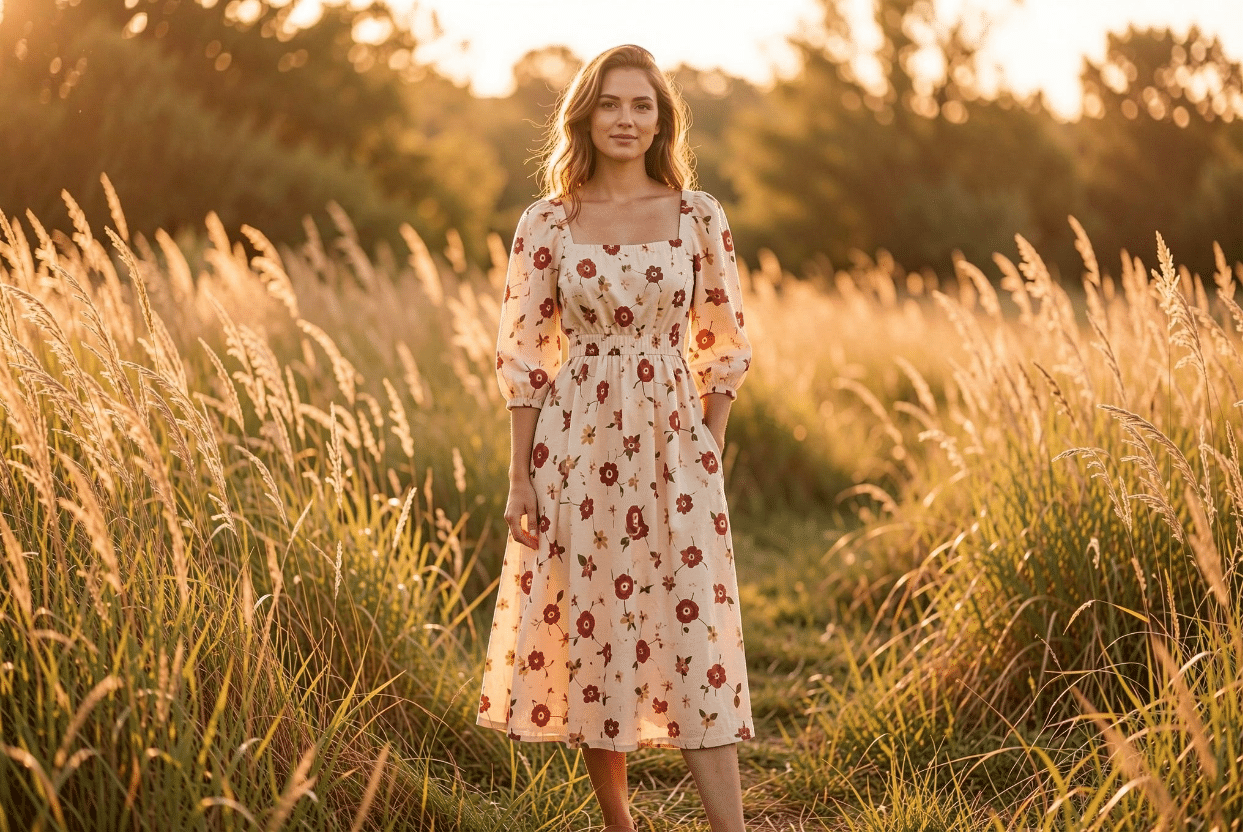
A floral midi dress styled to work across every season of the year.
Why One Floral Midi Dress Can Work All Year
You already own the dress that could replace half your closet — it’s just been sitting there labeled “summer only.” A floral midi dress is one of those pieces that quietly earns its spot as a wardrobe favorite. It’s easy to wear, flattering on almost every body type, and — if you pick the right print — works across three or even four seasons without ever feeling out of place. The tricky part is knowing how to style it so it doesn’t read as “just a summer dress” the moment the temperature drops.
Most people buy a floral dress in spring, wear it for a few warm months, and then quietly retire it to the back of the closet once fall hits. That’s a shame, because the dress itself hasn’t changed — only the styling around it needs to. In this guide, we’ll walk through exactly how to wear the same floral midi dress in every season, what to look for before you buy one, and why the fabric and print you choose matters more than most people realize.
Key Takeaways
- Spring & summer: let the print breathe with light layers and sandals
- Fall: layer it like a base layer under a jacket or cardigan
- Winter: opaque tights + a structured coat make it a true winter piece
- Choose a smaller, ditsy print for the most year-round versatility
Who This Guide Is For
This is for anyone who wants to get more mileage out of their wardrobe without buying a new dress every three months. If you already own a floral midi and it’s currently sitting unworn because you assume it’s “out of season,” this guide will change how you think about it.
What to Look for Before You Even Start Styling
Not every floral midi dress is built to transition between seasons. Before we get into the styling specifics, it helps to understand what makes a dress genuinely versatile versus one that’s really only suited to a single season.
Print Scale Matters More Than You Think
Smaller, ditsy-style prints (tiny, evenly repeated flowers) tend to feel more versatile across seasons than large, bold blooms. A bold, oversized floral print visually reads as “summer” no matter what you pair it with, while a smaller print is subtle enough to blend into a fall or winter outfit once you add darker layers on top.
Fabric Weight and Season
A lightweight cotton or rayon blend breathes well in summer but can feel thin in winter, even with tights and a coat. A slightly heavier cotton jersey or a cotton-blend with a bit of structure holds up better across seasons because it layers more easily without bunching or losing its shape under a cardigan or coat.
Fit and Silhouette
A relaxed, slightly A-line silhouette is the most forgiving shape to layer over and under. Very fitted midi dresses are harder to layer in cold weather because there’s no room for tights and boots to sit comfortably, and they’re harder to dress down for spring because they read as more “occasion” than “everyday.”
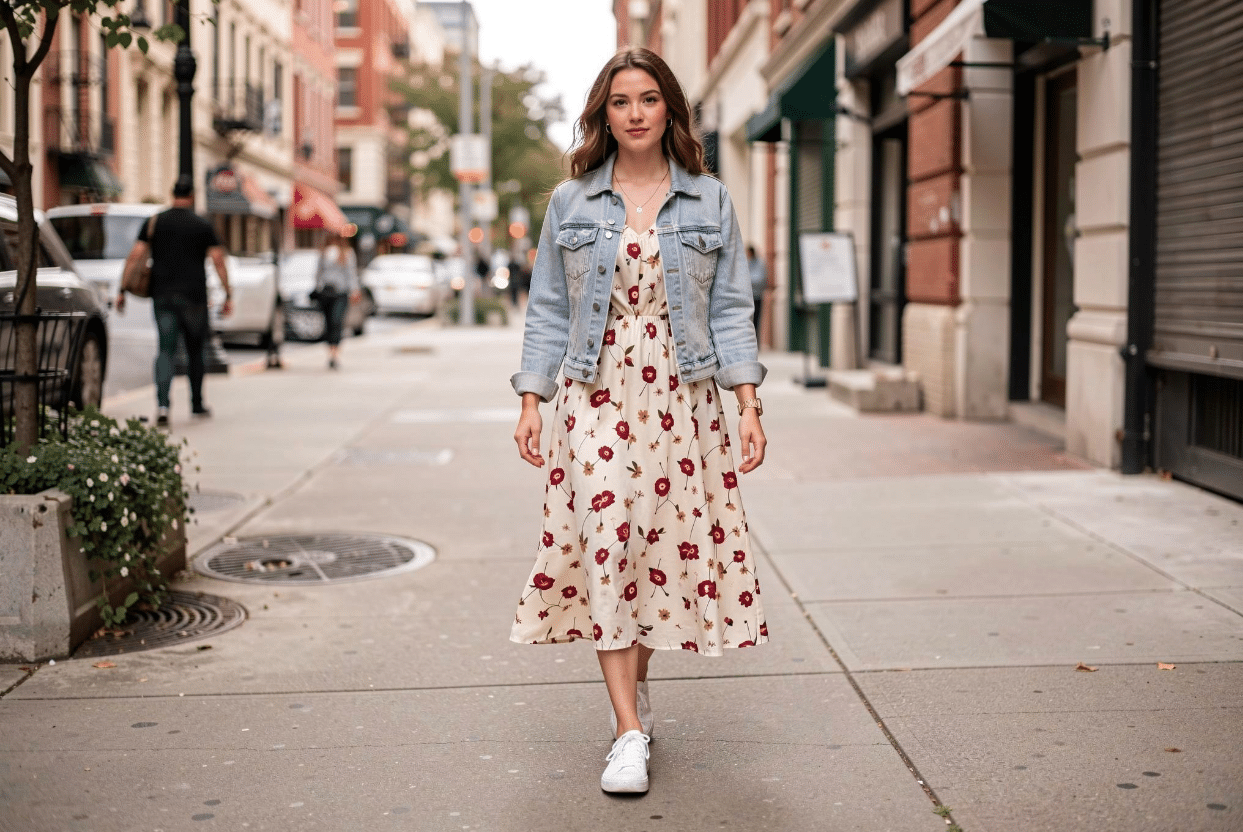
A floral midi dress styled for spring with sandals and light layers.
Spring Styling: Let the Print Breathe
In spring, keep things simple. Pair your floral midi with a pair of white sneakers or flat sandals and let the print do the talking. A light denim jacket works if the mornings are still cool, and a small crossbody bag keeps the look effortless rather than overdressed.
Footwear That Works
White sneakers, flat sandals, or simple slide sandals all work well in spring. Avoid anything too heavy or wintery, like knee-high boots — they’ll fight against the lightness the season is all about.
Layering for Cool Mornings
Spring mornings are often colder than the afternoon, so a light denim jacket, a cropped cardigan, or a utility jacket thrown over the dress gives you flexibility. You can simply take it off and tie it around your waist once the day warms up.
Accessories to Keep It Light
Stick to one or two simple accessories — a small crossbody bag, delicate gold or silver jewelry, and maybe a pair of sunglasses. Spring styling works best when it feels a little undone, not heavily accessorized.
A floral midi dress styled for summer with light, minimal accessories.
Summer Styling: Lean Into the Lightness
This is the season your floral midi was made for. Straw hats, woven bags, and strappy sandals all play well with soft floral prints like wildflower bouquets or ditsy patterns. If you’re heading somewhere with air conditioning, a thin cardigan in a solid color (not a competing print) keeps you comfortable without fighting your dress for attention.
Hot Weather Layering
You want minimal layering in summer, but a thin, breathable cardigan or kimono-style cover-up is useful for air-conditioned restaurants, offices, or evening breezes. Choose a solid color that pulls one of the shades out of your print, rather than a second pattern.
Accessories That Complete the Look
A straw hat, a woven raffia bag, and simple leather sandals all lean into the relaxed, warm-weather mood of a floral print. Gold jewelry tends to read warmer and more summery than silver in this context.
Making It Work for Both Day and Evening
The same dress can go from a daytime brunch to a summer evening out just by swapping sandals for a slightly dressier heeled sandal and adding a bold lip or a statement earring. The dress does most of the work — you’re just adjusting the finishing touches.
Fall Styling: Layer It Like a Base Layer
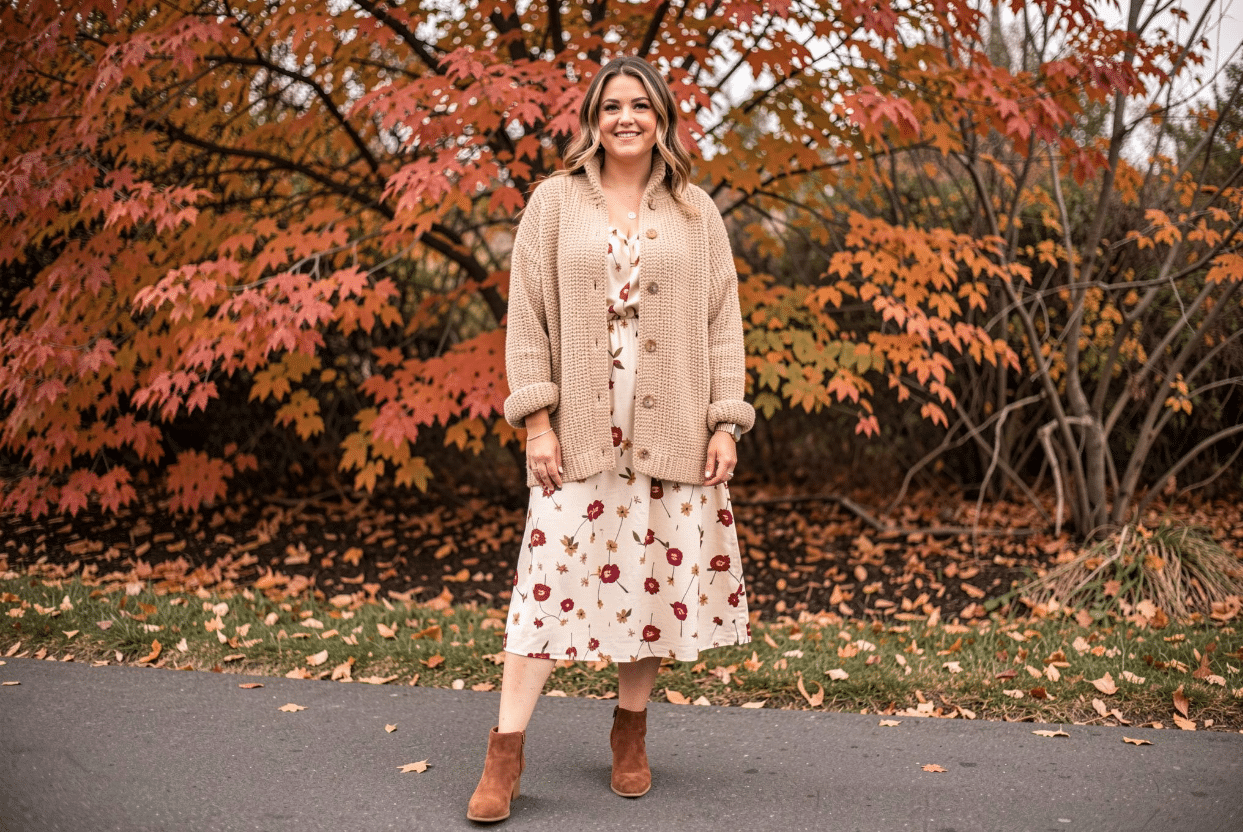
This is where most people give up on their floral dresses too early. Don’t. A midi dress works beautifully as a layering piece — add a chunky knit cardigan, ankle boots, and a leather jacket over it, and the floral print becomes a subtle detail peeking through rather than the main event. Earth-toned accessories (cognac, olive, rust) help bridge a summery print into an autumn palette.
Building the Layers
Start with the dress as your base layer, the same way you would a t-shirt or a slip. Add a turtleneck or long-sleeve top underneath if the dress is sleeveless, then a chunky cardigan or a structured jacket on top. This turns a “summer dress” into what functions more like a skirt with a built-in top.
Color Palette Shift
You don’t need a different dress for fall — you need different colors around it. Cognac, olive, deep burgundy, and mustard all pull a floral print into an autumn mood, even if the print itself includes brighter spring or summer tones.
Footwear for the Season
Ankle boots are the easiest way to signal “fall” instantly. A block heel or flat ankle boot in brown or black grounds the outfit and makes the transition from bare legs to layered dressing feel intentional rather than accidental.
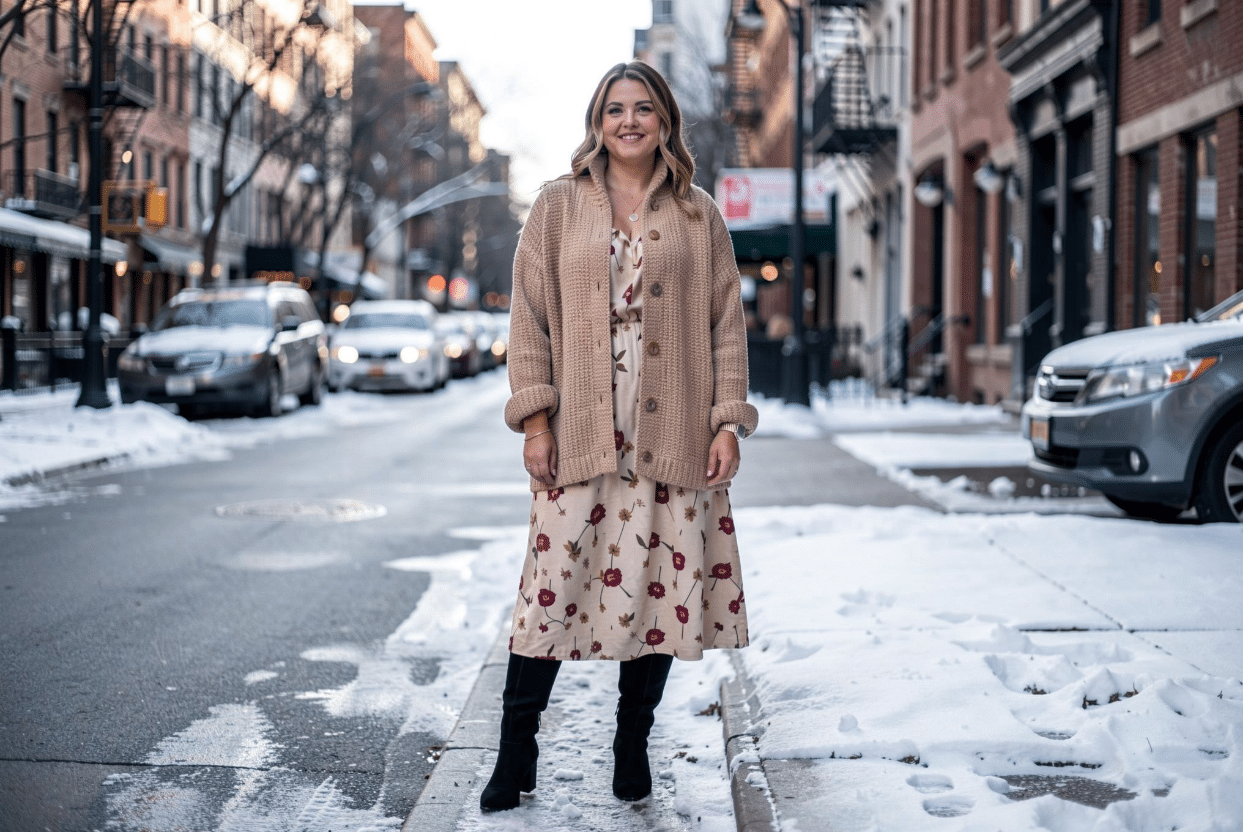
A floral midi dress layered with tights and a coat for winter styling.
Winter Styling: The Tights Trick
Opaque tights in black, cream, or a deep color instantly transform a floral midi into a cold-weather outfit. Add a turtleneck underneath if the dress has short sleeves, then a wool coat on top. Ankle boots or knee-high boots finish the look.
Choosing the Right Tights
Opaque, matte tights (rather than sheer or shiny ones) read as more intentional and cold-weather appropriate. A few color options to try:
- Black — the easiest to pair with almost any print
- Deep burgundy — pulls out warm tones from the floral pattern
- Forest green — pulls out cooler greens for a more styled look
“Designer Tip: The tights trick is the single easiest way to turn a summer dress into a winter outfit — opaque tights change the whole read of the print without changing a single thing about the dress itself.” — Elena M.
Outerwear That Pulls It Together
A long wool coat is the single most effective piece for making a floral dress feel like a genuine winter outfit rather than a summer piece worn out of season. A shorter puffer or cropped jacket works too, but pair it with knee-high boots so there isn’t a gap of exposed leg between the coat and the boots.
Small Details That Make It Feel Cohesive
A scarf in a solid, coordinating color, plus gloves and a structured bag, finish the look. The goal is for the floral print to feel like one deliberate element in a considered winter outfit, not the odd piece out.
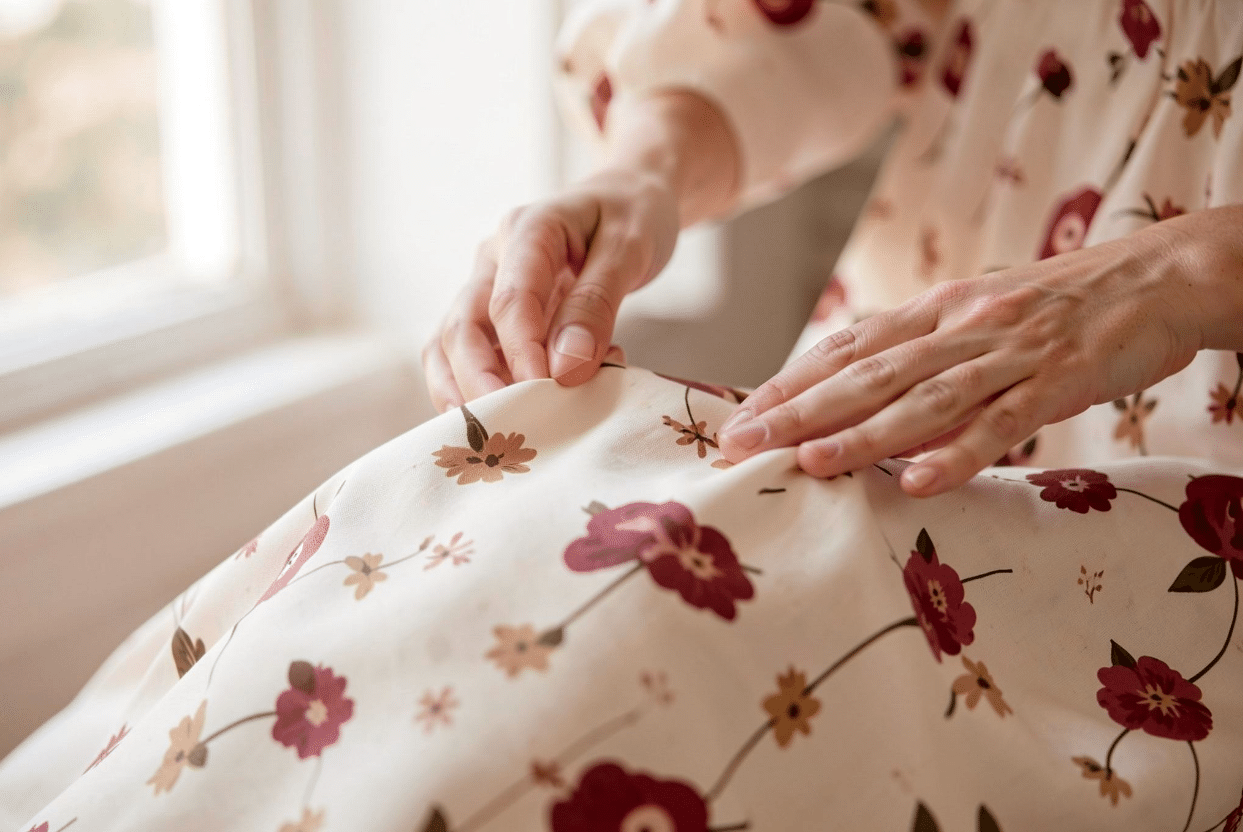
Close-up of a ditsy floral print pattern on a midi dress.
Choosing the Right Print for Year-Round Wear
Not every floral print transitions equally well between seasons. If you’re planning to build a capsule wardrobe around one floral dress, the print you choose from the start will determine how much use you actually get out of it.
Ditsy vs. Bold Florals
Smaller, ditsy prints (tiny repeated flowers) tend to feel more versatile across seasons, while bold, large-scale florals lean more strongly “summer.” A ditsy print is easier to layer under a dark cardigan or coat because it doesn’t compete for attention the way a large, saturated bloom does.
Color Palettes That Transition Well
Prints that include at least one deeper, muted tone alongside the brighter floral colors (think a wildflower print with some sage green, rust, or navy mixed in) transition into fall and winter styling far more easily than an all-pastel print, which will always read as spring or summer no matter what you layer around it.
Why Made-to-Order Floral Dresses Hold Up Better
If you’re going to wear one dress across every season, it needs to actually survive that much use — through washing, layering, and the general wear and tear of being a genuine wardrobe workhorse rather than an occasional-use piece. This is where how a dress is made matters just as much as how it’s styled.
Made-to-order pieces are produced individually rather than mass-manufactured in bulk ahead of demand, which means less rushed production and, generally, more attention to fabric quality and print durability. A well-printed cotton or cotton-blend jersey holds its color and shape through repeated wear far better than a cheaply mass-produced version of the same silhouette, which is exactly what you need from a dress you’re planning to style twelve months a year instead of three.
This is exactly why we at Honeh make our floral dresses to order in soft, durable cotton jersey — built to actually be worn every season, not just for one.
Building a Capsule Around Your Floral Midi
Once you’ve settled on the right dress, the easiest way to get maximum use out of it is to build a small, intentional set of layering pieces around it rather than buying new items every season. A denim jacket, a chunky neutral cardigan, a wool coat, a pair of opaque tights, and two pairs of shoes (one flat, one boot) are really all you need to take one floral midi dress through an entire year of outfits.
FAQ
Can a floral midi dress really be worn in winter?
Yes — with opaque tights, a turtleneck layered underneath if needed, and a proper coat on top, a floral midi dress works just as well in winter as any skirt would. The floral print becomes one detail in a fully layered outfit rather than the whole look.
What shoes work best with a floral midi dress across seasons?
Sandals or sneakers in spring and summer, ankle boots in fall, and knee-high boots or ankle boots with tights in winter. Keeping one or two versatile pairs on hand covers almost every season.
How do I stop a floral dress from looking “too summery” in colder months?
Layer with darker, richer colors — cognac, olive, burgundy, black — and add tights, boots, and a structured coat or cardigan. The layering does most of the work in shifting the mood of the print.
Is a bold floral print or a small ditsy print more versatile?
A smaller, ditsy print is generally more versatile because it’s subtle enough to work under darker layers without clashing, while a bold, large-scale print tends to read as a summer-only piece no matter how it’s styled.
How many floral dresses do I actually need for a capsule wardrobe?
One well-chosen floral midi dress, styled differently each season, can realistically replace three or four separate seasonal pieces — which is exactly the point of building a capsule wardrobe around versatile basics.
Final Thoughts
One good floral midi dress, styled with intention, really can carry you through the entire year. What’s your go-to trick for making a summer piece work in colder months? Share it in the comments!

-
 Price range: $22.38 through $29.07
 -
 Price range: $22.38 through $29.07
 -
 Price range: $22.38 through $29.07
 -
 Price range: $21.43 through $28.17
 -
 Price range: $22.38 through $29.07
 -
 Price range: $22.38 through $29.07
 -
 Price range: $22.38 through $29.07


Recent Comments