
Floral dresses tend to get packed away the moment the temperature drops, as if prints were a summer-only privilege. But a floral dress doesn’t need to disappear into storage for six months just because the weather turned — it needs the right layering strategy. Done well, layering a floral dress for cooler weather doesn’t hide the print, it frames it, turning a single warm-weather piece into a dress you can reasonably wear across three seasons instead of one.
The key is understanding which layers add warmth without competing with or covering up the print itself. This guide walks through exactly how to do that — which pieces to reach for, which colors work with a floral rather than against it, and how to build complete, cooler-weather-ready outfits around a dress you might have assumed was strictly for summer.
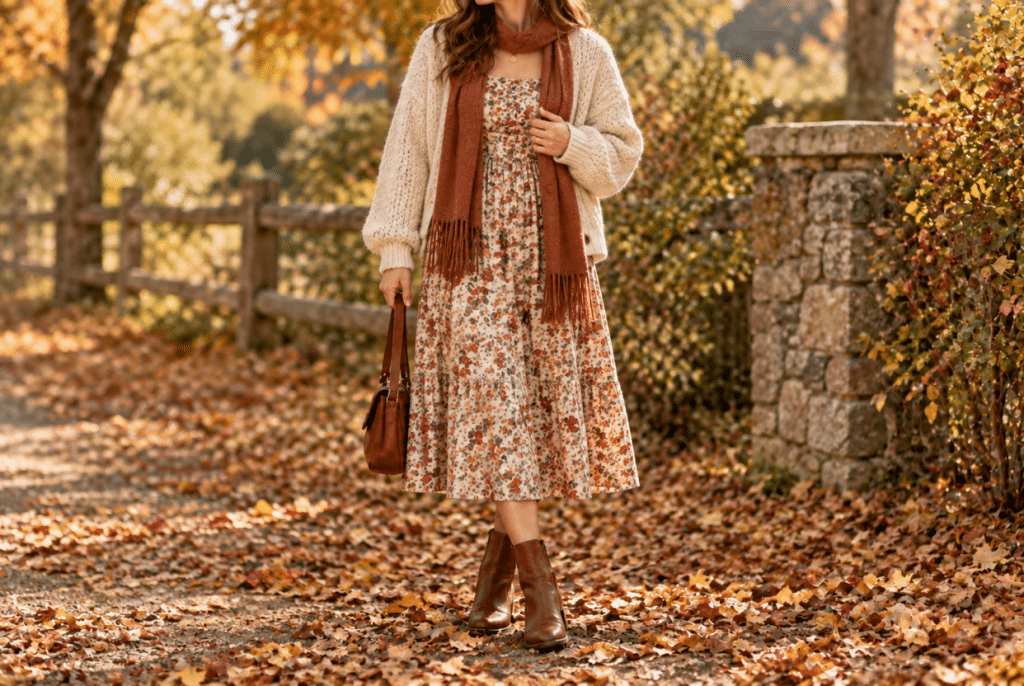
Layering a floral print dress with an open cardigan and boots for cooler weather.
Why People Hesitate to Layer Florals for Fall and Winter
The most common mistake is assuming that cooler-weather layers automatically mean covering up the print, when the goal should actually be the opposite: choosing layers that leave enough of the floral visible that it still reads as the star of the outfit. A heavy, high-coverage sweater thrown over a floral dress can genuinely erase the print from view, which defeats the purpose of wearing a floral dress in the first place. The fix isn’t avoiding layers — it’s choosing the right kind.
The Core Layering Principle: Frame the Print, Don’t Bury It
Cooler-weather layers should generally sit around the edges of a floral dress rather than across its center. Think open-front cardigans instead of crewneck sweaters, cropped jackets instead of long coats that fully conceal the skirt, and accessories like tights, boots, and scarves that add warmth from the ankles up and the neck down rather than covering the torso where most floral prints are concentrated.
🔑 Key Takeaways
- Choose layers that frame a floral print rather than cover it — open cardigans and cropped jackets work better than crewneck sweaters.
- A turtleneck or mock-neck layered under a sleeveless or short-sleeve floral dress adds warmth without hiding the pattern.
- Tights, boots, and a structured jacket are the fastest way to make a summer floral dress read as a cooler-weather outfit.
- Pull one solid color from the print itself for your outer layer so the whole look feels intentional rather than mismatched.
- Fabric weight matters: a lightweight cotton floral pairs better with knit layers, while a heavier floral fabric can carry a structured jacket.
Layering Pieces That Actually Work
Turtlenecks and Mock Necks
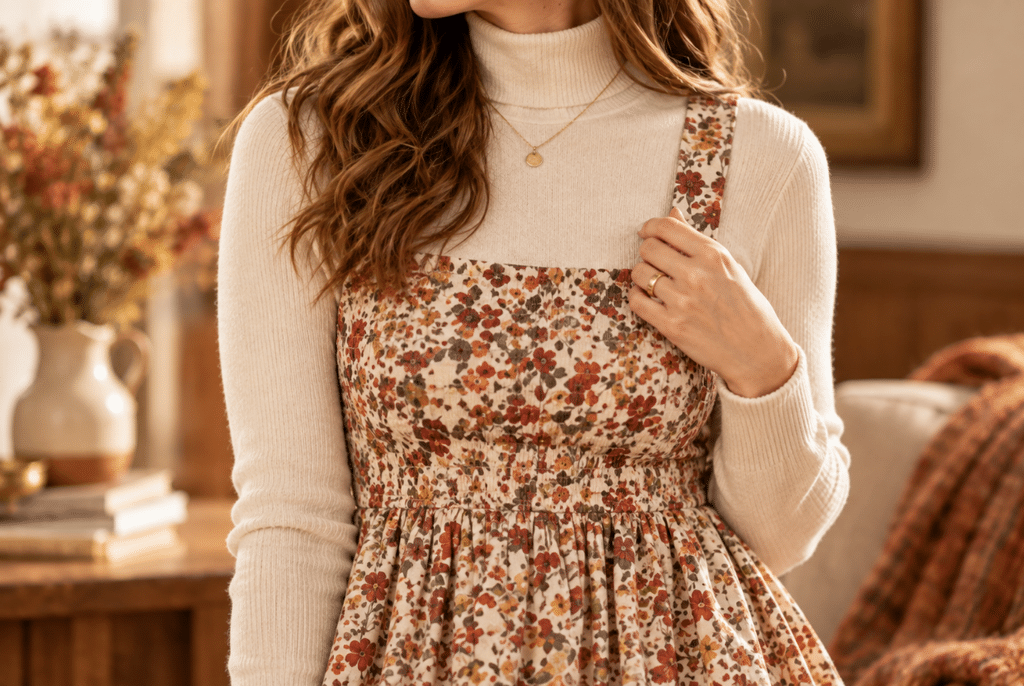
If your floral dress is sleeveless or short-sleeved, a fitted turtleneck or mock-neck top worn underneath is one of the most effective cooler-weather fixes available. It adds warmth at the arms and neckline — two of the coldest points on the body — while leaving the skirt and the bulk of the print fully visible below.
Open-Front Cardigans
An open cardigan, worn loose rather than buttoned, adds a layer of warmth across the shoulders and arms without closing over the print at the front. Choosing a cardigan in one of the solid accent colors pulled directly from the floral print — rather than a completely unrelated color — makes the whole outfit look deliberately coordinated rather than thrown together.
Cropped or Structured Jackets
A cropped denim jacket, a structured blazer, or a short leather jacket adds real outerwear-level warmth while stopping at the waist, which keeps the skirt of the dress fully visible. This works especially well with a ditsy floral print, where the small-scale pattern reads clearly even with a jacket layered over the top half.
Tights and Boots
Swapping bare legs for opaque tights and ankle boots or knee-high boots is one of the simplest, most immediate ways to make a summer floral dress look intentionally seasonal rather than out of place. Dark tights in black, charcoal, or a deep color pulled from the print’s background tend to ground the outfit and read as a deliberate cooler-weather choice.
💡 Designer Tip: Pull exactly one solid color from the floral print itself and use it for your main outer layer — a cardigan, jacket, or tights. It’s a simple trick, but it’s the difference between an outfit that looks styled on purpose and one that looks like two unrelated pieces were thrown together at the last minute.
— Elena M., Honeh Design Team
A turtleneck layered under a floral dress adds warmth without covering the print.
Matching Layers to Different Floral Print Styles
Not every floral print pairs the same way with cooler-weather layers. A bold, saturated wildflower print tends to carry a structured jacket or a darker cardigan well, since the print itself has enough visual weight to hold its own against a heavier layer. A softer, more delicate ditsy floral often looks better with lighter knitwear and a more pastel or neutral layering palette, since a heavy dark layer can visually overwhelm a smaller, more subtle print.
If your floral dress leans more toward a vintage, romantic silhouette, layering with pieces inspired by toile-print styling — structured collars, muted solid tones, classic silhouettes — tends to feel more cohesive than pairing it with something overly casual or sporty.
Seasonal Transition Tips: Late Summer Into Fall
The shoulder season between summer and fall is actually the easiest time to layer a floral dress, since the weather usually only calls for one added layer rather than a full winter-ready outfit. A light cardigan and ankle boots are often enough to carry a summer floral dress comfortably into cooler fall evenings without needing a heavier coat or tights just yet. As temperatures drop further into true winter, adding both a structured jacket and tights becomes the more reliable formula.
Fabric Weight: A Detail Most People Overlook
The fabric a floral dress is made from affects which layers actually work well with it. A lightweight cotton voile or chiffon floral dress pairs naturally with soft knit layers like cardigans and turtlenecks, since both fabrics share a similarly relaxed, soft drape. A heavier floral fabric, like a cotton twill or a structured woven print, can visually support a stiffer structured jacket or blazer without looking mismatched in weight or formality. Matching fabric weight between the dress and its layers, not just color, is part of what makes a layered outfit look put-together rather than accidental.
Layering Floral Dresses for Kids: A Quick Note
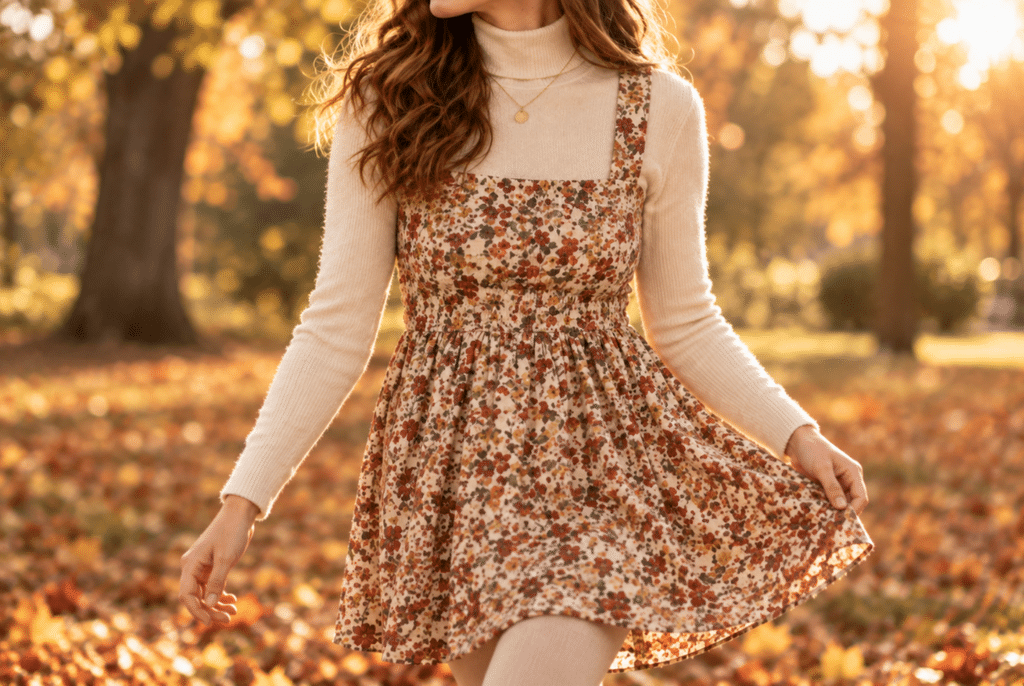
The same core principle applies when layering a child’s floral dress for cooler weather — a fitted long-sleeve top underneath and tights below, rather than a bulky sweater over the top, keeps a kid’s floral print visible while still adding real warmth. For more on choosing and coordinating kids’ printed pieces across seasons, our guide on caring for kids’ printed clothing covers seasonal wear and washing side by side.
This is also part of why we at Honeh design many of our floral pieces with layering already in mind from the start — cuts and necklines that work as easily with a turtleneck underneath in October as they do worn alone in July, so a single dress genuinely earns its place across more than one season of wear.
A child’s floral print dress layered with tights and a long-sleeve top for cooler days.
Common Layering Mistakes to Avoid
Covering the entire print with a bulky sweater. If the print disappears completely under the layer, the dress has essentially become a slip or lining rather than the outfit’s focal point, which usually isn’t the intended effect.
Mismatching formality between the dress and the jacket. A very casual denim jacket over a dressier, more formal floral dress (or the reverse) can make an otherwise good outfit feel visually confused.
Ignoring color entirely when choosing a layer. A layer in a completely unrelated color family — one that doesn’t appear anywhere in the print — is the fastest way to make an outfit look like an afterthought rather than a styled look.
Three Complete Layered Looks to Try
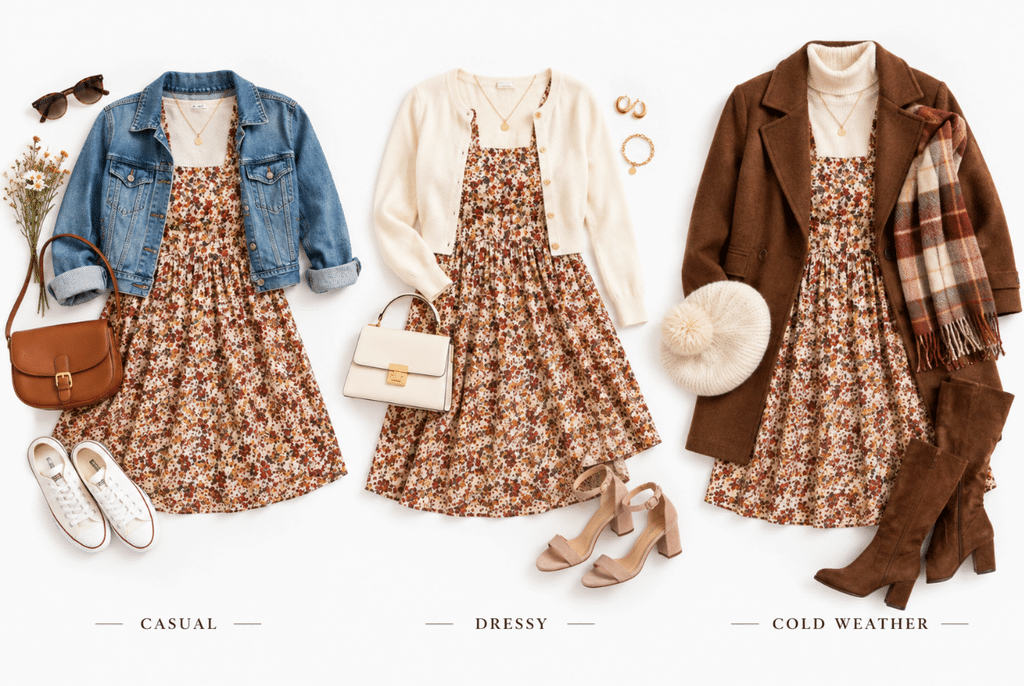
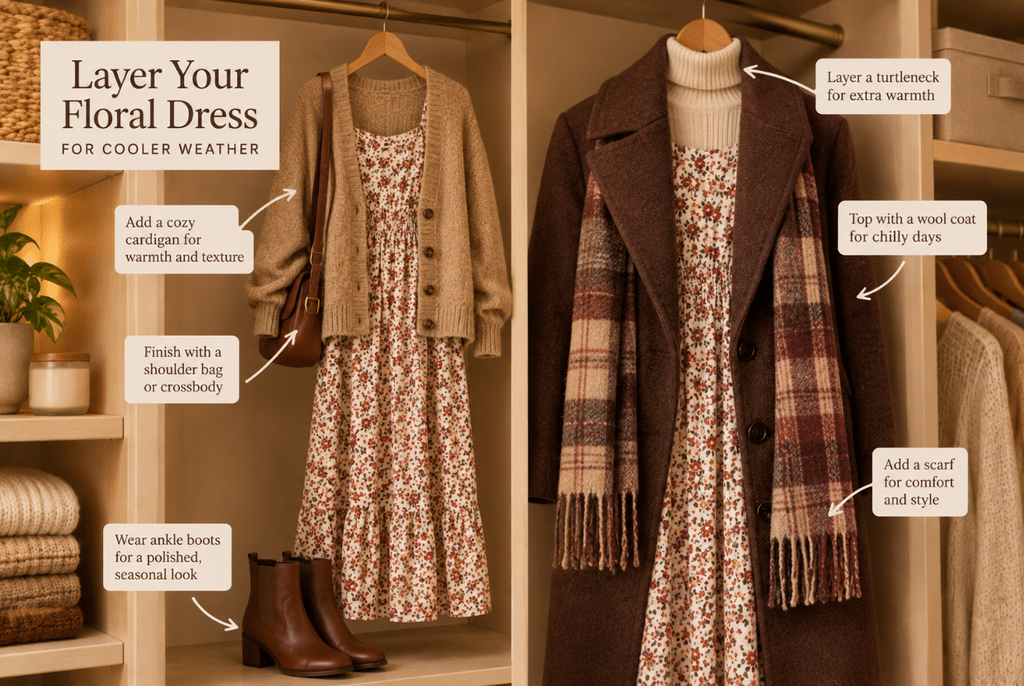
Casual daytime: floral dress, fitted turtleneck underneath, ankle boots, and a cropped denim jacket left open. Ideal for errands, casual coffee dates, or a relaxed weekend.
Dressed-up evening: floral dress, sheer or opaque tights in a color pulled from the print, heeled boots, and a tailored blazer in one of the print’s solid accent colors. Works well for dinners or events that call for slightly more polish.
Cold-weather everyday: floral dress, turtleneck underneath, thick tights, a structured wool coat left unbuttoned, and knee-high boots. This is the formula for genuinely cold days where warmth matters most, while still keeping a visible strip of the print at the hem and along the neckline.
Building a small capsule wardrobe around 2-3 floral dresses and a handful of versatile layering pieces means you can rotate through all three of these looks without needing to buy anything season-specific — the same core pieces just get recombined differently as the weather shifts.
Three complete looks built around one floral print dress, from casual to dressy to cold-weather.
Accessorizing a Layered Floral Look
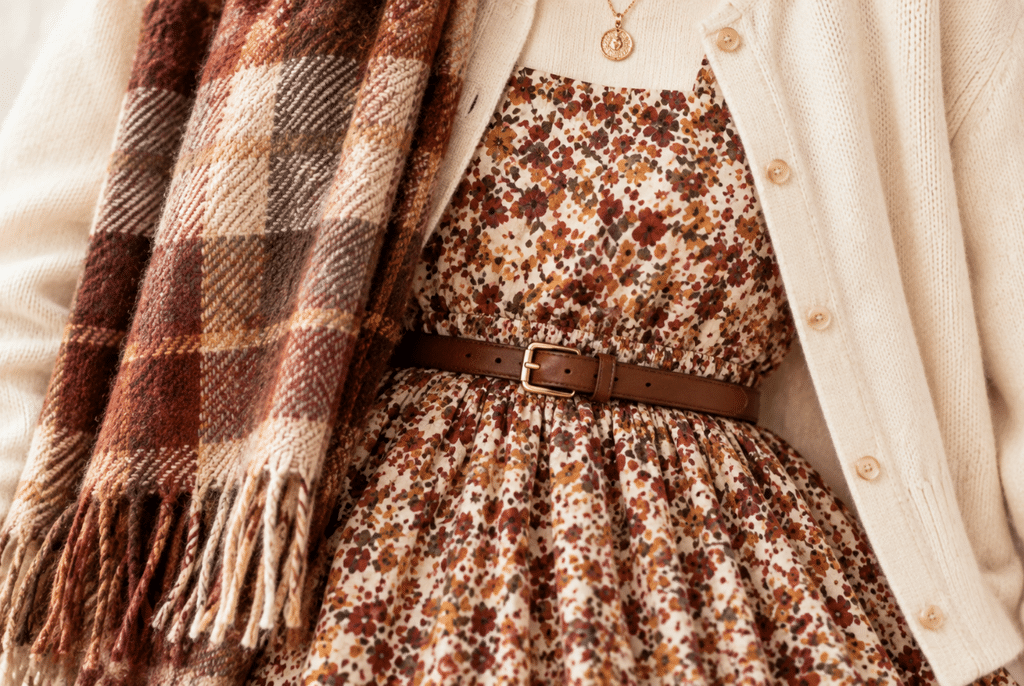
Accessories are an easy, low-commitment way to reinforce the color-matching principle without buying new layering pieces every season. A scarf in one of the print’s accent colors, wrapped loosely rather than tightly bundled, adds both warmth and a visual bridge between the dress and any outer layer. Belts can also help define the waist when a bulkier cardigan or jacket is layered on top, keeping the silhouette from looking shapeless once extra fabric enters the outfit. Even jewelry can play a small supporting role — a single warm-toned pendant or a pair of simple hoops tends to work better with a busy floral print than anything too large or attention-grabbing, since the print itself is already doing the visual work.
A scarf and belt pull a layered floral dress outfit together.
Layering Considerations by Climate
How aggressively you need to layer depends heavily on where you live. In a mild climate where fall temperatures rarely drop below the mid-teens Celsius, a single cardigan and tights are often enough to carry a floral dress through the entire season. In a climate with genuinely cold winters, the same dress needs a fuller layering system — thermal leggings under tights, a heavier structured coat, and possibly a base layer under the dress itself — to stay realistically wearable rather than just decorative under a coat you never take off indoors.
It’s worth being honest about your own climate when deciding how many floral dresses to keep in year-round rotation versus how many are better suited to a shorter three-to-four month season. There’s no need to force a delicate summer floral through a genuinely harsh winter if the layering required to make it work stops feeling practical for daily wear.
Storing Floral Dresses Between Layering Seasons
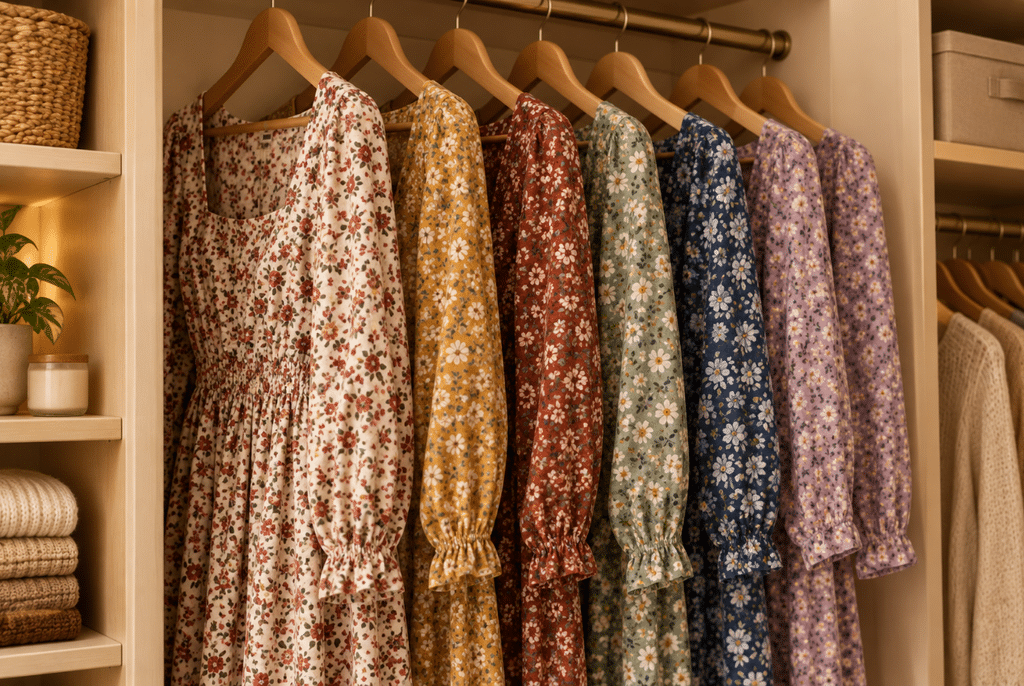
When a floral dress does move into off-season storage, hanging it rather than folding it helps prevent the kind of deep creasing that’s hard to steam out later, particularly for lighter fabrics like voile or chiffon. Keeping it away from direct sunlight during storage also protects the print’s color, since UV exposure can fade fabric even while it’s just hanging in a closet rather than being actively worn.
Floral print dresses hung away from direct sunlight to protect their color.
Layering Florals With Other Prints, Carefully
Once you’re comfortable layering a floral dress with solid-colored pieces, it’s worth experimenting with layering it against a second, smaller-scale print rather than only ever pairing it with solids. A subtle gingham scarf or a paisley-print accessory can work surprisingly well against a floral dress as long as the two prints share a common color and differ meaningfully in scale — a large floral against a tiny gingham check, for example, rather than two similarly-sized busy prints competing for attention. This kind of print mixing is more advanced than the solid-layer approach, so it’s worth practicing with accessories first, like a scarf or a bag, before committing to mixing two full printed garments in one outfit.
When to Retire the Layering Approach Entirely
Not every floral dress is worth forcing through a full cooler-weather layering system. If a dress is made from an extremely lightweight, sheer fabric that doesn’t hold its shape well under tights and a jacket, it may simply be better suited to a shorter summer season and worth setting aside once the weather turns rather than layering it into something it was never built to be. Recognizing which pieces are worth the layering effort and which aren’t is part of getting genuinely good at seasonal dressing, and it saves you from forcing outfits that never quite look intentional no matter how carefully you style them.
A helpful habit is trying on last year’s floral favorites at the very start of each fall, layered with whatever cardigans and boots you already own, before buying anything new — it quickly reveals which pieces are worth building a full cooler-weather outfit around and which are better left for next summer. It only takes a few minutes, but it saves both money and closet space over time.
FAQ
Can you really wear a summer floral dress in the fall or winter?
Yes, with the right layers. Adding a turtleneck underneath, tights, boots, and an open cardigan or structured jacket can make a summer floral dress work comfortably through cooler months.
What’s the best layer to add under a sleeveless floral dress?
A fitted turtleneck or mock-neck top is one of the most effective options, since it adds warmth at the arms and neckline without covering the print on the skirt.
Will a sweater ruin the look of a floral print dress?
It depends on the sweater. A bulky, high-coverage crewneck can hide too much of the print, while an open-front cardigan adds warmth while still leaving the print visible.
How do I choose a jacket color that works with a busy floral print?
Pull one solid color directly from the print itself, ideally an accent or background color, and use that for your jacket or cardigan so the whole outfit reads as coordinated.
Do tights work with any floral dress?
Tights generally work well with most floral dresses. Darker tights in black, charcoal, or a color pulled from the print’s background tend to ground the outfit and read as intentionally seasonal.
Does the fabric of the floral dress matter for layering?
Yes. Lighter fabrics like cotton voile or chiffon pair best with soft knit layers, while heavier woven floral fabrics can support stiffer, more structured jackets without looking mismatched.
Can kids’ floral dresses be layered the same way for cooler weather?
Yes, the same core idea applies — a long-sleeve top underneath and tights below keep the print visible while adding real warmth, rather than covering the dress with a bulky sweater.
Tell Us What You Think
What’s your go-to layering trick for wearing a favorite floral dress past summer? Tell us in the comments.

-
 Price range: $22.38 through $29.07
 -
 Price range: $22.38 through $29.07
 -
 Price range: $22.38 through $29.07
 -
 Price range: $21.43 through $28.17
 -
 Price range: $22.38 through $29.07
 -
 Price range: $22.38 through $29.07
 -
 Price range: $22.38 through $29.07


Recent Comments