
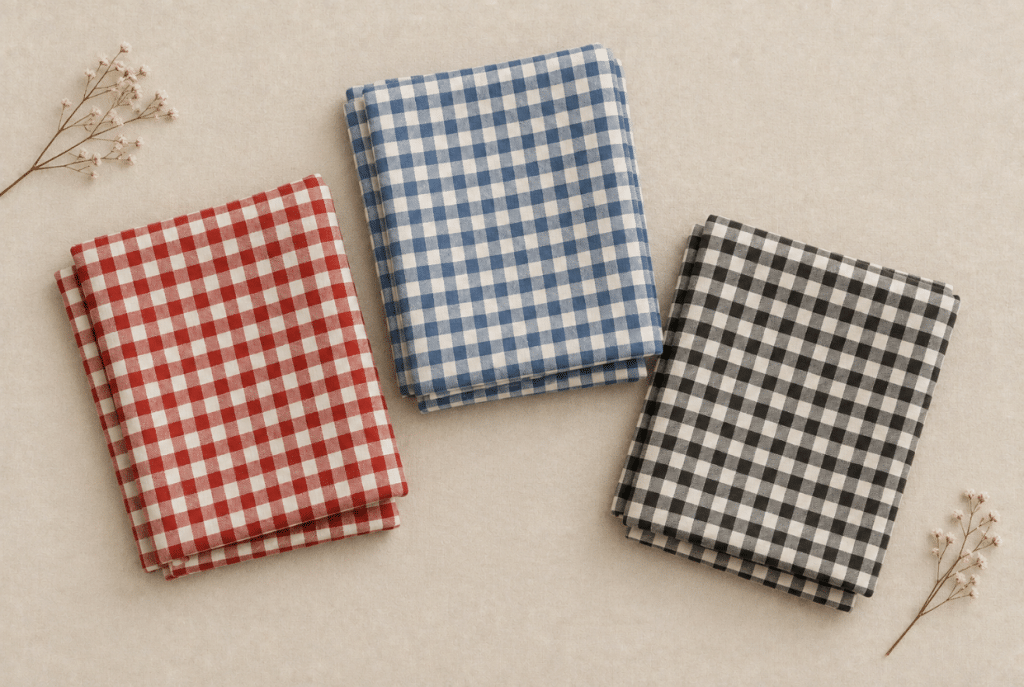
Gingham is everywhere — on picnic blankets, farmers’ market tote bags, summer dresses, and the occasional red-carpet moment — and yet most people would struggle to actually define it if you asked them on the spot. Is it the same thing as plaid? Does it have to be red? Is there a “correct” size for the check? This guide breaks down what a gingham print actually is, where the pattern came from, and how to wear it without it reading as costume-y. We’ll also cover how it compares to plaid, buffalo check, and tattersall — three patterns people confuse with gingham constantly — so you can shop for it with confidence instead of guessing.
What Exactly Is a Gingham Print?
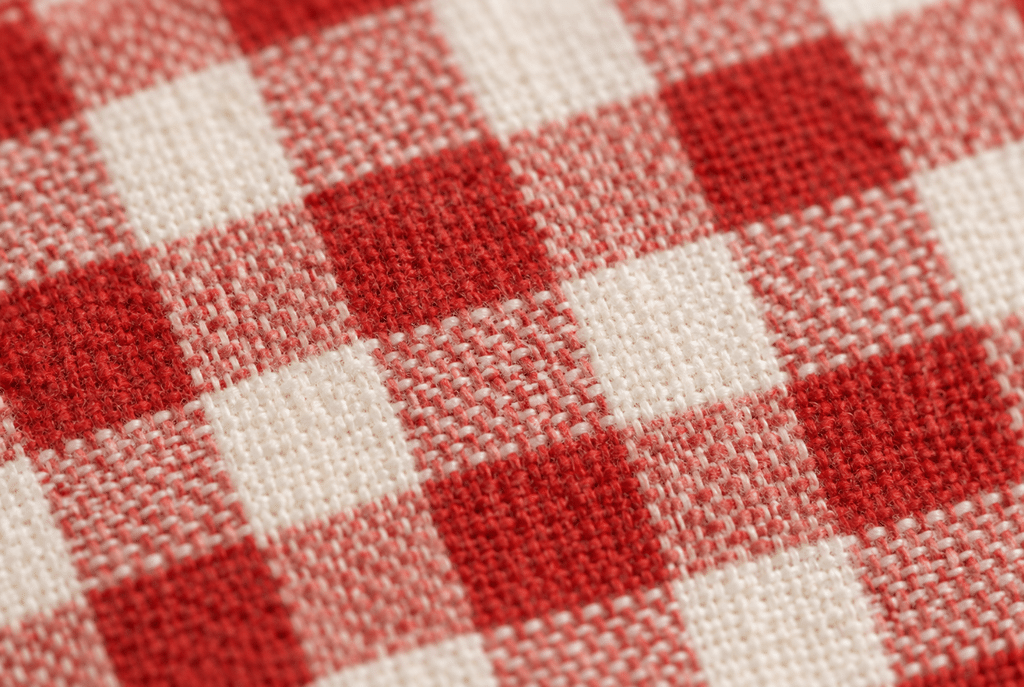
Close-up of a classic gingham checkerboard weave pattern.
The Checkerboard Weave That Defines It
At its core, gingham is a woven check pattern made from dyed threads (not a printed pattern in the technical sense, even though most people refer to it as a “print”). It’s created by weaving colored threads with white or undyed threads in an even, repeating pattern, which produces three visual tones: the base color, white, and a blended third tone where the two threads cross. That blended crossing square is actually the easiest way to identify true gingham versus a printed imitation — if you look closely and see a smooth gradient at each intersection rather than a flat printed square, you’re looking at woven gingham.
Not the Same as Buffalo Check or Plaid
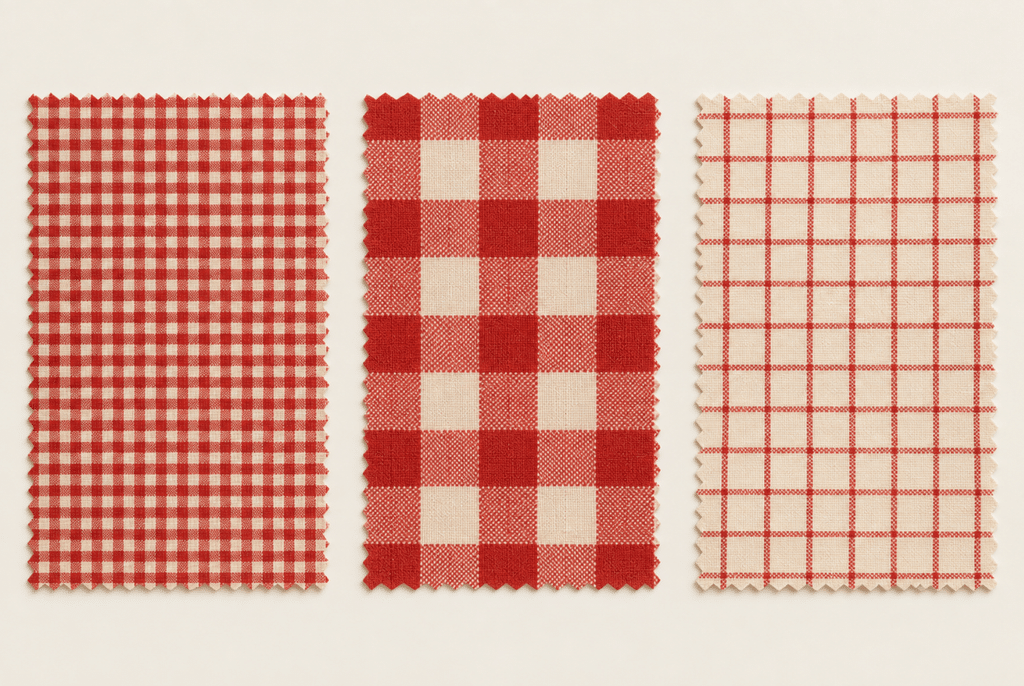
Gingham gets lumped in with other checked patterns constantly, but it’s technically the simplest of the bunch. It uses exactly two colors (one of which is usually white), evenly spaced, evenly sized squares, and a symmetrical grid. Buffalo check uses thicker, bolder lines and often a different color pairing (classic black and red). Plaid and tartan involve multiple colors and intersecting lines of different widths, which is what gives them their more complex, layered look. Gingham’s whole visual identity is its simplicity.
Key Takeaways
- Gingham is a woven check pattern (not a flat print) made from two colors, usually including white, with a signature blended tone at each intersection.
- It’s simpler than plaid or buffalo check, which use multiple colors and uneven line widths.
- The pattern’s name may come from Malay, French, or Dutch roots — historians still disagree.
- Small-scale gingham reads as classic and everyday; large-scale gingham reads as a bolder, statement choice.
Where Gingham Print Comes From
A Name With Disputed Origins
Nobody agrees on exactly where the word “gingham” comes from, which is a little unusual for a pattern this recognizable. Some textile historians trace it to the Malay word genggang, meaning striped, since the fabric started out as a striped weave in Southeast Asia rather than the checked pattern we know today. Others point to the French town of Guingamp in Brittany, a historic weaving center, or to the Dutch word ginghang. What most sources agree on is that the pattern evolved and traveled significantly before it ever became a check.
From Southeast Asian Stripes to European Checks
By the mid-18th century, British mills in Manchester had started weaving gingham with the signature checked pattern people now associate with the name. Made from cotton or linen, it was valued mainly for being breathable, durable, and cheap to produce — practical qualities that made it a household staple long before it was considered fashionable. In France, a checked cotton fabric produced in the town of Vichy became so associated with the pattern that “Vichy” is still used interchangeably with gingham in French fashion vocabulary today.
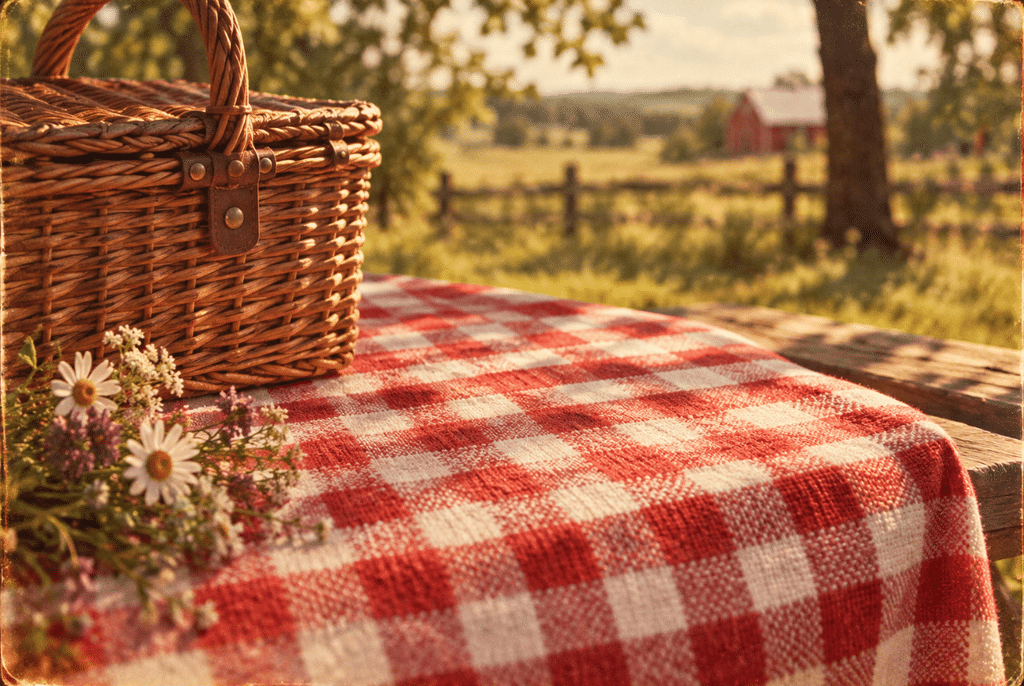
Historic gingham fabric pattern tracing its origins.
How Gingham Became a Fashion Icon
From Aprons and Tablecloths to Vichy
For a long time, gingham stayed firmly in the domestic sphere — aprons, curtains, tablecloths, and everyday work clothes. Its affordability and durability made it especially popular with farming families and pioneers in America, where it was one of the few printed cottons within reach of an average household budget. That utilitarian reputation is actually part of what makes gingham feel so timeless today: it was never designed to be trendy, which is exactly why it never really goes out of style.
Dorothy, Brigitte Bardot, and Hollywood’s Gingham Moment
Gingham’s jump from farmhouse fabric to fashion statement happened gradually through film and celebrity. Judy Garland’s blue-and-white gingham pinafore dress as Dorothy in The Wizard of Oz gave the pattern enormous visibility, and stars like Katharine Hepburn and Marilyn Monroe kept it in rotation through the mid-20th century. The moment most fashion historians point to as gingham’s true elevation to high fashion, though, is Brigitte Bardot’s pink gingham wedding dress in 1959, which cemented the pattern as something that could be both playful and elegant at once — a duality gingham still carries today.
“Gingham only looks costume-y when it’s the loudest thing in the outfit. Let the check be the pattern and keep literally everything else — shoes, bag, jewelry — solid.” — Elena M.
A vintage Hollywood-style gingham print dress.
Small Check vs. Large Check: Does Size Matter?
Petite Gingham for Everyday Wear
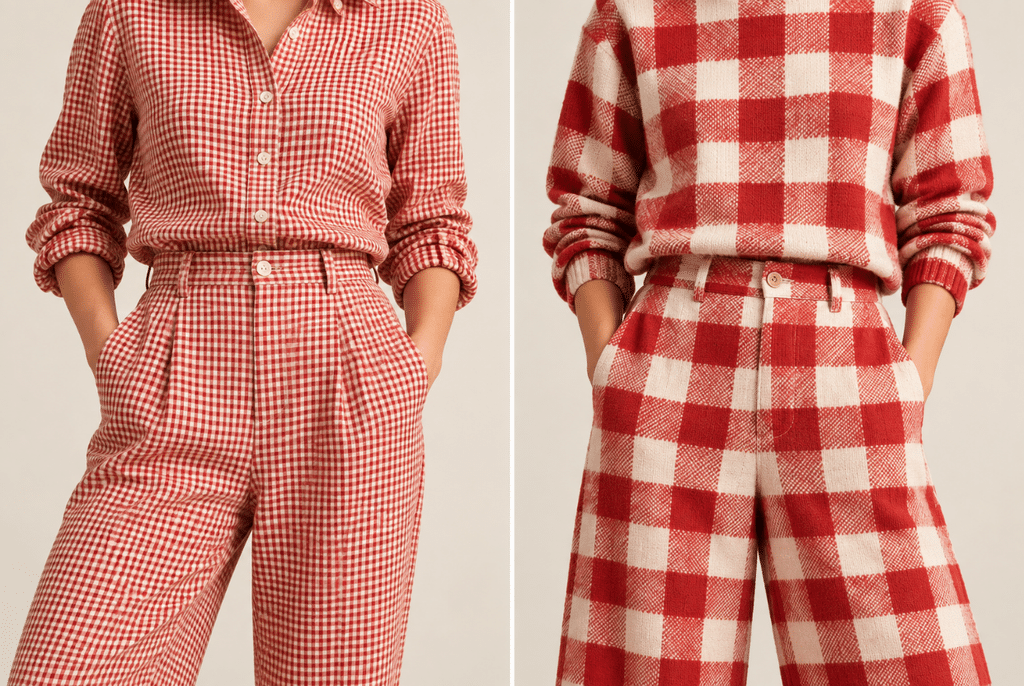
A small, tight gingham check (sometimes called a mini gingham) reads as classic, quiet, and easy to wear for a full day without feeling like a costume. It works well for blouses, dresses, and even work-appropriate pieces because from a few feet away it can almost read as a solid color with texture, rather than an obvious pattern.
Bold Gingham for Statement Pieces
A larger check does the opposite — it announces itself. Oversized gingham works best on simpler silhouettes (a shift dress, straight-leg pants, a basic button-down) because the print itself is already doing most of the visual work. Pairing large-scale gingham with a busy silhouette or another pattern usually tips the whole look into looking chaotic rather than intentional.
How to Style a Gingham Print
Pairing Gingham With Solid Colors
Because gingham is only ever two colors, styling it well is mostly about picking a solid that pulls from (or intentionally contrasts) one of those two tones. A few combinations that consistently work:
- Classic red-and-white gingham — pair with navy, black, or denim for a crisp, put-together look
- Blue-and-white gingham — pair with white, cream, or tan for an easy warm-weather palette
- Black-and-white gingham — treat it almost like a neutral and pair with any solid accent color
- Pastel gingham — pair with a slightly deeper shade of the same color family for a tonal, elevated look
Mixing Gingham With Other Patterns Without It Looking Chaotic
Gingham is actually one of the more forgiving prints to mix with others, precisely because it’s so simple and evenly spaced. The safest pairing is a plain stripe in one of the same two colors, or a small floral that shares one color with the check. The rule that keeps it from looking chaotic: only ever mix two patterns at a time, and make sure one of them (usually the gingham) is clearly the smaller-scale, quieter one.
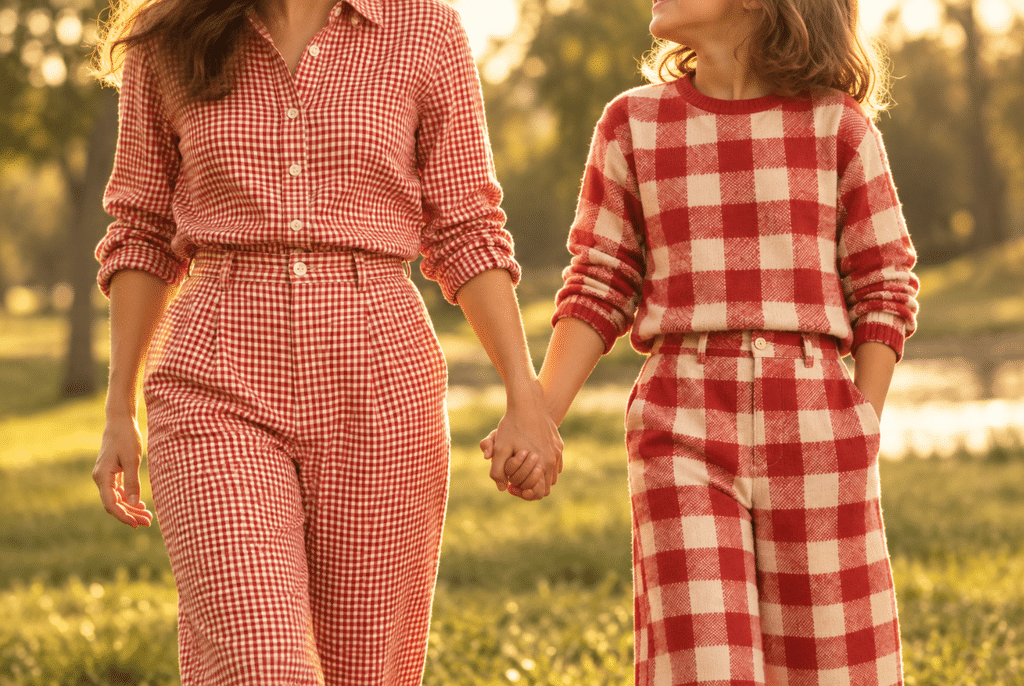
A gingham print mixed with another pattern in a coordinated outfit.
Gingham in Kids’ Clothing
Why the Classic Check Works So Well on Little Ones
Gingham has been a staple of children’s clothing for generations, and it holds up for practical reasons beyond nostalgia. The small, even check tends to hide minor stains and wrinkles better than a plain solid, and because the pattern itself is so simple, it never looks like it’s trying too hard — which matters when you’re dressing a toddler who will inevitably sit in something sticky within the hour.
Coordinating Gingham for Family Photos
Gingham is one of the easiest prints to build a coordinated (not identical) family look around, since the two-color format makes it simple to match a solid piece on one family member to the check on another. If you’re planning a family photo session around it, the same coordinated-not-identical approach used for fall family photos applies just as well here — pick one shared element (the check, or one of its two colors) and let the rest of each outfit be its own thing.
Caring for Gingham Print Garments
Keeping the Checks Crisp Wash After Wash
Because gingham is woven rather than printed, the pattern itself won’t crack or peel the way a screen-printed graphic can — but the color can still fade with repeated washing, especially in warmer water. Cold water washing and turning the piece inside out both help keep the contrast between the two colors sharp for longer. For a full breakdown of wash temperatures, drying methods, and fabric-specific tips, our guide on washing and caring for printed cotton jersey covers the same principles that apply to woven checks like gingham.
It’s part of why we at Honeh choose woven gingham over a printed imitation whenever we design a checked piece — it holds its color and shape through far more washes than a flat print ever could.
Crisp gingham checked fabric after proper washing.
Gingham vs. Similar Checked Prints
Gingham vs. Buffalo Check
Buffalo check uses much thicker, bolder lines than gingham and is almost always associated with a rustic, cabin-core aesthetic (think classic red-and-black flannel). Gingham’s lines are thinner and more evenly proportioned, which gives it a lighter, crisper feel that works for spring and summer just as easily as fall. Buffalo check also almost always appears in heavier fabrics like flannel or wool, while gingham is traditionally a lightweight cotton or linen weave — another reason the two patterns tend to show up in completely different seasons and settings.
Gingham vs. Tattersall
Tattersall is a checked pattern made of thin, evenly spaced lines (often in two alternating colors) on a solid background, without the solid blocks of color gingham has. It reads as more traditionally menswear-inspired and preppy, while gingham’s solid color blocks give it a softer, more casual feel.
Gingham by Season: When and How to Wear It Year-Round
Spring and Summer Gingham
Gingham hits its stride in warm weather, and there’s a practical reason for that beyond aesthetics: the original fabric was chosen for its breathability, and lightweight cotton gingham is still one of the more comfortable prints to wear in the heat. A gingham sundress, a lightweight button-down, or a gingham skirt all lean into the fabric’s original purpose. Pastel and mid-tone gingham (think soft blue, buttery yellow, or blush pink) feels especially at home in this season, paired with sandals and minimal accessories.
Fall and Winter Gingham
Gingham doesn’t have to disappear once the temperature drops — it just needs a different supporting cast. Swap the lightweight cotton base for a heavier flannel or wool-blend gingham, and layer it under a solid-color coat or cardigan in a deeper shade. Black-and-white or navy-and-white gingham in particular transitions well into cooler months because the contrast reads as slightly more sophisticated than the classic red-and-white summer version.
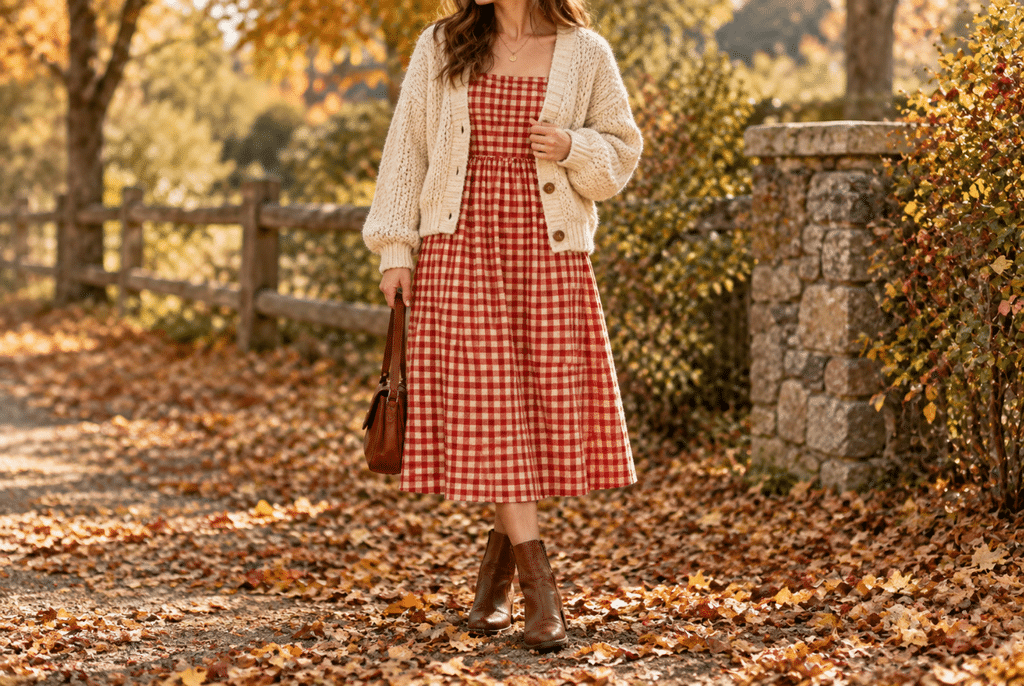
A gingham print outfit styled for fall and winter weather.
Common Myths About Gingham, Debunked
“Gingham Only Works for Picnics and Costumes”
This is probably the most persistent misconception, and it usually comes from seeing gingham used in an obviously themed context (a country fair costume, a checkered tablecloth dress for Halloween). In reality, a well-fitted gingham piece in a smaller check and a considered color palette reads as polished, not costumey — the theme-park association only shows up when the check is oversized, the colors are the most saturated version possible, and it’s paired with other “farmhouse” signifiers like a straw hat or overalls.
“Gingham Is Only for Kids and Grandmothers”
Gingham has shown up on adult runways consistently for decades, from Bardot’s wedding dress to modern minimalist collections that use oversized black-and-white gingham as a near-neutral. The print itself doesn’t have an age — the styling around it does. A tailored gingham blazer or a sleek gingham slip dress reads completely differently from a puff-sleeve gingham pinafore, even though the underlying pattern is identical.
“You Can’t Mix Gingham With Anything Else”
As covered earlier, gingham is actually one of the more flexible prints to combine with a second pattern, precisely because its own visual rhythm is so even and predictable. The myth probably persists because gingham paired badly (two competing bold patterns of similar scale) looks noticeably worse than a plain gingham piece styled simply — which makes people assume the safest option is to never mix it at all.
Building a Small Gingham Capsule
Start With One Versatile Piece
If you’re new to the print, the lowest-risk way in is a single gingham piece in a small, classic check — a button-down shirt or a simple A-line dress in black-and-white or navy-and-white. Both of those color combinations function almost like a neutral, which means you can build the rest of your timeless wardrobe basics around it without much extra thought.
Add a Bolder Piece Once You’re Comfortable
Once the first piece feels natural in rotation, a bolder colorway or a larger-scale check is the natural next step — a red gingham skirt, a yellow gingham top, or a gingham accessory like a headband or bag, which lets you test the print in small doses before committing to a full statement piece. Accessories are an especially low-commitment way to try a bolder gingham — a hair scarf, a bag, or even gingham shoelaces let the print show up in small, controllable doses without dominating the whole outfit.
Tell Us What You Think
Do you already own a gingham piece, or is this the print that finally convinces you to add one to your wardrobe? Tell us in the comments — we’d love to know.
FAQ
Is gingham print always red and white?
No — red and white is the most iconic combination, but gingham can be made in any two colors, including blue and white, black and white, and softer pastel pairings.
What’s the difference between gingham and plaid?
Gingham is a simple, two-color woven check with evenly spaced, evenly sized squares. Plaid (and tartan) use multiple colors and lines of different widths crossing at irregular intervals, which gives them a more complex, layered look.
Is gingham always made from cotton?
Traditionally yes — cotton and linen were the original gingham fabrics because of their breathability and durability. Modern gingham pieces are also made in cotton blends and occasionally silk.
Why is gingham associated with picnics and countryside style?
Gingham spent centuries as an inexpensive, durable household fabric used for aprons, tablecloths, and everyday work clothes before it became a fashion statement, which is where its enduring countryside association comes from.
Can adults and kids wear matching gingham without looking matchy-matchy?
Yes — the easiest way is to vary the check size or garment type between the adult and child version, or to have one person wear the full gingham piece while the other wears a solid in one of its two colors.
Does gingham shrink in the wash?
Cotton gingham can shrink slightly in hot water or a hot dryer, the same as most cotton fabrics, which is why a cold wash and low or air-dry setting is worth the extra care if you want it to keep its original fit.
Is gingham in style right now?
Gingham cycles in and out of the fashion spotlight every few years, but unlike a true trend, it never fully disappears — it has stayed in steady rotation across both fashion and home decor for well over a century, which is a big part of why it’s considered a genuine classic rather than a passing fad.

-
 Price range: $22.38 through $29.07
 -
 Price range: $22.38 through $29.07
 -
 Price range: $22.38 through $29.07
 -
 Price range: $21.43 through $28.17
 -
 Price range: $22.38 through $29.07
 -
 Price range: $22.38 through $29.07
 -
 Price range: $22.38 through $29.07

Recent Comments