
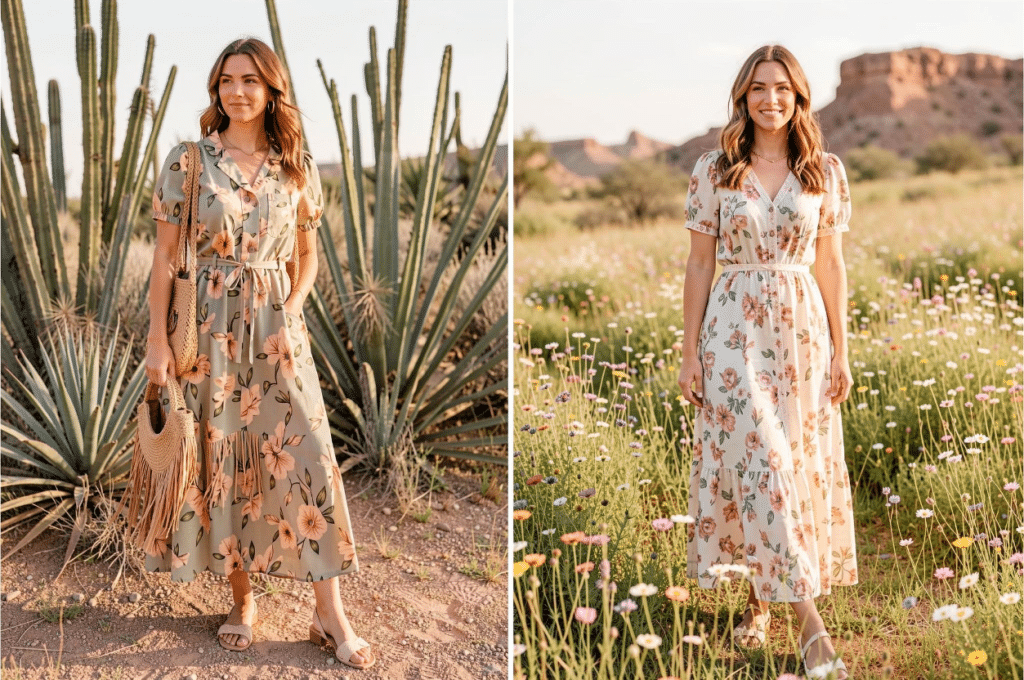
Two Aesthetics That Get Confused Constantly
You save a photo to your “style inspo” board labeled cottagecore, then find the almost identical outfit tagged boho on someone else’s feed a week later. Scroll through enough fashion content and you’ll see “boho floral” and “cottagecore floral” used almost interchangeably — but if you put outfits from each aesthetic side by side, they actually look quite different. Both love florals, both feel romantic and a little nostalgic, and both have surged in popularity in recent years. The difference comes down to where each style draws its inspiration from, and that changes everything from color palette to silhouette to accessories.
Key Takeaways
- Boho = warm, earthy, saturated tones + fringe, suede, layered jewelry
- Cottagecore = soft, muted pastels + ribbon, lace, delicate details
- The same floral dress can be styled either way just by changing accessories
- Color palette is the fastest way to tell the two apart at a glance
Why the Confusion Happens
Both aesthetics reject the polished, structured look of mainstream fast fashion in favor of something softer and more personal. Because they share that underlying rejection of “try-hard” fashion, people often lump them together, even though the actual styling details point in fairly different directions.
What Defines Boho Florals
Boho, short for bohemian, draws its inspiration from a mix of 1970s free-spirit fashion, travel-inspired layering, and natural, earthy materials.
Color Palette
Boho florals tend to lean warm and earthy — rust, terracotta, mustard, deep green, and burnt orange, sometimes mixed with more saturated jewel tones. The florals themselves are often larger and more painterly rather than small and delicate.
Silhouette and Fabric
Loose, flowing silhouettes dominate boho styling — think maxi dresses, wide-leg pants, and layered tops in lightweight, textured fabrics like gauze, linen, or crinkled cotton.
Accessories That Complete a Boho Look
Fringe, suede, leather, layered jewelry, and natural materials like wood and woven straw are all boho staples. Accessories tend to feel a little worn-in and well-traveled rather than crisp and new.
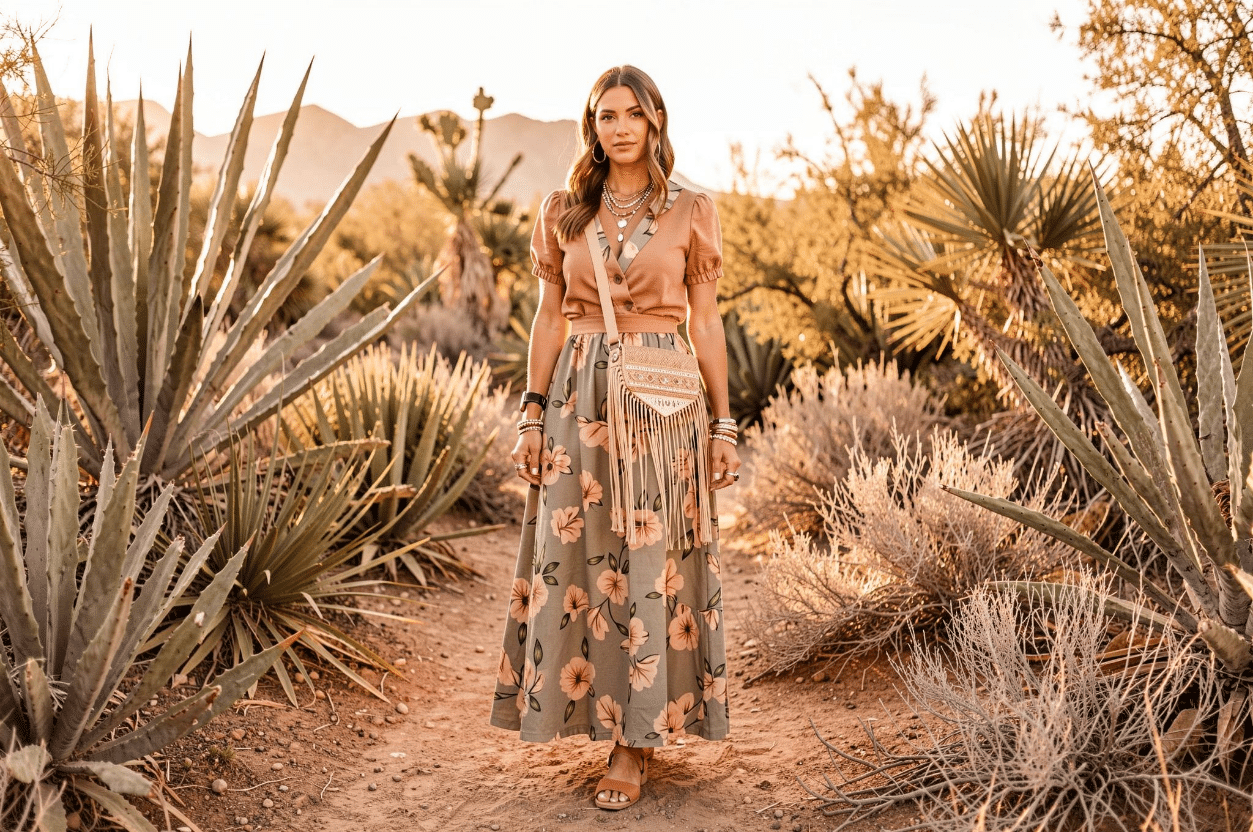
A cottagecore floral outfit styled with soft pastel colors.
What Defines Cottagecore Florals
Cottagecore draws its inspiration from an idealized, romantic vision of countryside life — think meadows, tea gardens, and vintage farmhouse aesthetics.
Color Palette
Cottagecore leans toward soft pastels and muted, dusty tones — sage green, buttery yellow, dusty pink, and cream. The florals are usually smaller and more delicate, closer to a ditsy print than a bold, oversized bloom.
Silhouette and Fabric
Cottagecore favors more structured romantic details — puff sleeves, smocking, gathered waists, and midi-length hems — in softer, lighter fabrics like cotton voile or lightweight jersey.
Accessories That Complete a Cottagecore Look
Mary janes, lace-up flats, delicate hair ribbons, and woven baskets replace boho’s fringe and suede. Where boho feels well-traveled, cottagecore feels more like a curated, storybook version of rural simplicity.
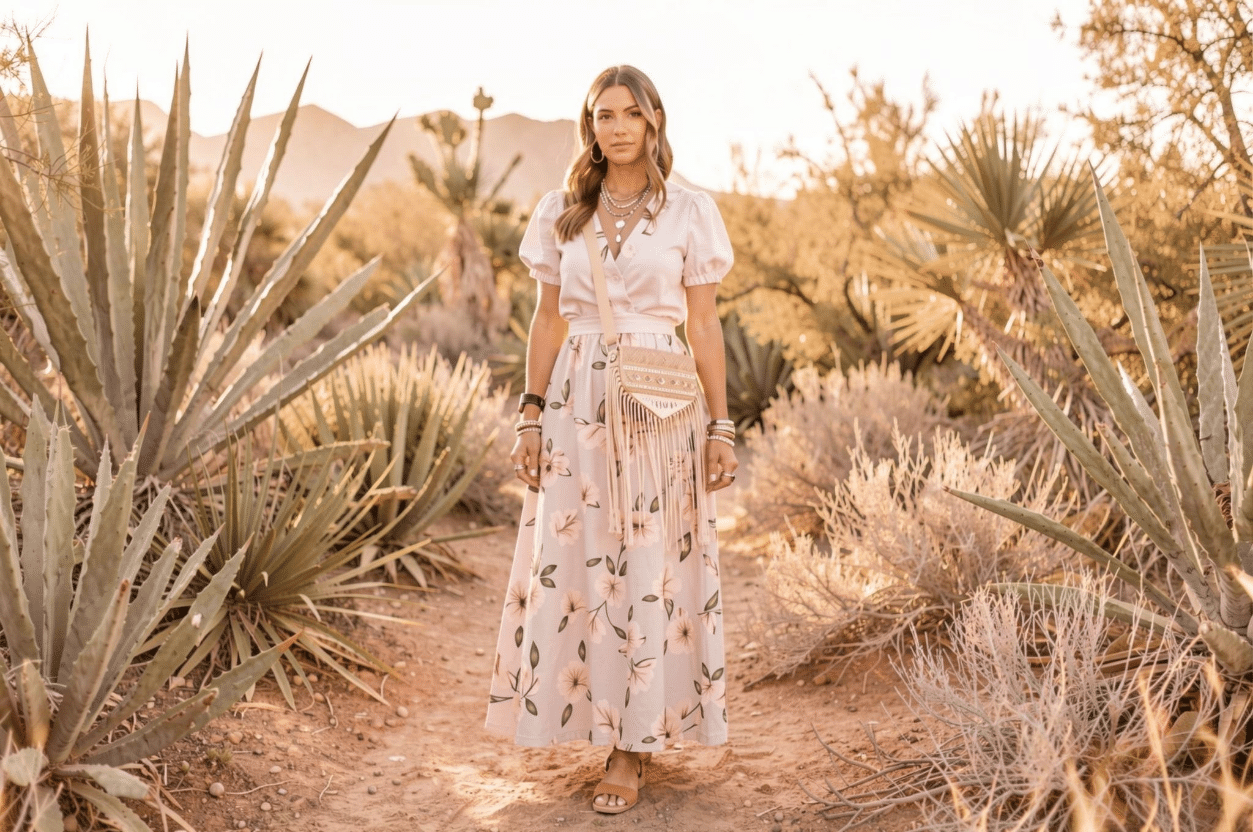
A side-by-side comparison of boho floral and cottagecore floral outfit styling.
Side-by-Side: The Same Print, Two Different Looks
Here’s the part that trips most people up: the exact same ditsy floral print can be styled as either aesthetic, depending on everything around it.
Styled Boho
Same dress, different accessories — here’s the formula for each look:
- Boho formula: Ditsy floral dress + suede fringe bag + layered necklaces + flat leather sandals
Styled Cottagecore
- Cottagecore formula: Same dress + delicate ribbon headband + mary jane flats + small woven basket
“Designer Tip: Don’t buy two wardrobes for two aesthetics. Buy one great floral dress and let your accessories do the styling work.” — Elena M.
Which One Fits Your Existing Wardrobe Better
Rather than picking an aesthetic and buying an entirely new wardrobe around it, it’s worth looking at what you already gravitate toward.
Signs You Lean Boho
If your closet already has a lot of warm, earthy tones, flowing silhouettes, and layered accessories, boho styling will likely feel like a natural extension of what you already wear rather than a costume.
Signs You Lean Cottagecore
If you’re drawn to soft pastels, delicate details, and a more polished, put-together romantic look, cottagecore styling will probably feel more like “you” than boho’s looser, earthier vibe.
Choosing Prints That Work for Both
If you’d rather not commit fully to one aesthetic, a ditsy floral print in a mid-tone palette — not too pastel, not too saturated — gives you the flexibility to style it either direction depending on your mood and the accessories you have on hand, which is one of the reasons this kind of print stays in steady rotation across so many different personal styles.
Shopping Tips for Each Aesthetic
Once you know which direction you lean, a few practical shopping habits help you build the look more intentionally instead of buying pieces at random.
What to Look for When Buying Boho Pieces
Look for natural fibers and textured weaves — linen, gauze, crinkled cotton — and prints with a slightly larger, more painterly floral motif. Earthy, warm-toned prints will layer more easily with the fringe and suede accessories boho styling relies on.
What to Look for When Buying Cottagecore Pieces
Prioritize soft, muted colors and delicate design details — puff sleeves, smocking, gathered waists. A smaller, more evenly repeated floral print (closer to ditsy) tends to fit the cottagecore mood better than a bold, oversized bloom.
How Kids’ Floral Prints Fit Into Both Aesthetics
These two aesthetics aren’t limited to adult fashion — the same style logic applies just as easily to children’s clothing.
Boho-Inspired Kids Styling
A warm-toned floral dress paired with simple sandals and minimal, sturdy accessories translates the boho look into something completely practical for a young child, without any of the delicate materials that don’t hold up to kids’ activity levels.
Cottagecore-Inspired Kids Styling
Soft pastel florals with puff sleeves and mary jane shoes are an easy, ready-made cottagecore look for kids, and this pairing already shows up constantly in children’s clothing because it happens to be both practical and photogenic.
Accessorizing Tips for Everyday Wear
Beyond special-occasion styling, both aesthetics have easy everyday versions that work for a normal day of errands, school pickup, or casual plans.
Boho Everyday Accessories
A simple woven tote, layered thin necklaces, and flat leather sandals bring boho energy to an otherwise simple outfit without requiring a full styled look every day.
Cottagecore Everyday Accessories
A small fabric hair bow, simple ballet flats, and a delicate thin bracelet bring just enough cottagecore softness to a casual outfit without feeling overdone for a regular day.
How Color Temperature Changes the Mood of the Same Print
Beyond accessories, the specific colorway a print comes in can shift which aesthetic it leans toward, even with an identical floral layout.
Warm-Toned Versions
The same floral silhouette printed in rust, mustard, and olive reads distinctly boho, especially paired with earth-toned accessories.
Cool and Muted Versions
That same print layout in sage, dusty rose, and cream shifts toward cottagecore, proving that color temperature alone can move a print between the two aesthetics.
Building a Capsule That Works for Both
If you appreciate elements of both aesthetics, it’s possible to build a small, flexible capsule wardrobe that can lean either direction depending on styling.
Core Pieces to Start With
One or two floral dresses in a mid-tone palette, a knit cardigan, and a pair of simple flats form a flexible base that can be accessorized toward either look.
Swapping Accessories to Shift the Look
Keep one small “boho kit” (fringe bag, layered jewelry) and one small “cottagecore kit” (ribbon, delicate flats) on hand, and you can shift the same core wardrobe between the two aesthetics in minutes.
Seasonal Transitions for Boho and Cottagecore Florals
Neither aesthetic has to be retired once summer ends — both transition into cooler months with the right layering choices.
Taking Boho Into Fall and Winter
Swap sandals for suede ankle boots, add a chunky knit layer, and lean into deeper, richer earth tones to carry boho florals comfortably into fall and winter.
Taking Cottagecore Into Fall and Winter
A cottagecore floral dress layers well under a soft knit cardigan with tights and mary jane-style boots, keeping the romantic, delicate mood intact even in colder weather.
Why These Aesthetics Resonate Beyond Just Fashion
Both boho and cottagecore reflect a broader cultural pull toward slower, more personal, less mass-produced ways of living, which is part of why they’ve stayed relevant well past a typical trend cycle.
A Reaction to Fast, Disposable Fashion
Both aesthetics favor pieces that feel intentional and long-lasting over trend-driven, disposable fashion, aligning naturally with a slower approach to building a wardrobe.
Choosing What Actually Feels Like You
Ultimately, the most useful takeaway isn’t picking a side — it’s noticing which combination of colors, textures, and details genuinely feels like your own style, and building toward that gradually rather than chasing either label as a strict rulebook.
FAQ
Is boho or cottagecore more “in style” right now?
Both aesthetics have stayed consistently popular rather than trading places as trends — they tend to appeal to different personal styles rather than one replacing the other seasonally.
Can I mix boho and cottagecore elements in one outfit?
Yes, many people blend the two intentionally — for example, a cottagecore floral dress with a boho-style woven bag — creating a softer, hybrid look that borrows from both.
What’s the easiest way to tell the two apart at a glance?
Color palette is usually the fastest tell: warm, earthy, saturated tones point to boho, while soft, muted pastels point to cottagecore.
Do I need completely different clothing for each aesthetic?
Not necessarily — the same floral dress can often be restyled between the two looks just by changing accessories, shoes, and layering pieces.
Which aesthetic works better for everyday wear versus special occasions?
Both work well for everyday wear, but cottagecore’s slightly more polished details often translate more easily to dressier occasions, while boho’s relaxed layering tends to suit casual, day-to-day styling.
Final Thoughts
Once you know what to look for, telling boho and cottagecore apart — and mixing them on purpose — gets a lot easier. Which aesthetic do you lean toward? Tell us in the comments!

-
 Price range: $22.38 through $29.07
 -
 Price range: $22.38 through $29.07
 -
 Price range: $22.38 through $29.07
 -
 Price range: $21.43 through $28.17
 -
 Price range: $22.38 through $29.07
 -
 Price range: $22.38 through $29.07
 -
 Price range: $22.38 through $29.07

Recent Comments