
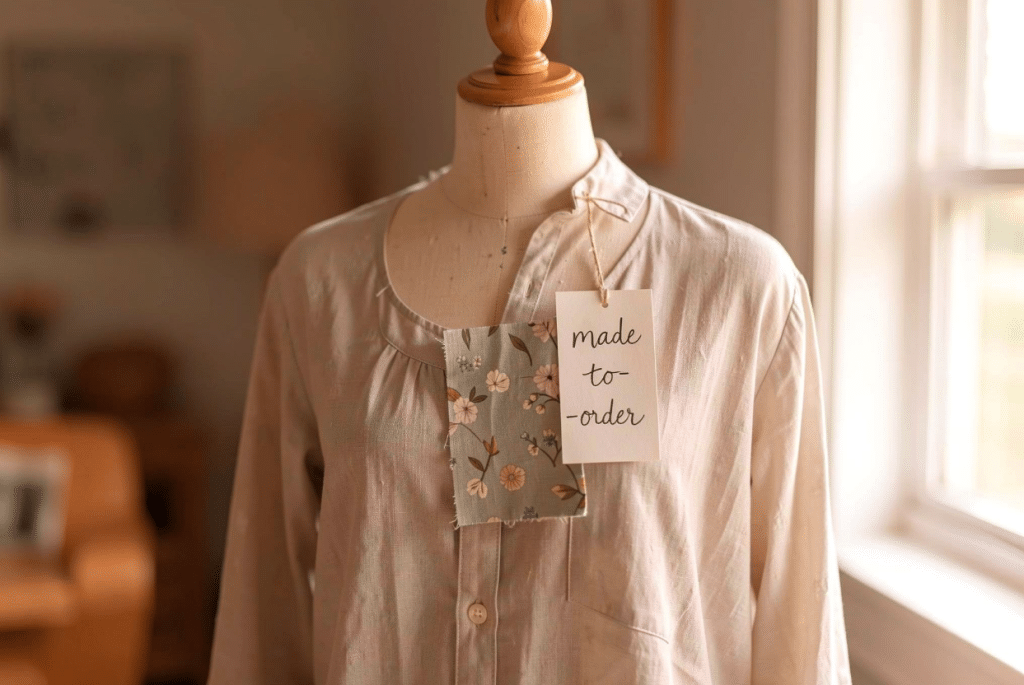
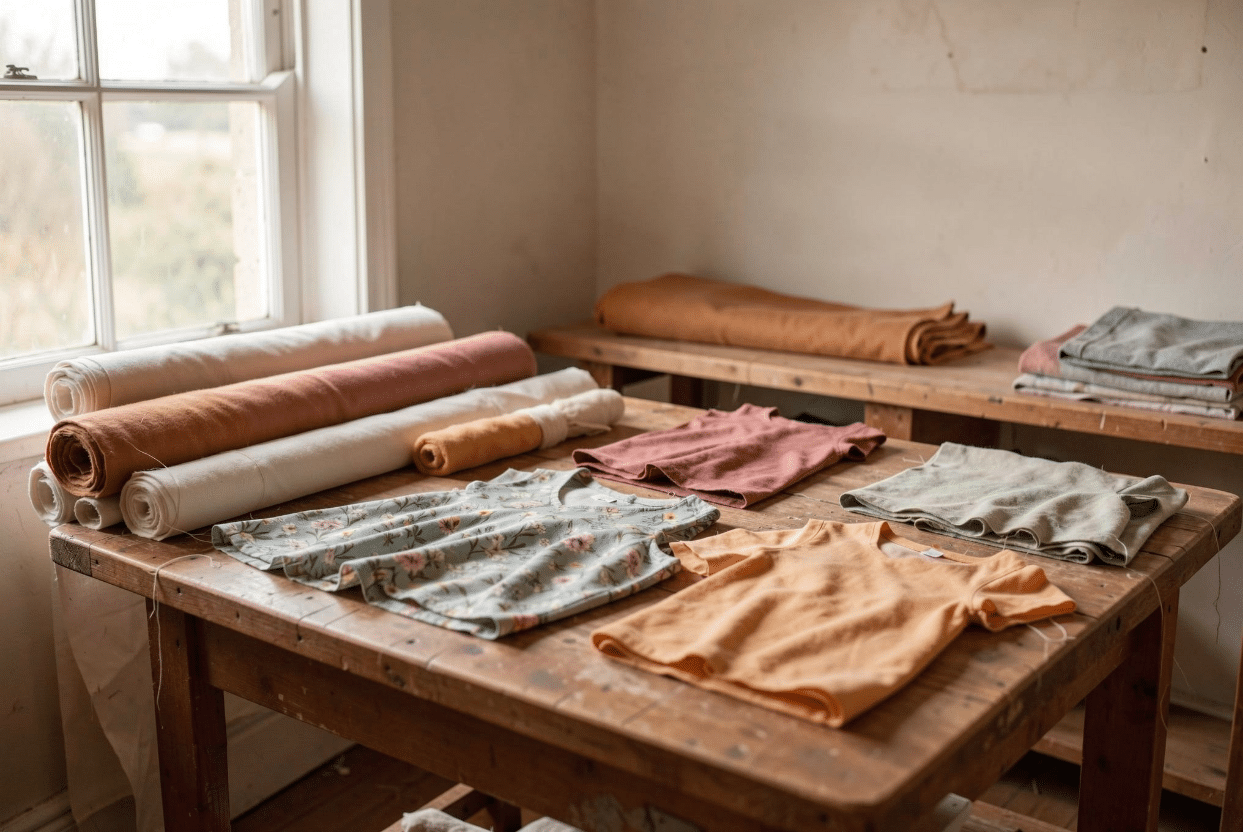
A small-batch made-to-order clothing production workshop.
A Term You’ve Probably Seen Without a Clear Definition
You’ve seen “small batch” stamped on everything from candles to clothing lately, and you’re not entirely sure if it means something real or if it’s just this decade’s version of “artisanal.” “Small batch” and “made-to-order” show up constantly in clothing brand descriptions, but they’re rarely explained in plain terms. If you’ve ever wondered what actually happens differently behind the scenes when a brand uses these words instead of just manufacturing and shipping like everyone else, here’s a clear breakdown.
Key Takeaways
- Small-batch = produced in limited quantities, not mass-manufactured ahead of demand
- Made-to-order = produced specifically after you place your order
- Together they drastically cut unsold inventory and fashion waste
- Expect slightly longer processing time — usually days, not weeks
Why It’s Worth Understanding Before You Shop
Knowing the difference helps you make more informed choices about where your money goes, and it explains a few things that might otherwise be confusing — like why a made-to-order item takes longer to arrive than a similar item from a big retailer.
What Small-Batch Production Actually Means
Small batch production involves creating limited quantities of garments — often as few as ten to twenty pieces per size — rather than manufacturing thousands of identical units at once in a large factory.
How It Differs From Mass Manufacturing
Traditional mass manufacturing produces huge volumes ahead of actual demand, betting on sales forecasts that are often wrong. Small batch production flips that model, producing closer to real demand rather than guessing months in advance.
Why Brands Choose This Model
Smaller production runs allow more attention to construction quality and give a brand the flexibility to adjust designs based on real customer feedback, rather than being locked into a design decision made months before anyone actually saw the finished product.
What Made-to-Order Adds on Top of Small Batch
Made-to-order takes the small-batch idea one step further: instead of producing a small batch speculatively and hoping it sells, the garment isn’t produced at all until a customer actually places an order.
How the Process Works
You place an order, and production begins from that point — meaning your specific size and print combination is manufactured to fill your order rather than pulled from a pre-made stockpile sitting in a warehouse.
Why This Takes Slightly Longer
Because nothing is pre-made, there’s naturally a short production window between ordering and shipping — usually just a matter of days rather than weeks. This is the tradeoff for a system that produces close to zero excess inventory.
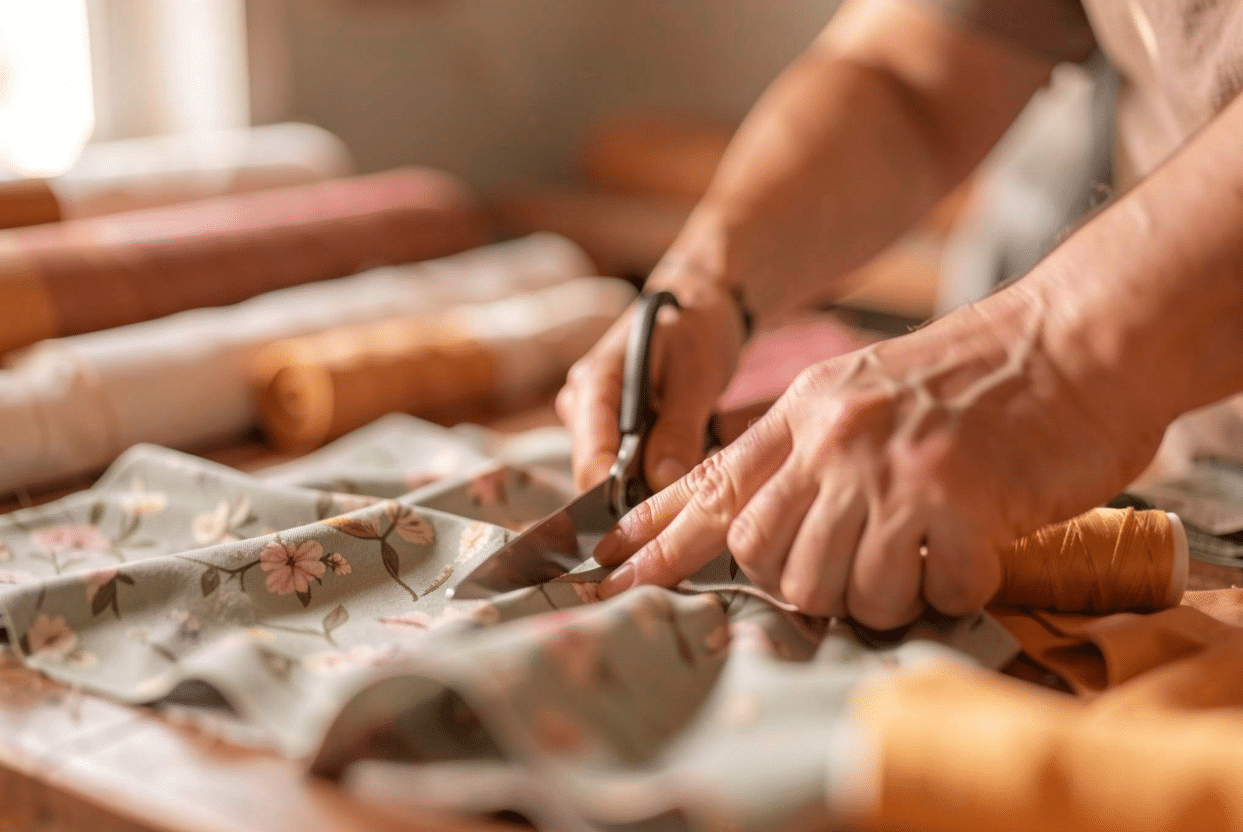
Sustainable small-batch fashion production reducing overproduction.
Why This Matters for the Environment
The scale of overproduction in the fashion industry is genuinely hard to picture, and it’s the main reason small-batch and made-to-order models have gained so much attention.
The Real Numbers Behind Overproduction
Global annual garment production is estimated at somewhere between 80 and 150 billion units, and industry estimates suggest that between 15 and 45 billion garments are destroyed each year without ever being sold — either because they didn’t sell through at full price or were simply overproduced relative to actual demand.
The Transparency Problem
Part of what makes this hard to track is that an estimated 88% of major fashion brands don’t publicly disclose their annual production volumes at all, which makes it genuinely difficult for shoppers to know how much waste sits behind any given garment on a rack.
How Small Batch and Made-to-Order Change the Equation
By producing only what’s actually ordered or in very limited speculative runs, this model essentially removes the unsold-and-destroyed inventory problem from the equation for that portion of production, since there’s rarely leftover stock sitting around waiting to be discounted or discarded.
What This Means for Quality
Beyond the environmental angle, there’s a practical quality difference that often comes with smaller-scale production.
More Attention Per Garment
When a workshop is producing ten pieces instead of ten thousand, there’s naturally more opportunity for quality control and attention to construction details, rather than relying purely on assembly-line speed.
Fewer Design Compromises
Mass production often requires design compromises that make garments easier to manufacture at scale. Smaller runs have more flexibility to prioritize the original design intent over manufacturing efficiency.
What to Expect as a Customer
If you’re ordering from a small-batch or made-to-order brand for the first time, a few things are worth knowing upfront.
Processing Time
Expect a short processing window before your order ships — this is normal and is the direct tradeoff for a lower-waste production model, not a sign of a problem with your order.
Limited Restocks
Because prints and designs are often produced in smaller, sometimes one-time runs, a specific print or style may not be restocked once it sells out, which is different from a big retailer’s typically ongoing availability.
Why We Build Honeh Around This Model
This production approach is the foundation of how our own pieces are made — printed and produced close to when they’re actually ordered, rather than sitting in a warehouse as speculative stock. It’s a big part of why our turnaround takes a little longer than a same-day shipping retailer, and also why we’re comfortable calling our production genuinely low-waste rather than just using the word as a marketing label.
How to Tell If a Brand Is Genuinely Small-Batch
Because “small batch” has become a popular marketing phrase, it’s worth knowing how to tell whether a brand is actually operating this way or simply using the term loosely.
Questions Worth Asking Before You Buy
Does the brand mention specific production quantities or processing timelines? Do they explain what happens to unsold stock? Brands genuinely operating on this model are usually fairly transparent about production timing, since it’s a real operational detail rather than just a slogan.
Red Flags That Suggest Otherwise
“Designer Tip: If a brand can restock every print instantly and ship same-day on everything, ask yourself how ‘small batch’ that really is.” — Elena M.
These are signs that “small batch” may be used more as a marketing term than an accurate description of how the clothing is actually made:
- Instant, same-day shipping on every single item
- Unlimited restocks of every print
- Vague language without any real explanation of the production process
The Bigger Picture: Why Production Model Matters as Much as Materials
Sustainable fashion conversations often focus heavily on materials — organic cotton, recycled fibers — but the production model itself is just as significant a factor.
Materials Alone Don’t Tell the Whole Story
A garment made from perfectly sustainable organic cotton still has a real environmental cost if it’s mass-produced speculatively and ends up unsold and destroyed. Material choice and production model are two separate variables, and both matter.
Why Overproduction Is Often the Bigger Issue
Given that an estimated 15 to 45 billion garments are destroyed annually without ever being sold, addressing how much gets produced in the first place may have as much impact as what any single garment is made from.
A Brief Look at How Mass Production Became the Default
Understanding how the fashion industry got to its current overproduction problem helps explain why small-batch and made-to-order models feel like such a meaningful shift.
The Rise of Fast Fashion Cycles
Over the past few decades, fashion shifted from a handful of seasonal collections per year to a nearly constant stream of new styles, which pushed brands toward producing in large volumes to keep up with the pace.
Why Speed Became More Important Than Precision
In that model, getting new styles to market quickly became more important than accurately predicting demand, which is part of why overproduction became such a structural, industry-wide issue rather than an occasional mistake.
What Happens to Overproduced Stock
Unsold inventory doesn’t just disappear — it typically follows one of a few predictable paths, none of which are especially good outcomes.
Discounting and Clearance
Marked-down clearance sales are the most visible outcome, but even steep discounts don’t always clear all the excess stock produced.
Landfill and Destruction as a Last Resort
Stock that doesn’t sell even at clearance prices is often destroyed rather than donated, partly due to brand protection concerns and the cost of managing leftover inventory long-term.
How to Support This Model as a Shopper
A few small shifts in shopping habits help support small-batch and made-to-order brands in a way that actually makes a difference.
Planning Purchases Ahead of Need
Because made-to-order pieces take a short production window, ordering a little ahead of when you actually need an item (rather than last-minute) supports this model without adding stress to your own timeline.
Valuing Availability Less Than Fit and Quality
Getting comfortable with a favorite print occasionally selling out, rather than expecting infinite ongoing restocks, is part of what makes this lower-waste model work in the first place.
Common Misconceptions About Made-to-Order Fashion
A couple of misunderstandings come up often enough that they’re worth addressing directly.
“It Means Fully Custom-Designed”
Made-to-order usually means an existing design is produced specifically for your order, not that the design itself is created from scratch for you individually, though some brands do offer additional customization on top of a base design.
“It’s Always More Expensive Than Fast Fashion”
While per-unit costs can be higher without mass-production economies of scale, the comparison often overlooks that fast fashion’s low price frequently reflects a shorter garment lifespan, meaning the real cost-per-wear can end up fairly similar or even favor the better-made piece.
FAQ
Is made-to-order clothing more expensive than mass-produced clothing?
It can be, since smaller production runs don’t benefit from the same economies of scale, but the price often reflects better construction quality and near-zero unsold inventory rather than pure markup.
How long does a made-to-order item usually take to ship?
This varies by brand, but it’s typically a matter of days for production, plus standard shipping time — noticeably longer than an item already sitting in a warehouse, but far from a lengthy custom-order wait.
Is small-batch clothing always sustainable?
Not automatically — it depends on the specific materials and processes used, but it does remove one of the biggest sources of fashion waste: unsold inventory that ends up destroyed.
Why can’t I always restock my favorite print?
Small-batch and made-to-order brands often run limited or seasonal print offerings rather than an unlimited ongoing catalog, which means a specific print may not return once its run ends.
Does made-to-order mean the item is custom-designed for me?
Not usually — it typically means an existing design is produced specifically to fill your order, rather than fully custom design work, though some brands do offer additional customization options.
Final Thoughts
Once you know what to look for, it’s easy to spot the difference between a real small-batch brand and a marketing label. Does knowing how a piece is made change how you shop? Let us know in the comments!

-
 Price range: $22.38 through $29.07
 -
 Price range: $22.38 through $29.07
 -
 Price range: $22.38 through $29.07
 -
 Price range: $21.43 through $28.17
 -
 Price range: $22.38 through $29.07
 -
 Price range: $22.38 through $29.07
 -
 Price range: $22.38 through $29.07


Recent Comments