

If you’ve ever added something to your cart on a small, made-to-order brand’s website and been surprised to see “ships in 1–2 weeks” instead of the next-day delivery you’re used to from bigger retailers, you’re not alone — it’s one of the most common points of confusion for first-time customers. This guide breaks down what actually happens between placing a made-to-order order and it landing on your doorstep, why the timeline looks the way it does, and how to plan around it so it never catches you off guard. We’ll also cover how made-to-order compares to ready-to-wear and pre-order, what actually affects your specific timeline, and what your options are if a deadline is genuinely tight.
What “Made-to-Order” Actually Means for Shipping Time
The Order Isn’t Sitting In a Warehouse
The core difference between made-to-order and traditional retail is right there in the name: nothing exists yet when you place the order. There’s no warehouse shelf holding your exact size and color combination, ready to be pulled and boxed the same afternoon. Instead, your specific order triggers the actual production of that specific garment.
Production Starts After You Click “Buy”
Once an order comes in, it typically enters a production queue — fabric gets printed or sourced, the pattern gets cut, the piece gets sewn, finished, and quality-checked, all after your purchase rather than months in advance. That sequence simply takes real time, regardless of how efficient the brand’s process is.
Key Takeaways
- Made-to-order production starts after you place your order, not before — there’s no pre-made inventory sitting in a warehouse.
- Typical made-to-order timelines range from about 3 days for simple basics to 2–3 weeks for more complex or personalized pieces.
- Made-to-order, ready-to-wear, and pre-order are three different models with very different shipping expectations.
- Ordering with extra lead time for gifts and holidays avoids most of the stress associated with the longer wait.
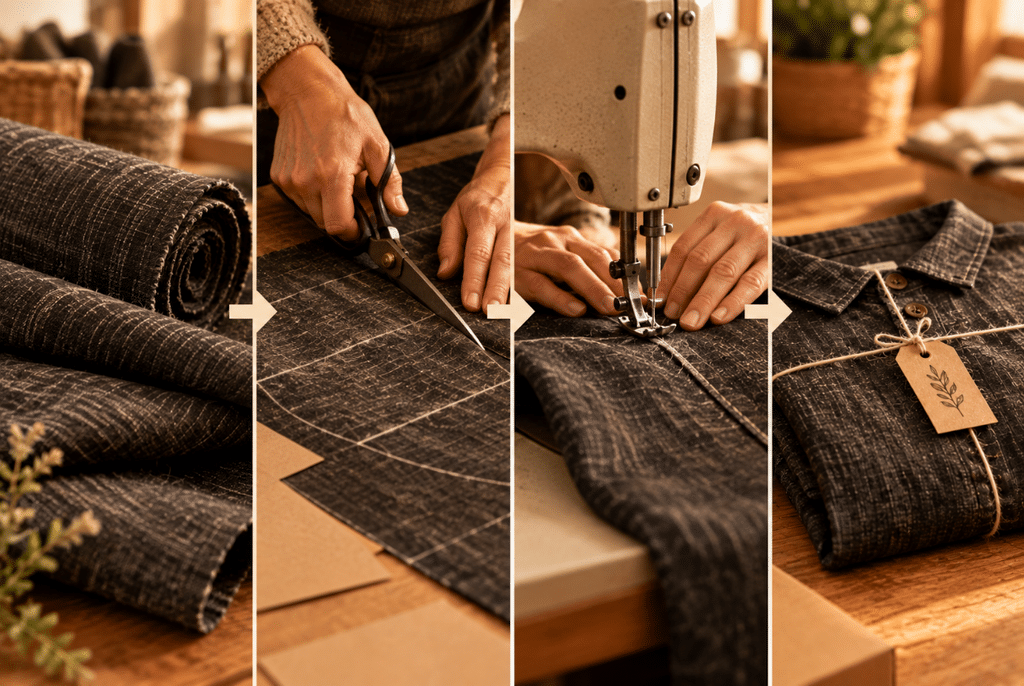
A garment being produced after an order is placed, the core of made-to-order clothing.
Typical Made-to-Order Timelines by Product Type
Simple Printed Basics
A straightforward printed t-shirt or basic jersey piece is usually the fastest made-to-order category, often shipping within about 3 to 7 business days, since the production process involves fewer steps — print the fabric, cut, sew, done.
More Complex Garments
A dress, a tailored piece, or anything involving multiple fabric panels, linings, or closures generally takes longer — commonly 1 to 2 weeks — simply because there are more construction steps and more opportunities where careful quality control matters.
Customized or Personalized Pieces
Anything involving a custom size, a personalized detail like embroidered initials, or a fully custom print combination typically sits at the longer end of the range, sometimes 2 to 3 weeks, since these pieces can’t be batched together with identical orders the way a standard size and print can.
Made-to-Order vs. Ready-to-Wear vs. Pre-Order: What’s the Difference?
Ready-to-Wear
Ready-to-wear pieces are already fully produced and sitting in inventory before you ever place an order, which is why they ship the fastest — usually within a day or two. The tradeoff is that this model requires the brand to guess how much of each size and color to produce in advance, which is exactly the overproduction problem made-to-order was designed to avoid.
Made-to-Order
As covered above, made-to-order pieces are produced specifically in response to your order, which takes longer but eliminates the guesswork (and the resulting unsold inventory) that ready-to-wear production requires.
Pre-Order
Pre-order is a slightly different model where a batch of a specific item is produced only once enough people have committed to buying it, usually by a set date. Pre-order timelines tend to be the least predictable of the three, since your shipping date depends partly on how quickly the pre-order period fills, not just on production time.
“The fastest shipping option and the most sustainable one are almost never the same option. Made-to-order asks you to trade a few extra days for a garment that was never gambled on in bulk before you wanted it.” — Elena M.
Comparing shipping timelines for made-to-order, ready-to-wear, and pre-order clothing.
Why Made-to-Order Takes Longer Than Overnight Shipping
No Bulk Inventory to Pull From
Fast shipping from a large retailer is only possible because of an enormous amount of pre-produced inventory sitting in distribution centers, ready to be picked and packed within hours of an order coming in. Made-to-order deliberately skips that step, which is the whole point — but it also means there’s no shortcut around the actual production time. Even the most efficient small production team is ultimately bound by how long it physically takes to cut, sew, and finish a garment by hand or on a small-batch machine, which is a fundamentally different constraint than picking an item off a shelf.
Quality Control Takes Time
Each made-to-order piece typically gets checked individually rather than being one unit sampled from a batch of thousands, which adds a small amount of time but generally results in fewer sizing and construction issues reaching the customer. The full reasoning behind why this tradeoff is usually worth it is covered in our guide to why made-to-order clothing is worth the wait.

Quality control inspection of a finished made-to-order garment.
How to Plan Around a Made-to-Order Timeline
Order Early for Gift-Giving and Holidays
The single biggest source of made-to-order frustration is ordering too close to a deadline — a birthday, a holiday, a specific event date. Building in the full estimated production window, plus standard shipping time on top, avoids the most common source of last-minute stress with this shopping model.
Check the Estimated Ship Date Before Checkout
Most made-to-order brands display an estimated production or ship time somewhere on the product page or at checkout — it’s worth actually reading that estimate rather than assuming standard retail shipping speed, since the two can differ by a week or more.
This is exactly why we at Honeh show an estimated ship window on every product page rather than a generic “shipping” note — knowing roughly what to expect up front avoids most of the frustration that comes from assuming a made-to-order piece will move at ready-to-wear speed.
What Happens If You Need It Faster
Contacting the Brand Directly
Many small, made-to-order brands can accommodate a rush request if you reach out directly and explain the deadline, especially for simpler pieces — it never hurts to ask, even if a rush isn’t explicitly advertised as an option. Some brands even keep a small buffer of finished popular sizes on hand specifically for this kind of request, even though they market themselves as fully made-to-order.
Choosing a Ready-to-Wear Alternative for Tight Deadlines
If a deadline genuinely can’t accommodate a made-to-order timeline, it’s usually more realistic to choose a ready-to-wear piece for that specific occasion and save the made-to-order purchase for a date with more flexibility, rather than risk a late delivery.
A ready-to-wear clothing rack as a faster alternative for tight deadlines.
Is the Wait Actually Worth It?
What You’re Actually Trading Time For
The extra few days or weeks aren’t just an inconvenience with no upside — they’re the direct result of a production model that doesn’t generate the kind of unsold inventory covered in our guide to the hidden cost of overproduction in fashion, and it avoids the environmental tradeoffs discussed in what print on demand actually means for the planet.
Setting Realistic Expectations From the Start
Ultimately, the wait feels far less frustrating once you know what to expect going in — most of the negative made-to-order experiences people describe online come from a mismatch between expectation (next-day shipping) and reality (a week or two of production), not from the wait itself being unreasonable. A quick scan of a brand’s shipping policy before checkout takes less time than reading a single product review, and it consistently prevents the most common source of made-to-order disappointment.
A calendar marking realistic delivery expectations for a made-to-order order.
Factors That Can Affect Your Specific Timeline
Seasonal Demand Spikes
Made-to-order production queues get longer around predictable high-demand periods — the weeks before major holidays, back-to-school season, and any sale event that drives a sudden spike in orders. Ordering slightly earlier than usual during these windows helps avoid landing at the back of a longer-than-normal queue.
Fabric and Print Availability
If a specific print or fabric needs to be sourced or printed fresh rather than pulled from stock already on hand, that can add a few extra days to the estimate, particularly for a newly launched design that hasn’t been produced before.
Custom Sizing Requests
A fully custom size, outside a brand’s standard size chart, generally takes longer than a standard size within the normal range, since it usually requires an adjusted pattern rather than simply cutting from an existing one.
Domestic vs. International Shipping Considerations
Production Time vs. Transit Time
It’s worth separating “how long it takes to make” from “how long it takes to travel” — the production window covered throughout this guide is separate from standard shipping transit time once the piece is actually finished and handed off to a carrier, and international orders naturally add extra transit days on top of the production estimate.
Customs and Import Considerations
International orders can occasionally be held at customs, which is outside a brand’s direct control and worth factoring into the timeline as a small additional buffer, especially for a time-sensitive gift crossing international borders.

An international shipping package going through customs and import processing.
How to Track a Made-to-Order Order
Understanding Order Status Stages
Most made-to-order brands break the process into visible stages — something like “order received,” “in production,” “quality check,” and “shipped” — which gives a clearer picture of where your specific piece is than a generic “processing” label would. Checking in on that status periodically is usually more reassuring than emailing to ask for an update every few days.
When to Actually Reach Out
If your order status hasn’t moved at all well past the original estimated window — not just a day or two late, but genuinely stalled — that’s a reasonable point to reach out directly rather than continuing to wait indefinitely.
Comparing Made-to-Order Wait Times Across Small Brands
Why Estimates Vary So Much Brand to Bran
Two brands both calling themselves “made-to-order” can have very different actual timelines depending on their production setup — an in-house sewing team versus an outsourced manufacturing partner, a single product line versus dozens of styles in rotation, and how much of their own fabric printing or sourcing they handle internally.
What to Look for Before You Buy
A brand that’s transparent about its estimated production window — stating it clearly on the product page rather than burying it in a shipping policy page — is generally a better sign of a well-run made-to-order operation than one that stays vague about timing until after you’ve already paid. Even a rough range — “usually ships within 5–7 business days” — is far more useful to a shopper than no information at all.
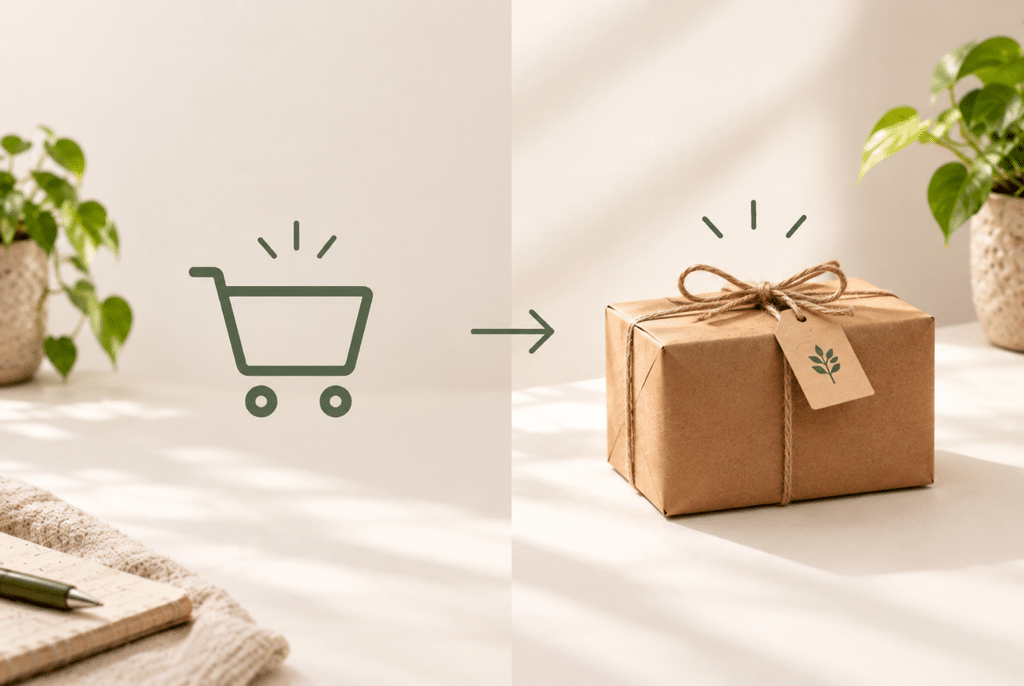
A shopper checking the estimated ship date before buying made-to-order clothing.
What This Timeline Means for Returns and Exchanges
Sizing Exchanges Take Extra Time Too
Because a made-to-order piece wasn’t pulled from existing stock, a size exchange effectively means starting a brand-new production cycle for the replacement size, rather than simply swapping one already-made item for another. Reviewing the brand’s size chart carefully before ordering helps avoid needing an exchange in the first place. If sizing feels uncertain, reaching out to ask before ordering is almost always faster than waiting through a full second production cycle for an exchange.
Why Some Made-to-Order Brands Limit Returns
Because each piece is produced specifically for one customer’s order, some made-to-order brands have more limited return policies than a traditional retailer would, simply because a returned made-to-order item is much harder to resell as new compared to a mass-produced piece pulled from a warehouse shelf.
Setting the Right Expectations From Day One
Read the Fine Print Once, Not the Whole Order
Taking thirty seconds to check a brand’s stated production window before checking out saves far more frustration than any customer service interaction could fix after the fact. It’s a small habit that makes the entire made-to-order shopping experience noticeably smoother.
Treat the Wait as Part of the Value, Not a Flaw
Reframing the wait as part of what you’re actually paying for — a garment made specifically for you, without contributing to unsold inventory — tends to make the whole experience feel less like a delay and more like a deliberate tradeoff you chose to make.
Tell Us What You Think
Has a made-to-order timeline ever caught you off guard, or do you plan around it now? Tell us about your experience in the comments.
FAQ
How long does made-to-order clothing typically take to ship?
It varies by complexity — simple printed basics often ship in about 3 to 7 business days, while more complex or fully customized pieces can take 1 to 3 weeks before they even leave for shipping.
Why does made-to-order take longer than regular online shopping?
Because production only starts after you place your order, rather than the item already sitting finished in a warehouse ready to be shipped immediately.
Is made-to-order the same as pre-order?
No — made-to-order production begins as soon as you place your individual order, while pre-order typically waits until a set date or until enough orders accumulate before a batch goes into production.
Can I request rush production on a made-to-order item?
Many small brands can accommodate a rush request if you contact them directly and explain your deadline, though it isn’t always guaranteed, especially for more complex pieces.
How far in advance should I order a made-to-order gift?
A safe rule of thumb is to add the brand’s stated production window to standard shipping time, then order at least a few extra days beyond that total to account for any unexpected delays.
Does international shipping add extra time to a made-to-order order?
Yes — international orders add standard transit time on top of the production window, and can occasionally be held briefly at customs, which is worth factoring in as an additional buffer. None of this is within a brand’s control once the package leaves their hands, which is why the estimate you see at checkout almost always covers production time only, not the full door-to-door delivery window.
Is the longer wait for made-to-order actually worth it?
For most shoppers, yes — the wait reflects a production model that avoids the unsold inventory and overproduction problems common in traditional fast fashion, in exchange for a few extra days or weeks.

-
 Price range: $22.38 through $29.07
 -
 Price range: $22.38 through $29.07
 -
 Price range: $22.38 through $29.07
 -
 Price range: $21.43 through $28.17
 -
 Price range: $22.38 through $29.07
 -
 Price range: $22.38 through $29.07
 -
 Price range: $22.38 through $29.07


Recent Comments