
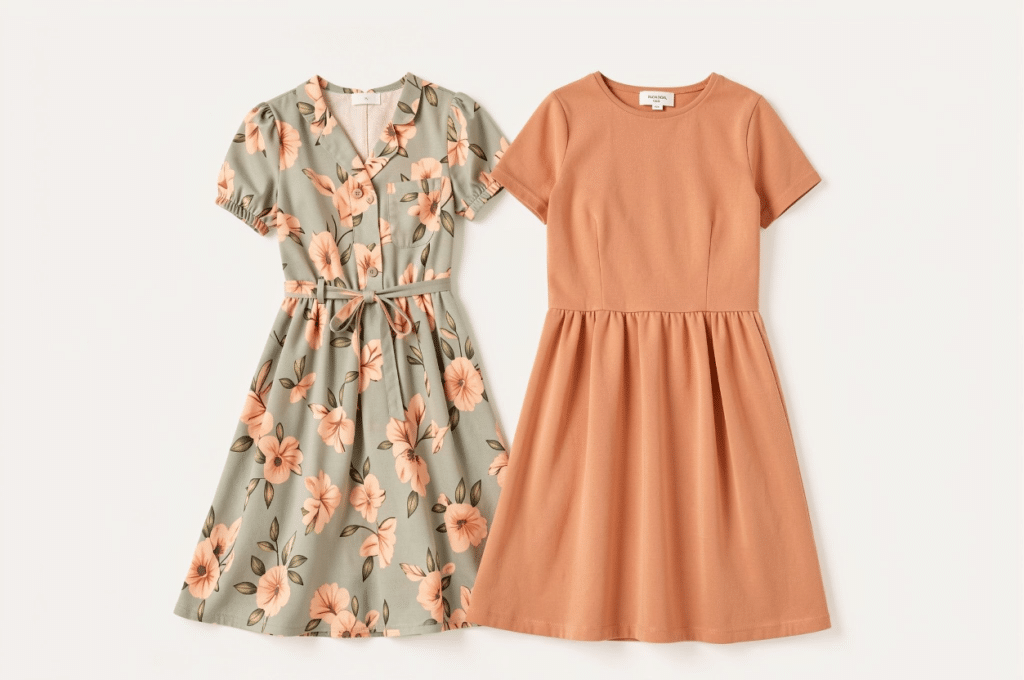
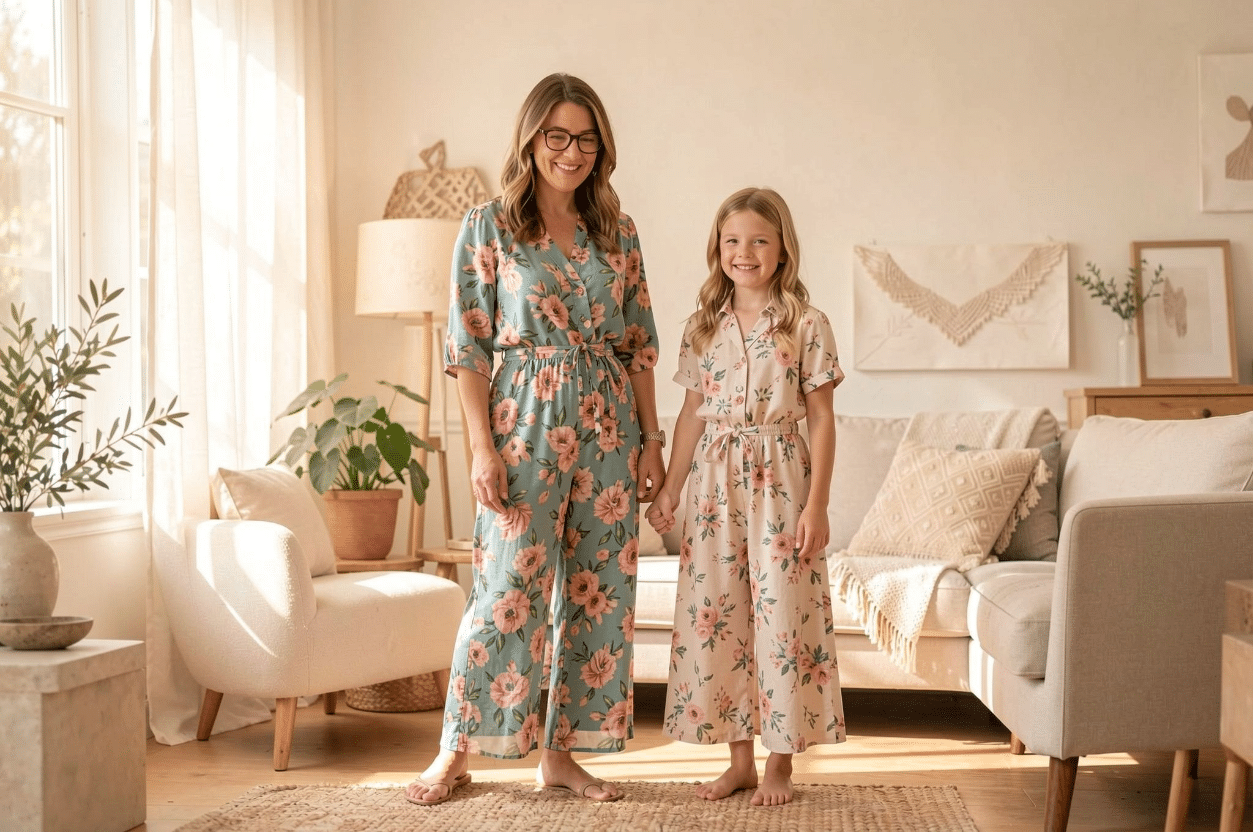
A mother and daughter in coordinating outfits that share one color palette.
The Problem With Buying Matching Sets Every Time
You’ve bought the matching set for the pumpkin patch, the matching set for the beach, and the matching set for the holiday card — and somewhere in your closet is a small graveyard of sets your daughter wore exactly once. Mommy-and-me matching sets are everywhere, and they’re genuinely adorable, but if you buy a brand new identical set for every occasion, the cost adds up fast and most of those pieces only get worn once or twice before they’re outgrown or the moment has passed. There is a smarter way to build a coordinating wardrobe and if you are wondering how to coordinate mommy and me outfits without matching, you are in the right place.
Key Takeaways
- Coordinate with one shared element instead of buying identical matching sets
- Build around a small, shared color palette that mixes and matches
- Invest in a few versatile “anchor” pieces rather than one-off sets
- Save true matching sets for the occasions that really call for them
Why Subtle Mommy and Me Outfits Make More Sense Long Term
A wardrobe built around coordinating pieces rather than identical matching sets gives you far more outfit combinations from fewer total items and it adapts more easily as your child grows out of individual pieces at their own pace.
Identical matching outfits can read as a costume rather than an intentional style choice, especially in photos.
Subtle mommy and me outfits, like a floral dress for one and a solid color in one of the print’s accent shades for the other, create a more sophisticated, put together look.
How to Coordinate Mommy and Me Outfits without Matching
The single biggest shift is moving away from identical outfits and toward pieces that share just one element: a color, a print, or a fabric.
Pick just one shared element per outfit: the same print in different silhouettes, the same color family in different prints, or the same fabric type across otherwise different garments.
This one rule does most of the work in making outfits feel cohesive without needing to shop for exact matches.
Why Coordinating Looks More Polished Than Matching
Identical matching outfits can read as a costume rather than an intentional style choice, especially in photos.
Coordinating pieces, like a floral dress for one and a solid color in one of the print’s accent shades for the other, create a more sophisticated, put-together look.
The One-Element Rule
Pick just one shared element per outfit: the same print in different silhouettes, the same color family in different prints, or the same fabric type across otherwise different garments.
This one rule does most of the work in making outfits feel cohesive without needing to shop for exact matches.
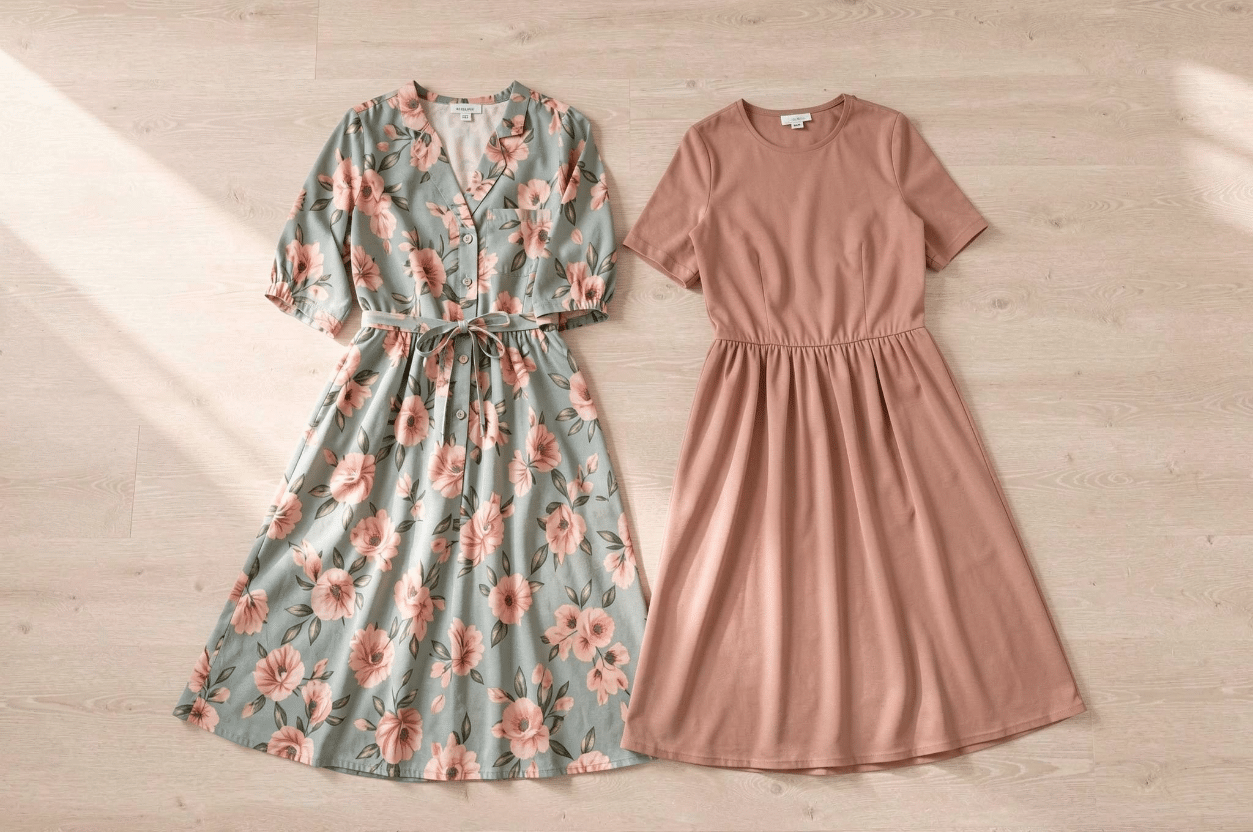
A coordinated color palette used to build a mommy and me wardrobe.
Build Around a Small Shared Color Palette
Rather than buying matching sets for every event, choose two or three colors that show up across both your and your child’s wardrobes, and build new pieces around that existing palette.
A palette that includes at least one warm neutral (cream, tan, or rust) alongside a couple of accent colors gives you the most flexibility across seasons.
Before buying anything new, lay out what’s already in both closets and look for natural overlaps in color.
Choosing a Palette That Works Year-Round
A palette that includes at least one warm neutral (cream, tan, or rust) alongside a couple of accent colors gives you the most flexibility across seasons and occasions, rather than a palette that only works for one specific event or season.
Auditing What You Already Own
Before buying anything new, lay out what’s already in both closets and look for natural overlaps in color.
You’ll often find you’re closer to a coordinated wardrobe than you think, just by rearranging existing pieces.
Building a Mom and Toddler Matching Wardrobe with Anchor Pieces
“Designer Tip: One well-chosen floral dress in a versatile color palette will out-coordinate five one-off matching sets — because it can be restyled with whatever your child already owns.” — Elena M.
Rather than single-use matching sets, choose a small number of versatile pieces that can be restyled into multiple different coordinated looks.
A floral dress in a versatile print and a mid-tone color palette can be paired with several different solid-color pieces for your child.
One well-chosen floral dress for you creates several coordinated looks from a fraction of the pieces a full matching-set approach would require.
Building a Capsule Wardrobe for Busy Women
What Makes a Piece a Good Anchor
A floral dress in a versatile print and a mid-tone color palette can be paired with several different solid-color pieces for your child, rather than needing an exact matching counterpart every time.
Getting More Mileage From Each Piece
One well-chosen floral dress for you, paired with two or three different solid-color pieces for your child across different occasions, effectively creates several coordinated looks from a fraction of the pieces a full matching-set approach would require.
Save Matching Sets for the Moments That Matter
This doesn’t mean matching sets are never worth it.
For a handful of key occasions (a family photo session, a special holiday), a genuine matching set can be worth the investment specifically because it’s reserved for something memorable.
Reserve true matching sets for photographed, once-a-year type occasions and rely on coordinating pieces for regular, everyday wear.
Choosing Which Occasions Are Worth It
Reserve true matching sets for photographed, once-a-year type occasions and rely on coordinating (not matching) pieces for regular, everyday coordination.
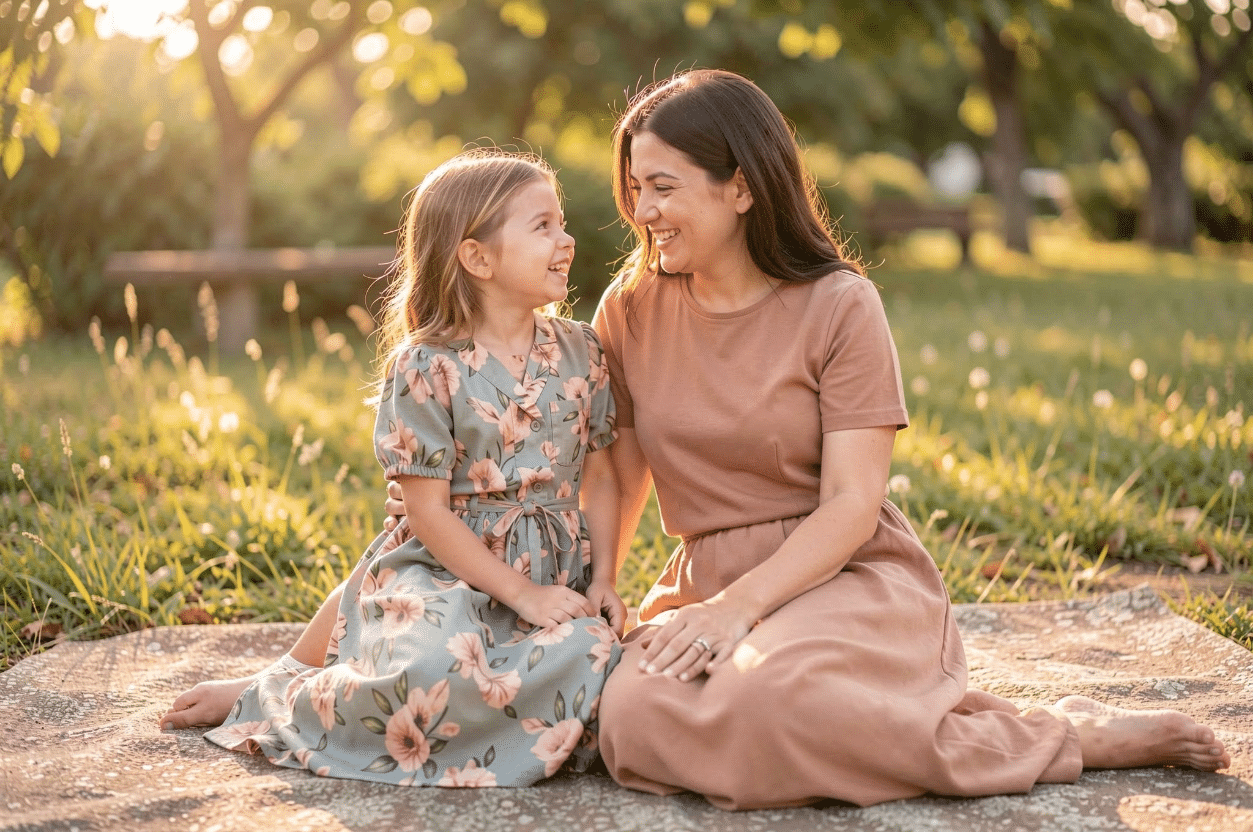
Made-to-order coordinating pieces for a mommy and me wardrobe.
Why Made-to-Order Pieces Fit This Approach Well
Because made-to-order pieces are produced in the exact print and size you choose rather than pulled from limited pre-made matching sets, it’s easier to build a genuinely coordinated look by picking complementary prints and colors across separate individual pieces.
„Shop our made-to-order kids fashion“
A Simple Checklist Before You Buy
If it checks all three boxes, it’s genuinely building toward a coordinated wardrobe rather than adding a one-off piece:
- Shares at least one element with something already owned
- Works across more than one occasion
- Fits within your existing color palette
Seasonal Coordination Ideas Throughout the Year
A coordinated wardrobe approach works differently depending on the season:
-
Spring and Summer: Lean into lighter, brighter shared colors and simple floral prints that work well in warm weather.
-
Fall and Winter: Shift the shared color palette toward warmer, richer tones, and use layering pieces like cardigans in a shared color.
Budgeting for a Coordinated Wardrobe
Building a coordinated wardrobe over time makes the whole approach more sustainable.
Spend on the most versatile anchor pieces first before adding more specific, occasion-only pieces to the mix.
Because made-to-order pieces tend to stay in a wardrobe longer, they often work out to better value over time than frequently replaced fast-fashion matching sets.
Prioritizing Versatile Pieces First
Spend on the most versatile anchor pieces first, the ones that can be restyled into the most different combinations, before adding more specific, occasion-only pieces to the mix.
When Made-to-Order Saves You Money Long-Term
Because made-to-order pieces are produced to order rather than discounted-and-replaced seasonally, they tend to stay in a wardrobe longer, which often works out to better value over time than frequently replaced fast-fashion matching sets.
Coordinating for Special Occasions Beyond Photos
Photo sessions aren’t the only time coordinated outfits come in handy, a few other occasions are worth planning for too.
Birthdays and Family Gatherings
A shared color palette (rather than a full matching set) works well for birthday parties and family gatherings, giving a coordinated feel without looking like a costume for a casual event.
Holiday Coordination Ideas
For holidays, a shared color in the accessories or a small seasonal detail (like a specific accent color) ties outfits together without needing an entirely new matching set for every single holiday on the calendar.
Involving Your Child in the Process
Coordinated dressing goes more smoothly when a child feels like they have some say in the outcome.
Pre-select two coordinating options that both work with your outfit, and let your child choose between them.
A child who feels involved is generally far more willing to actually wear the outfit without a fight.
Letting Them Pick Between Two Approved Options
Pre-select two coordinating options that both work with your outfit and let your child choose between them.
This preserves the coordination while still giving them a genuine choice.
Why This Reduces Morning Battles
A child who feels involved in choosing their outfit is generally far more willing to actually wear it without a fight, compared to being told exactly what to put on with no input at all.
Storing and Organizing Coordinated Pieces
A little organization makes it much easier to actually put coordinated outfits together quickly, rather than searching through two full closets each time.
Grouping by Color Palette
Grouping pieces by color family, rather than by garment type alone, makes it faster to spot which items pair well together when you’re getting dressed.
Keeping Track of What Pairs With What
A simple photo log on your phone of outfit combinations that worked well previously saves time re-figuring out pairings each time you want to coordinate.
Where to Find Inspiration for New Combinations
Once you’re building a coordinated wardrobe intentionally, a little ongoing inspiration helps keep new combinations feeling fresh.
Following Real Families, Not Just Staged Sets
Real families styling coordinating (not identical) outfits day to day often provide more realistic, repeatable inspiration than heavily staged matching-set product photography.
Saving Ideas for Future Seasons
Keep a simple folder of outfit combinations and color palettes that worked well, so you’re not starting from scratch each time a new season or occasion comes around.
Handling Growth Spurts Without Breaking the System
Kids grow unpredictably, which can disrupt a carefully built coordinated wardrobe if you’re not planning around it a little.
Buying With Some Room to Grow
Choosing pieces with a little extra room, or in adjustable styles, extends how long a specific coordinating piece stays usable, reducing how often you need to replace a key anchor item.
Rotating in New Pieces Gradually
Rather than replacing an entire coordinated wardrobe at once when a growth spurt hits, swap in one or two new pieces at a time that still fit within your existing shared color palette.
FAQ
Are non cheesy mommy and me outfits easier to style?
Yes, subtle mommy and me outfits coordinated separately usually offer more long term value and outfit flexibility, while true matching sets are worth reserving for special, photographed occasions.
How do I know if two prints or colors coordinate well?
Look for a shared color between the two pieces, even if the prints themselves are different. That shared color is usually enough to visually tie the outfits together.
What if my child refuses to wear anything that matches mom?
Coordinating rather than matching often solves this too. Because the pieces do not look identical, many kids are more willing to wear a coordinating solid color than an exact copy of a parent’s outfit.
How do I build a matching mom and toddler capsule wardrobe?
A handful of versatile anchor pieces in a shared color palette, mixed and matched, can realistically create more outfit combinations than several one off matching sets.
Does this approach work for more than two people coordinating?
Yes, the same one shared element principle scales to a whole family. It is just worth keeping the shared element (usually color) consistent across everyone rather than trying to match every single person identically.
Final Thoughts
A coordinated wardrobe built around anchor pieces and a shared palette will always get more real-life wear than a closet full of one-time matching sets. What’s your favorite way to coordinate without buying double? Tell us in the comments!

-
 Price range: $22.38 through $29.07
 -
 Price range: $22.38 through $29.07
 -
 Price range: $22.38 through $29.07
 -
 Price range: $21.43 through $28.17
 -
 Price range: $22.38 through $29.07
 -
 Price range: $22.38 through $29.07
 -
 Price range: $22.38 through $29.07


Recent Comments