

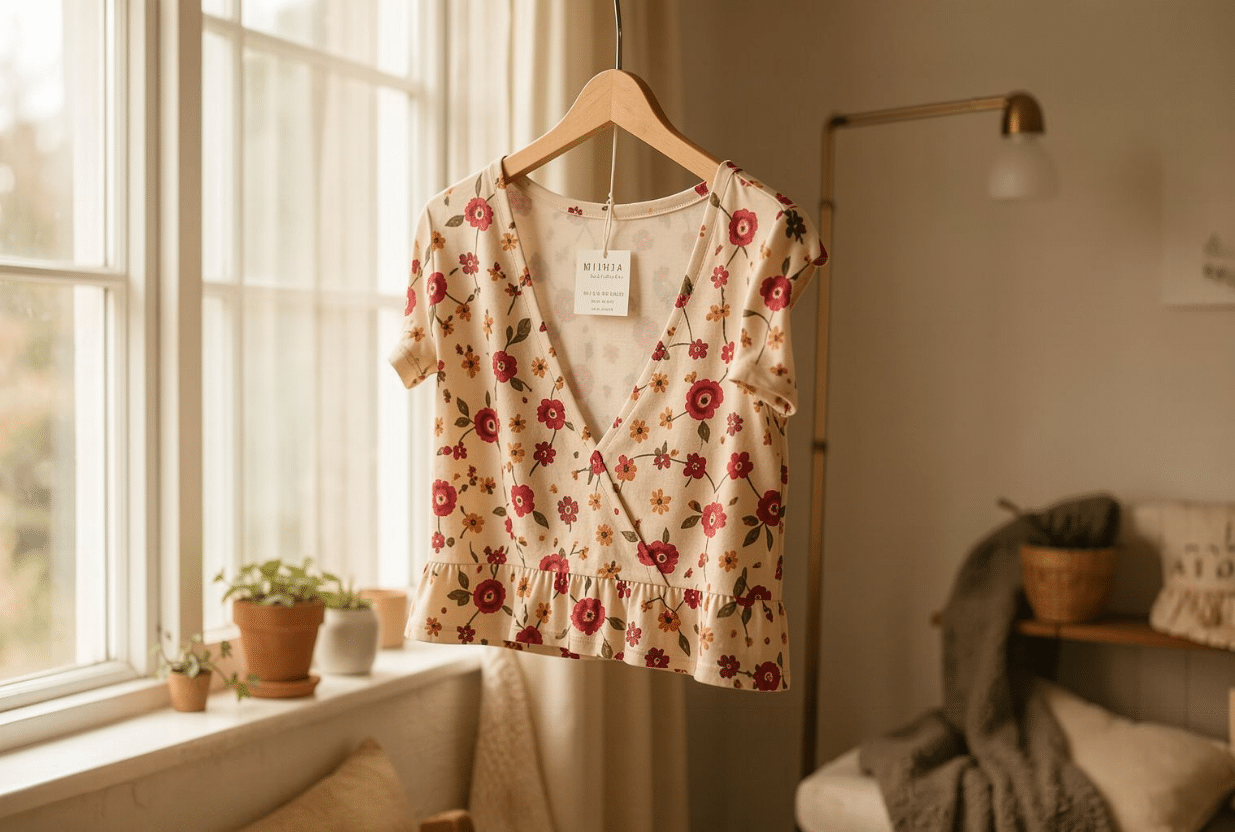
Printed cotton jersey clothing being cared for properly to protect the print.
Why Printed Fabric Needs Different Care Than Plain Fabric
You pull out your favorite printed tee for the tenth time this month and notice the pattern looks a little… tired. Not ruined, just faded around the edges in a way that makes it look older than it actually is. Printed cotton jersey is soft, breathable, and comfortable — but that print is exactly the part that needs a bit of extra care to keep looking sharp wash after wash. A plain-dyed cotton tee can survive years of careless laundering with barely a change in appearance, but a printed design sits on top of the fabric, which means heat, friction, and harsh detergents affect it far more visibly and far sooner.
Key Takeaways
- Turn garments inside out before washing to protect the print from friction
- Wash in cold water with mild detergent — skip the fabric softener
- Air dry when possible; if using a dryer, use low heat only
- Iron inside out or with a cloth barrier, never directly on the print
What’s Actually Happening to the Print Over Time
Most prints on cotton jersey are applied using heat and pressure to bond pigment to the fabric’s surface fibers. Every wash cycle introduces friction, heat, and chemical exposure that can gradually break down that bond — which is why a t-shirt that looked crisp on day one can look faded or cracked after a few months of the wrong laundry routine.
Turn It Inside Out Before Washing
This is the single most effective thing you can do. Washing printed garments inside out reduces friction directly on the printed surface, which means less fading and less cracking of the design over time.
Why This Works
Inside a washing machine, garments rub against each other, the drum, and the water itself throughout the cycle. Turning a printed garment inside out means that friction happens against the plain interior of the fabric rather than directly against the print, protecting it significantly.
Use Cold Water
Hot water breaks down print adhesion faster and can cause colors to bleed, especially in the first few washes. Cold water (30°C or below) is gentler on both the fabric and the print, and it’s better for the environment too.
“Designer Tip: If you only change one laundry habit, make it cold water. It does more to protect a printed design than any detergent or setting ever will.” — Elena M.
The Science Behind Cold Water Washing
Heat causes fibers to expand and contract more aggressively, which puts additional stress on any printed design bonded to the surface. Cold water keeps the fabric more stable throughout the wash cycle, reducing the stress placed on both the print and the garment’s shape.
An Added Environmental Benefit
Roughly 90% of the energy used in a typical wash cycle goes toward heating the water. Washing in cold water isn’t just gentler on your clothes — it’s also a simple way to reduce the environmental footprint of your laundry routine.
Skip the Fabric Softener
It sounds counterintuitive for a soft fabric like cotton jersey, but fabric softener can actually leave a residue that dulls printed designs over time. A mild, residue-free detergent is a better choice if you want the print to stay vibrant.
What Fabric Softener Actually Does to Printed Fabric
Fabric softener works by coating fibers in a thin waxy layer to make them feel smoother. Over repeated washes, that same coating builds up on top of a printed design, creating a slightly hazy or muted appearance that’s easy to mistake for simple fading.
Avoid the Dryer When You Can
Heat is the biggest enemy of printed fabric. Air-drying (flat or on a hanger) prevents the high heat that causes prints to crack, peel, or fade faster. If you need to use a dryer, a low heat setting and removing the garment while still slightly damp helps minimize damage.
Best Practices for Air Drying
Lay printed garments flat on a towel or drying rack rather than hanging them by the shoulders, especially for jersey fabric, which can stretch out of shape under its own wet weight if hung.
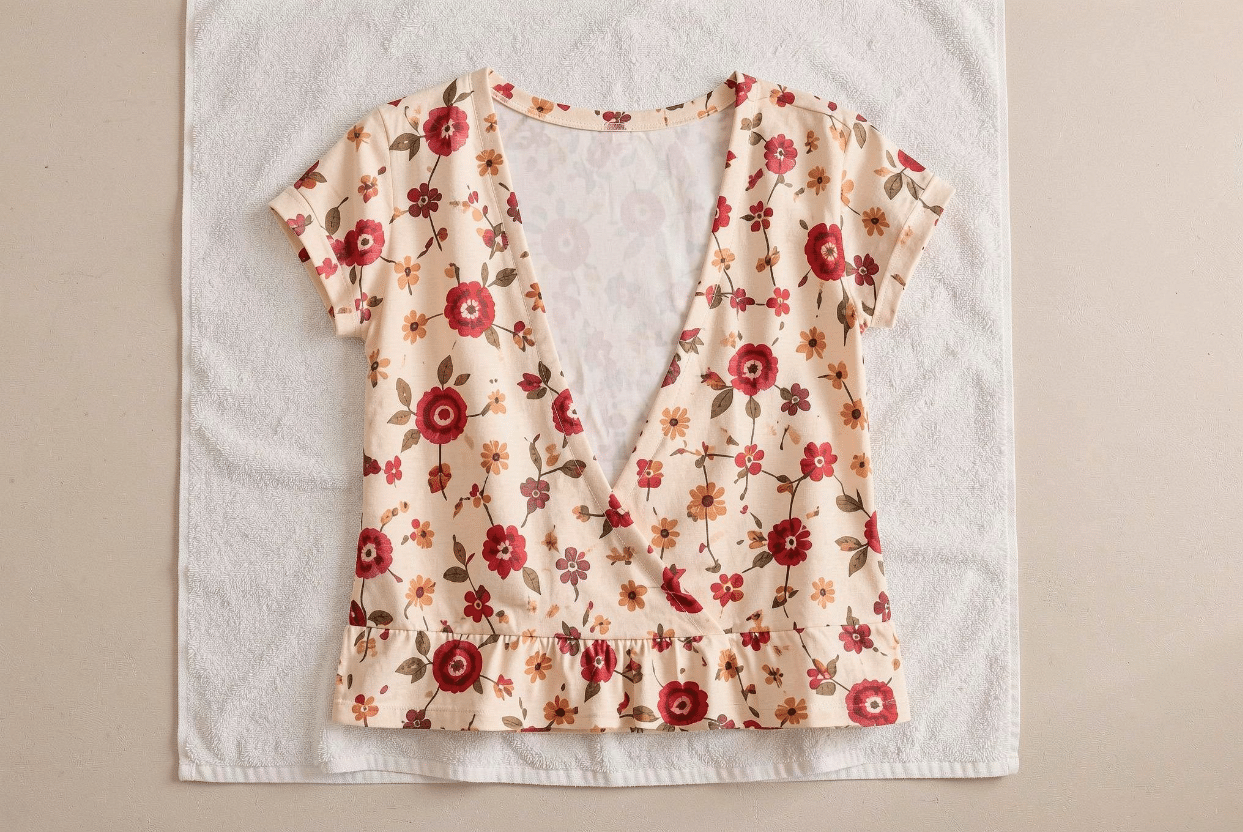
Air drying printed cotton jersey clothing to preserve the print.
If You Must Use a Dryer
Use the lowest heat setting available, turn the garment inside out first, and remove it while still slightly damp rather than running a full drying cycle. This dramatically reduces the cumulative heat exposure over the life of the garment.
Don’t Iron Directly on the Print
If your printed cotton jersey needs ironing, turn it inside out first, or place a thin cloth over the print before ironing on a low setting. Direct heat and pressure on a printed design can cause it to melt slightly or lose its texture.
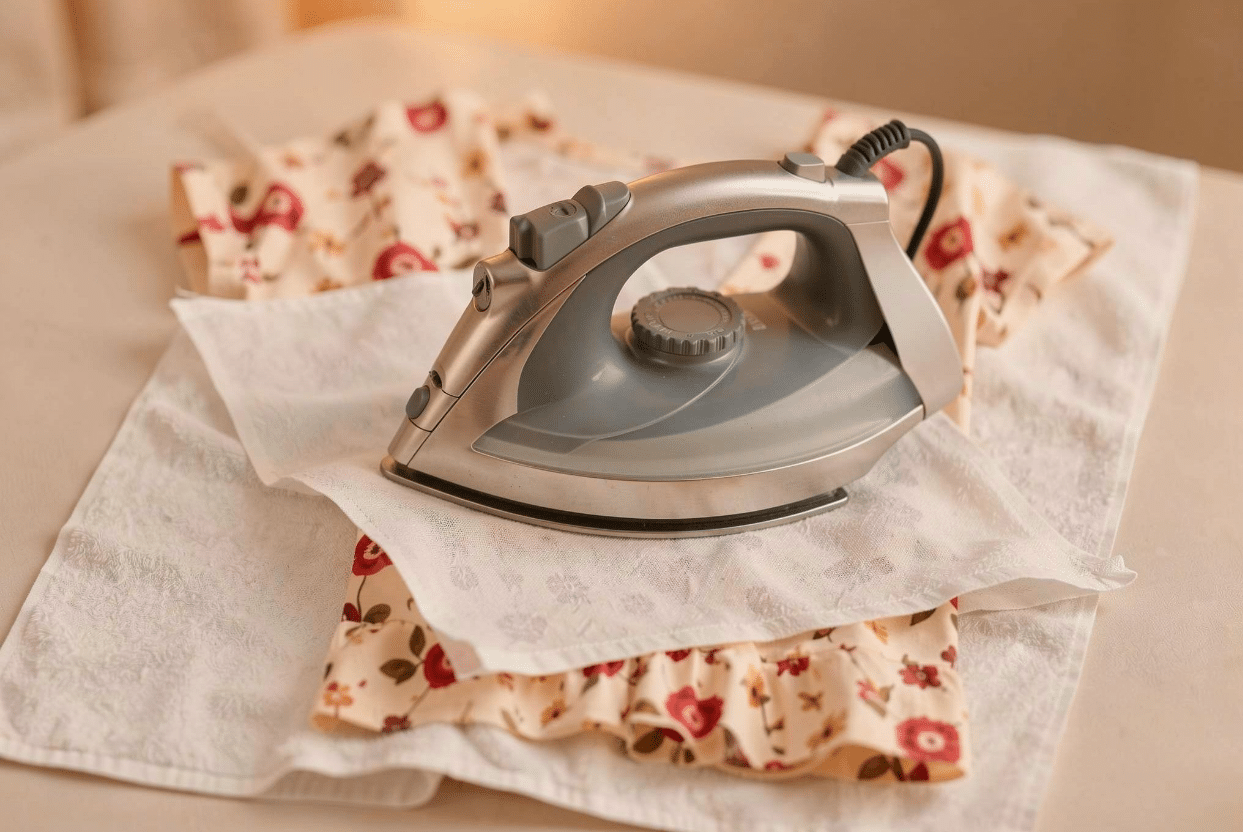
Ironing printed cotton jersey clothing inside out to protect the design.
Why This Step Gets Skipped (and Shouldn’t)
Most people iron out of habit without thinking about what’s underneath the iron. A direct hot iron on a printed design can permanently distort or melt the print in seconds, so it’s worth the extra ten seconds to flip the garment or grab a cloth barrier first.
Wash Similar Colors Together
This one’s basic laundry advice, but it matters more for printed garments — a stray color bleed can be much more noticeable on a light-colored print than on solid fabric.
Why Printed Garments Are More Vulnerable to Color Bleed
A light or white background fabric with a colorful print shows even minor dye transfer far more visibly than a solid mid-tone garment would. Washing printed pieces with similarly colored items reduces this risk significantly.
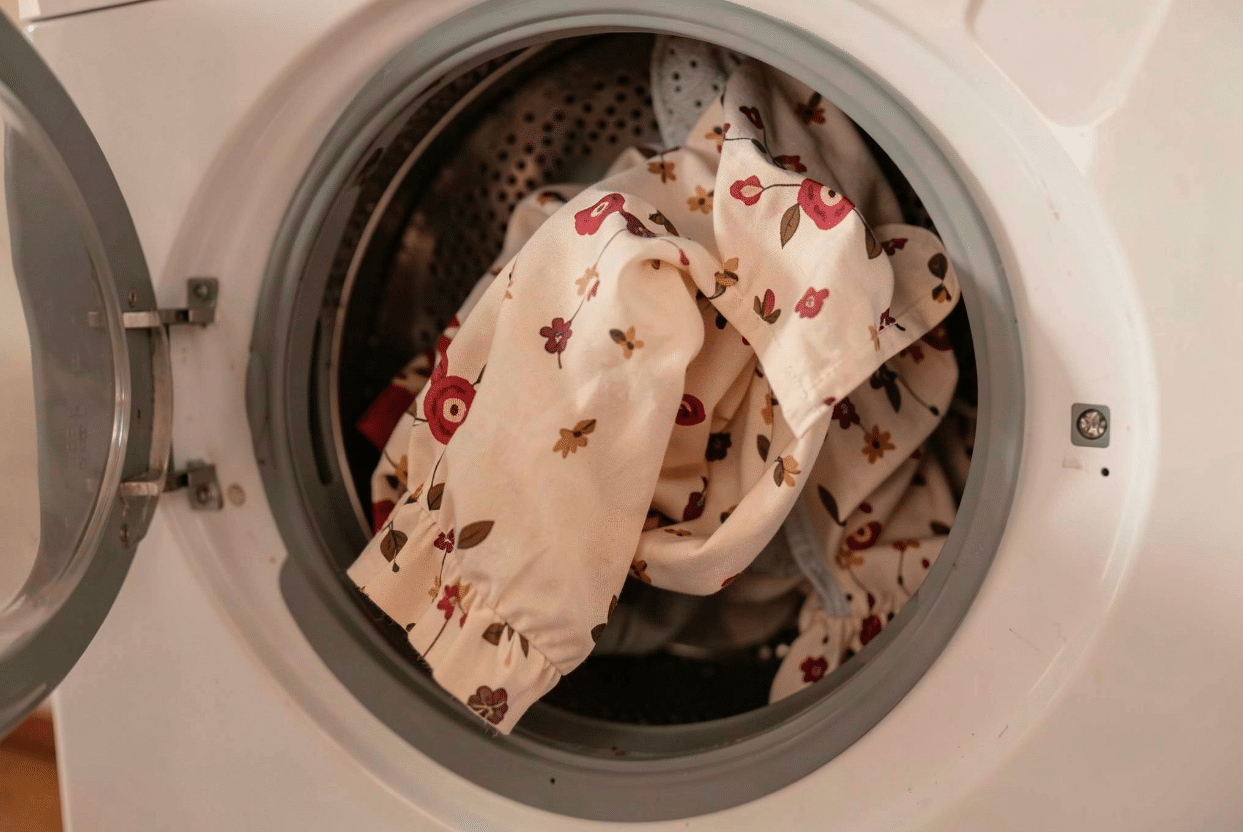
A quick care checklist for washing printed cotton jersey clothing.
A Quick Care Checklist
Following these five simple steps consistently makes the biggest difference in how long a printed piece keeps its original color and shape:
- Turn the garment inside out
- Wash in cold water
- Use a mild detergent with no fabric softener
- Air dry when possible
- Iron inside out or with a cloth barrier
Why This Matters Beyond Just Looking Good
Taking proper care of printed clothing isn’t only about appearance — it’s also one of the simplest ways to reduce your overall environmental footprint. Every garment you keep wearing for years instead of replacing after a few faded washes is one less item that needs to be manufactured, shipped, and eventually discarded. Combined with cold-water washing’s lower energy use, proper garment care is a small daily habit with a real cumulative impact.
Understanding Cotton Jersey as a Fabric
Knowing a little about how cotton jersey is actually constructed helps explain why it behaves the way it does in the wash, and why certain care habits matter more for this fabric than others.
Why Jersey Knit Is Popular for Everyday Wear
Jersey is a knit fabric, meaning it’s constructed from interlocking loops of yarn rather than woven threads. That knit structure is what gives it natural stretch, softness, and breathability, which is exactly why it’s such a common choice for everyday dresses, t-shirts, and children’s clothing.
How Jersey Differs From Woven Cotton
A woven cotton fabric (like a poplin or a canvas) is more structured and holds its shape, but it doesn’t stretch. Jersey’s give makes it more comfortable for everyday movement, but that same looser knit structure also means it can be more prone to stretching out of shape if washed in hot water or dried on high heat — another reason cold water and gentle drying matter so much for this specific fabric type.
Extending the Life of Your Favorite Printed Pieces
Good wash habits are only half the equation — how you store and eventually retire a piece also affects how long it stays in regular rotation.
Storing Printed Garments Properly
Folding printed jersey pieces rather than hanging them prevents the fabric from stretching out of shape under its own weight over time, especially for heavier printed areas. If you do hang a piece, a padded hanger distributes weight more evenly than a thin wire one.
When to Retire a Piece
Even with the best care, printed fabric eventually shows its wear — usually as a slightly softened or faded print rather than a dramatic failure. At that point, many people repurpose well-worn jersey pieces as loungewear or cleaning cloths rather than discarding them outright, which is a simple way to get a bit more use out of the fabric before it’s truly done.
Common Care Mistakes That Shorten a Garment’s Life
Beyond the core washing steps, a few habits quietly shorten the lifespan of printed cotton jersey pieces without people realizing it.
Overloading the Washing Machine
Cramming too many garments into one load means clothes can’t move freely through the water and detergent, which leads to uneven cleaning and more direct friction between garments — exactly the kind of friction that damages printed surfaces fastest.
Mixing Harsh Chemicals or Bleach
Bleach and other harsh whitening agents can react with printed pigments and cause discoloration or patchiness that’s impossible to reverse. Even for stain removal, a gentle, color-safe stain treatment is a far safer choice for printed garments than any chlorine-based product.
How Climate and Water Quality Affect Your Results
Not every home has identical washing conditions, and factors outside the wash cycle itself can influence how well a printed garment holds up over time.
Hard Water and Detergent Buildup
In areas with hard water, mineral deposits can build up on fabric over repeated washes, contributing to a dull, slightly stiff feel that’s easy to mistake for print fading. A water softener or a detergent formulated for hard water can noticeably improve results if this applies to your home.
Humidity and Air Drying Times
In more humid climates, air-dried garments take longer to fully dry, which can occasionally lead to a slightly musty smell if airflow is limited. Drying printed pieces on a rack with space between garments, ideally near an open window or fan, helps them dry fully without needing dryer heat.
Adjusting Your Routine Seasonally
In colder months when air drying takes longer indoors, a very low, short tumble-dry cycle to remove most of the moisture, followed by a shorter air-drying period, can be a reasonable middle ground that still limits heat exposure to the print.
FAQ
Can I use fabric softener on printed cotton jersey at all?
It’s best to avoid it. Fabric softener leaves a residue that builds up over time and can dull the appearance of a printed design, even if the fabric itself feels softer.
Is it okay to tumble dry printed clothing on any setting?
Low heat only, and ideally removing the garment while it’s still slightly damp. High heat is the single biggest cause of print cracking and fading over time.
Why does my printed shirt look faded after just a few washes?
This is usually caused by a combination of hot water, high dryer heat, and fabric softener use. Switching to cold water, air drying, and skipping softener typically slows this down significantly.
Does turning a garment inside out really make a difference?
Yes — it’s one of the most effective single changes you can make, since it protects the print from direct friction against other garments and the machine drum during the wash cycle.
How long should a well-cared-for printed piece last?
With proper care, a quality printed cotton jersey garment can maintain its color and shape through hundreds of wash cycles, versus a fraction of that with hot water, high heat drying, and fabric softener use.
Final Thoughts
A few small laundry habits are the difference between a printed piece that looks new for years and one that fades in a few months. What’s your best laundry tip for keeping prints looking fresh? Share it in the comments!

-
 Price range: $22.38 through $29.07
 -
 Price range: $22.38 through $29.07
 -
 Price range: $22.38 through $29.07
 -
 Price range: $21.43 through $28.17
 -
 Price range: $22.38 through $29.07
 -
 Price range: $22.38 through $29.07
 -
 Price range: $22.38 through $29.07






Recent Comments