

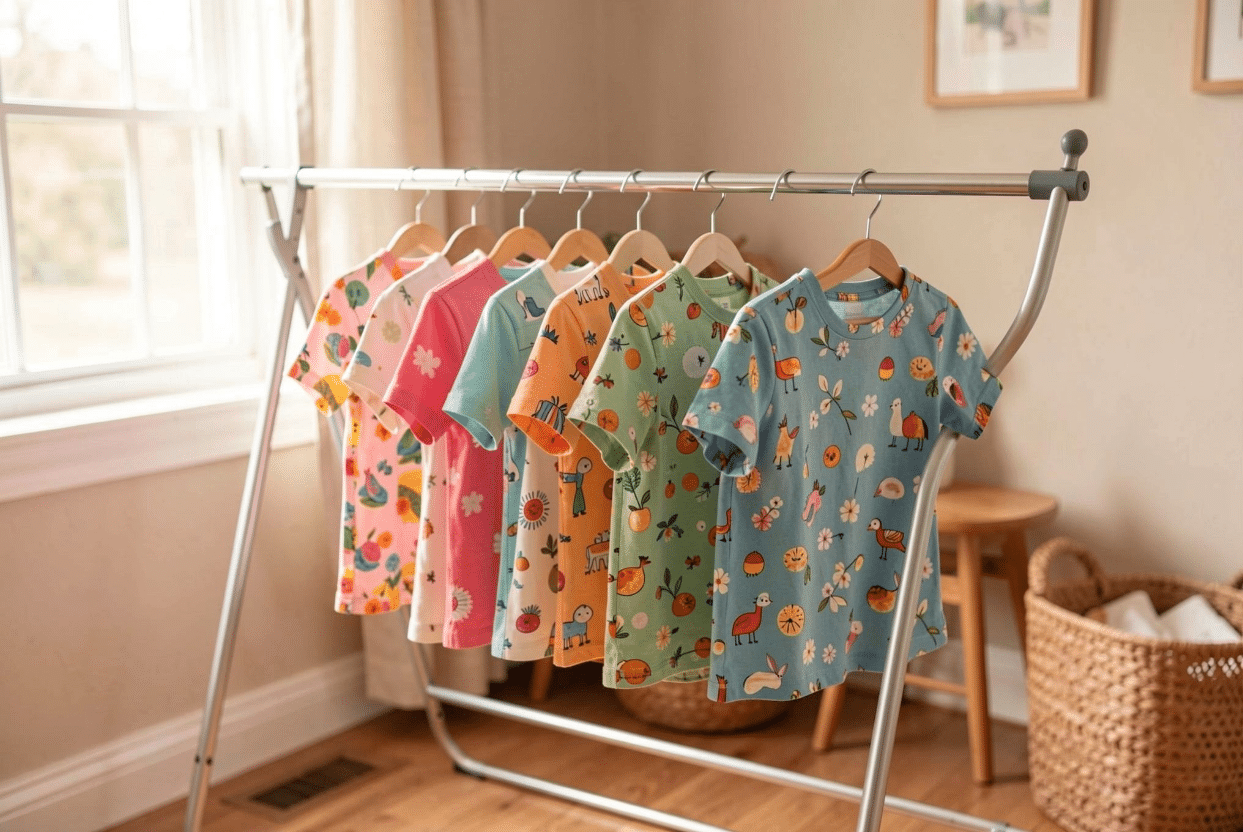
Kids printed clothing being washed and cared for properly.
Why Kids’ Clothes Need a Different Approach Than Adult Laundry
Somewhere between the swing set, the spaghetti dinner, and the “art project” that involved actual paint, your kid’s favorite printed shirt has seen things. Kids’ clothing goes through a level of abuse that most adult clothing never sees — grass stains, food spills, paint, mud, and constant washing to keep up with it all. On top of that, a lot of kids’ clothing features printed designs, which need a slightly different care routine than a plain solid-color garment to keep looking good wash after wash.
Key Takeaways
- Treat stains fast — before the item goes in the hamper
- Turn printed items inside out and wash in cold water
- Don’t overload the machine or overdo the detergent
- Switch to lower heat drying — the single biggest fix for fading
What Makes This Guide Different
This isn’t just general laundry advice — it’s specifically focused on keeping printed designs intact while also dealing with the realistic mess level of actual kids’ clothing.
Act Fast on Stains
Fresh stains are genuinely easy to deal with. Old, set-in stains are not. The single biggest factor in whether a stain comes out completely is how quickly you treat it.
Treating a Stain Before It Sets
Apply a small amount of detergent or stain treatment directly to the stain and gently work it into the fabric before the item goes into the hamper. Waiting even a day or two allows a stain to bond more permanently with the fabric fibers.
What to Do When You Can’t Treat It Immediately
If you can’t treat a stain right away, at least rinse the area with cold water to prevent it from setting further, and treat it properly as soon as you’re able to.
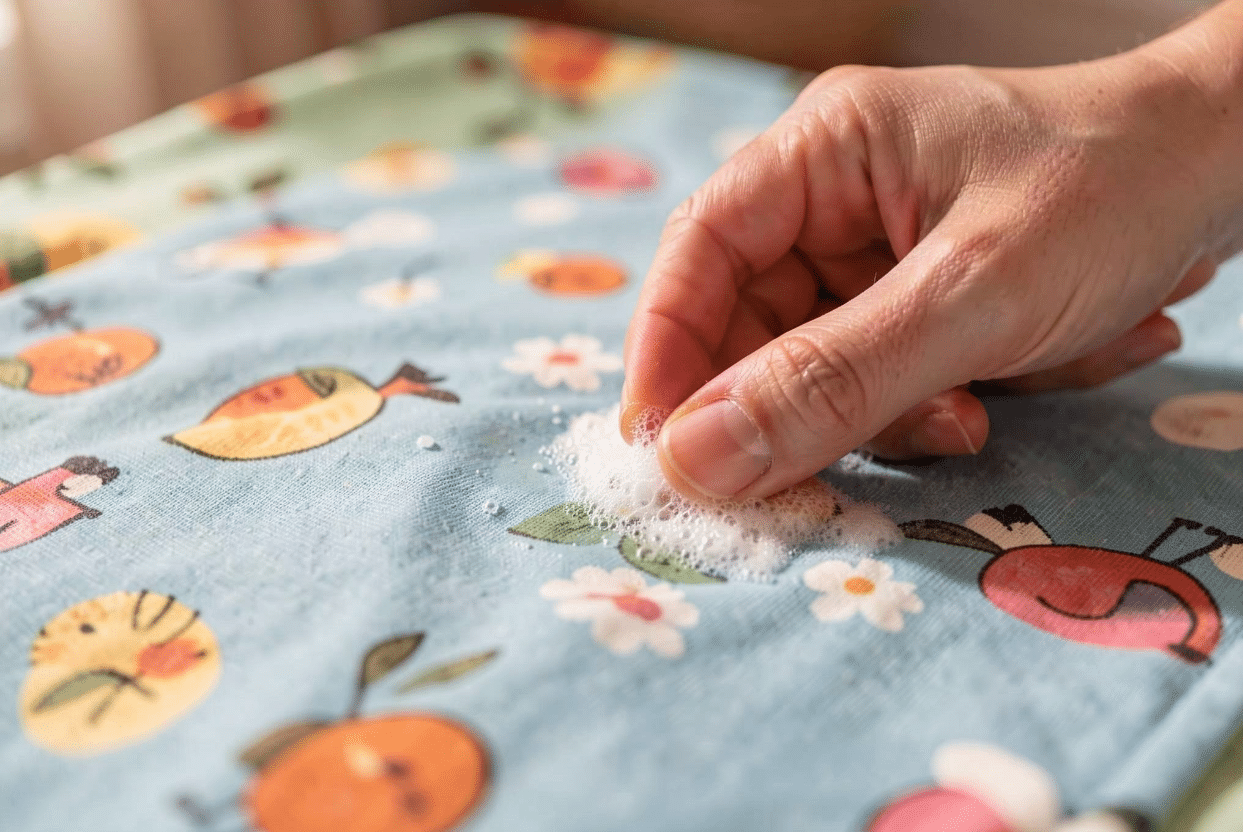
Treating a stain on kids printed clothing before washing.
Turn Printed Items Inside Out
This single step protects printed designs more than almost anything else you can do. Washing printed graphics inside out shields them from the direct friction that happens between garments and the machine drum during a wash cycle.
Why This Matters More for Kids’ Clothing
Kids’ clothing tends to be washed more frequently than adult clothing, simply due to how often it gets dirty. That means the cumulative friction damage to a printed design adds up faster, making this simple step even more valuable.
“Designer Tip: If you only change one thing, switch to cold water washing and lower heat drying. Those two changes alone fix most fading and print-cracking problems.” — Elena M.
Use Cold Water
Cold water protects colors, prevents shrinkage, and helps preserve printed graphics far better than hot water, which can cause both fading and premature cracking of a printed design.
An Extra Benefit for Growing Kids
Hot water is also more likely to cause shrinkage, which is the last thing you want for clothing that’s already going to be outgrown eventually — there’s no reason to speed up that timeline with avoidable shrinkage.
Don’t Overdo the Detergent
More detergent doesn’t mean cleaner clothes — it usually just means more residue left behind, which can create a stiff feel and a slightly dull appearance over time, especially noticeable on printed areas.
Finding the Right Amount
Follow the manufacturer’s recommended amount on the detergent packaging rather than estimating generously, and consider a slightly reduced amount for lightly soiled loads.
Don’t Overload the Washing Machine
Cramming too many clothes into one load prevents proper movement through the water and detergent, leading to both less effective cleaning and more direct friction between garments — which, again, is exactly what accelerates print damage.
A Simple Way to Check
If you can’t comfortably fit your hand into the machine on top of a loaded wash, it’s likely overloaded. Splitting into two smaller loads produces better results for printed items than one packed load.
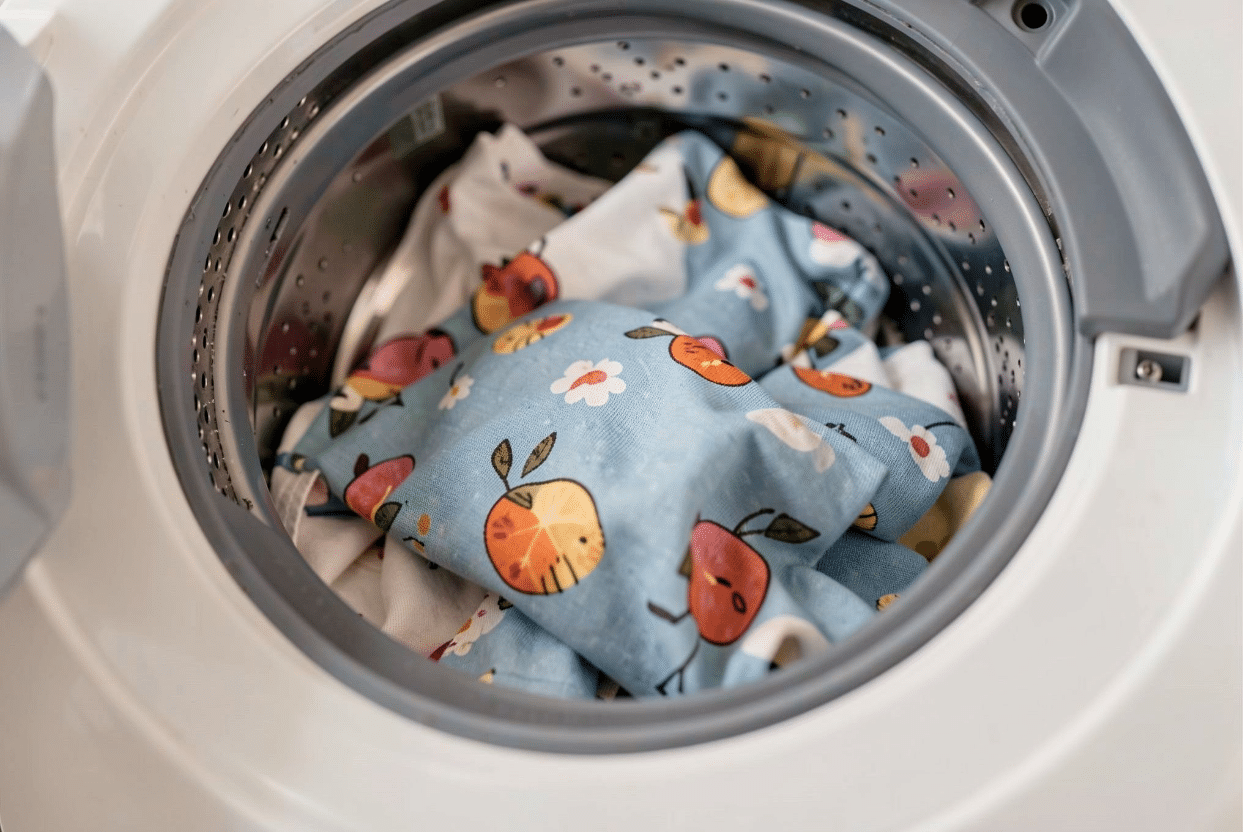
Sorting kids printed clothing by color before washing.
Separate New, Bright Colors for the First Few Washes
Bright dyes, especially on new garments, can bleed slightly in the first few washes. Washing new, brightly printed pieces separately (or with similar colors) for the first two or three washes prevents any dye transfer onto lighter garments.
How Long This Matters
After the first few wash cycles, most dye bleeding risk drops off significantly, so this precaution is really only necessary early in a garment’s life.
Use Lower Heat When Drying
High dryer heat is one of the fastest ways to damage both the print and the elastic in waistbands and cuffs common in kids’ clothing.
Protecting Elastic Bands
Elastic in waistbands, cuffs, and sock tops breaks down faster under repeated high heat, leading to that stretched-out, saggy fit that makes kids’ clothes look worn out even when the fabric itself is still in good shape. Lower heat settings extend the life of these components significantly.
Air Drying When Possible
For printed pieces especially, air drying (flat or on a low rack) avoids dryer heat altogether, which is the single best thing you can do to keep a printed design looking sharp over dozens of washes.
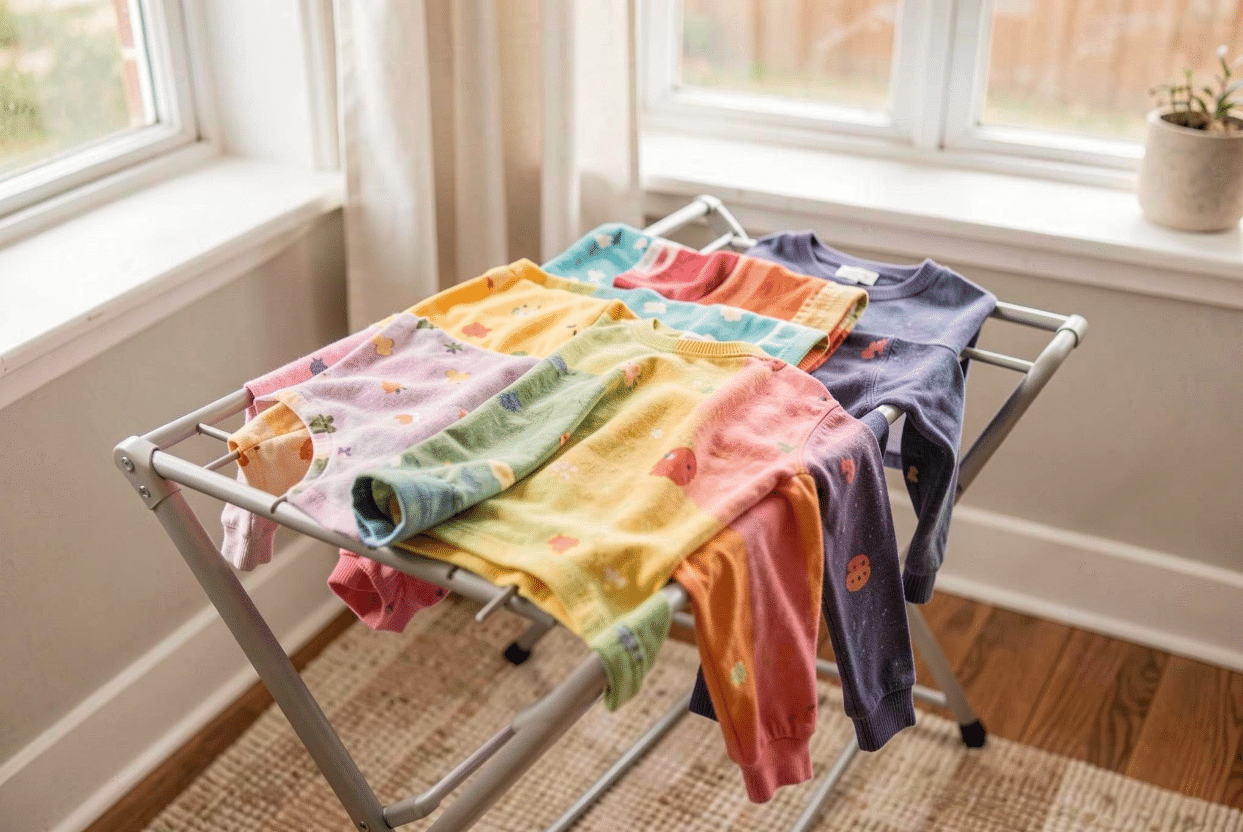
Air drying kids printed clothing to help it last longer.
Small Habits That Add Up
None of these individual steps feel dramatic on their own, but together they compound significantly over the life of a garment. A shirt cared for with these habits can realistically outlast several siblings or wash cycles compared to one washed carelessly in hot water with excess detergent and high heat drying.
Special Considerations for Hand-Me-Downs
Printed clothing that’s cared for well often has plenty of life left for a younger sibling or another family, which makes a few extra considerations worth knowing.
Restoring Slightly Faded Pieces
A gentle color-refresh product designed for faded fabric can sometimes bring back some vibrancy to a slightly dulled printed piece, though it won’t reverse actual cracking or peeling of the print itself.
What to Check Before Passing Clothes Down
Check elastic waistbands and cuffs for stretched-out give, and inspect the print closely for any cracking, since these are the two areas that show wear first, even when the overall fabric still looks fine.
Building a Simple Laundry Routine That Sticks
The best care routine is one that’s simple enough to actually follow consistently, especially with the volume of laundry that comes with young kids.
Sorting as You Go
Keep a small inside-out basket near the hamper so printed items get flipped right when they come off, rather than trying to remember to do it at wash time when you’re sorting a large pile quickly.
Setting Up a System the Whole Family Can Follow
A simple, visible reminder (even just a note near the hamper) helps other family members or caregivers follow the same routine, so the care habits don’t depend on one person remembering every single load.
Dealing With Specific Common Stains
A few stain types show up constantly in kids’ clothing, and each responds a little differently to treatment:
- Grass and mud: let it dry completely, brush off the excess, then treat
- Food and juice: rinse with cold water immediately, then treat with detergent — never hot water
Grass and Mud Stains
Let mud dry completely and brush off the excess before treating, since working wet mud into fabric can spread it further. Grass stains respond well to a stain treatment applied directly and left to sit briefly before washing.
Food and Juice Stains
Rinse food and juice stains with cold water as soon as possible, then treat with detergent before washing. Avoid hot water on protein-based stains specifically, since heat can actually set certain food stains permanently.
Choosing the Right Detergent for Kids’ Skin and Prints
The detergent itself matters both for sensitive skin and for how well a printed design holds up over time.
Fragrance-Free and Gentle Formulas
A fragrance-free, dye-free detergent reduces the chance of skin irritation for sensitive kids while typically containing fewer harsh additives that can affect printed designs over time.
Avoiding Ingredients That Dull Prints
Detergents with built-in optical brighteners or heavy fragrance additives can leave more residue behind than a simpler formula, contributing to that dulled, slightly hazy look on printed fabric over time.
When to Retire a Piece of Kids’ Clothing
Even with the best care, every piece eventually reaches the end of its useful life, and it helps to know what that actually looks like.
Signs a Garment Is Past Its Best
Significantly stretched-out elastic, a print that’s visibly cracked or peeling across a large area, or fabric that’s gone noticeably thin are all signs a piece has reached the end of its wearable life.
Repurposing Instead of Discarding
Well-worn kids’ clothing often has a second life as cleaning rags, stuffing for a craft project, or fabric scraps, which is a simple way to avoid sending it straight to the trash even once it’s no longer wearable.
Traveling With Kids’ Printed Clothing
Travel adds its own challenges to keeping printed clothing looking good, from packing to washing away from your usual setup.
Packing to Minimize Wrinkling and Friction
Rolling rather than folding printed garments reduces sharp crease lines directly across a printed design, and packing them inside out adds an extra layer of friction protection during transit.
Washing on the Go Without Your Usual Setup
When using an unfamiliar washer (like at a hotel or rental), stick to cold water and a gentle cycle by default, since you won’t necessarily know the water temperature or agitation level of an unfamiliar machine.
FAQ
Is it okay to use bleach on stained kids’ clothing?
Avoid bleach on printed clothing specifically — it can react with printed pigments and cause permanent discoloration. A color-safe stain treatment is a much better option.
How often should kids’ clothes actually be washed?
This depends on how visibly soiled they are, but there’s no need to wash lightly worn items after every single use — over-washing accelerates wear on both fabric and printed designs unnecessarily.
Why does my child’s shirt look faded after just a few months?
This is usually a combination of hot water, high dryer heat, and excess detergent. Switching to cold water, lower heat, and a moderate detergent amount typically slows this down noticeably.
Should I wash kids’ clothes separately from adult clothes?
It’s not strictly necessary for cleanliness, but grouping similar colors (rather than separating by age group specifically) matters more for preventing dye transfer and print damage.
What’s the single most impactful change I can make?
If you only change one thing, switch to cold water washing and lower heat drying — these two changes alone address the majority of common fading and print-cracking issues.
Final Thoughts
A few small laundry habits can make a printed piece last through more than one kid. What’s your best trick for getting stains out of kids’ clothes? Share it in the comments!

-
 Price range: $22.38 through $29.07
 -
 Price range: $22.38 through $29.07
 -
 Price range: $22.38 through $29.07
 -
 Price range: $21.43 through $28.17
 -
 Price range: $22.38 through $29.07
 -
 Price range: $22.38 through $29.07
 -
 Price range: $22.38 through $29.07




Recent Comments