
Made-to-order clothing production, a more sustainable alternative to traditional mass manufacturing.
Why Every Order You Place Actually Matters
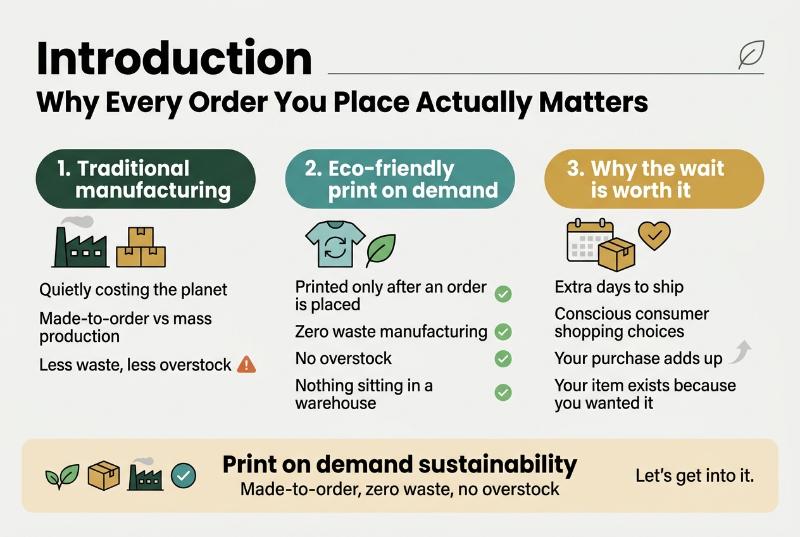
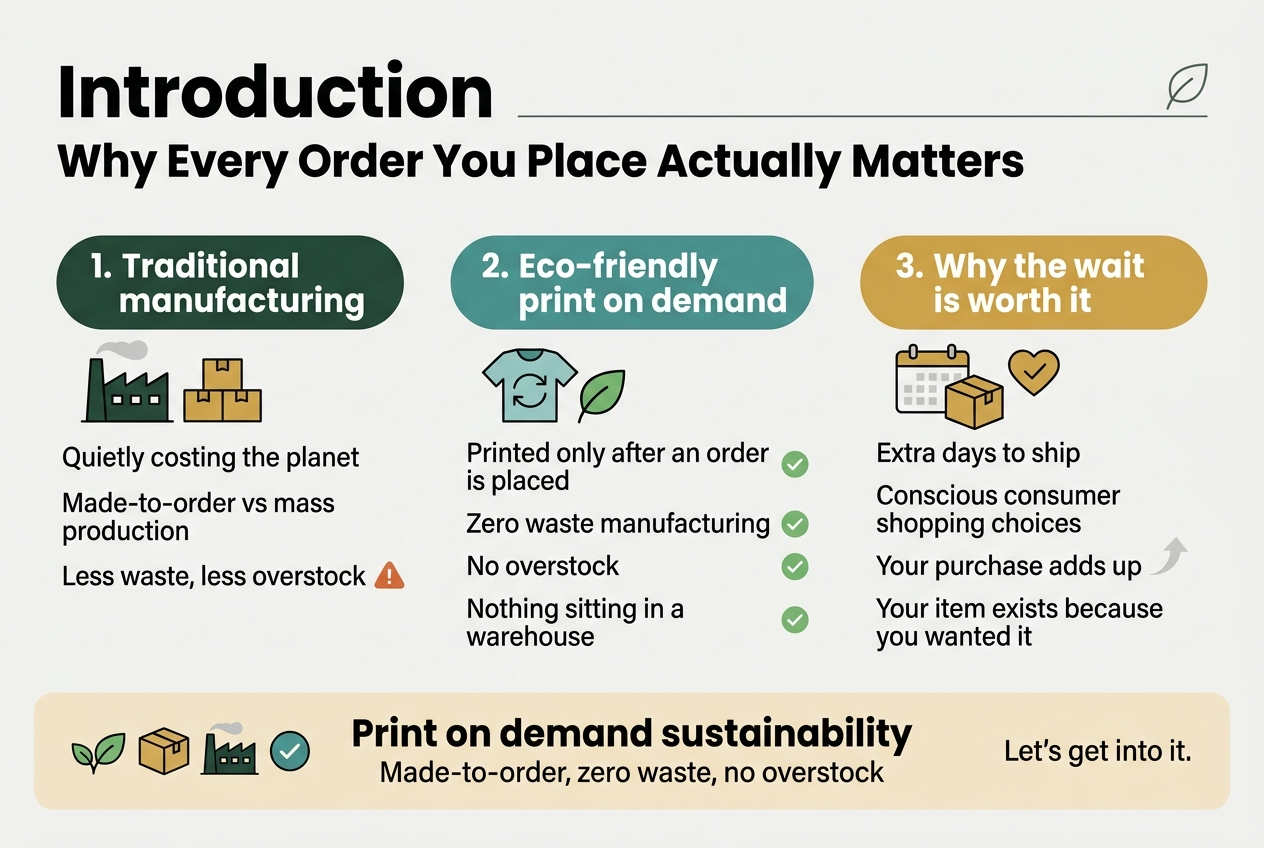
If you’ve ever wondered why your order takes a few extra days to ship, you’re not alone — and the answer is actually a good one.
This blog is for you if you care about shopping in a way that doesn’t leave a pile of waste behind. You don’t have to be a hardcore environmentalist to get it. You just have to be someone who wants their money to go somewhere that makes sense.
Here’s what we’re going to walk through together:
- What traditional manufacturing is quietly costing the planet — and why the made-to-order vs mass production conversation matters more than most brands let on
- How eco-friendly print on demand actually works — and the real environmental benefits of print on demand that show up every time you place an order
- Why the wait is genuinely worth it — and how your conscious consumer shopping choices add up to something bigger than a single purchase
Print on demand sustainability isn’t a buzzword we’re throwing around to sound good. It’s the actual reason we build our process the way we do — zero waste manufacturing, no overstock, nothing sitting in a warehouse collecting dust. When you buy made-to-order, your item exists because you wanted it. That’s a pretty different model from the one most of the industry still runs on.
Let’s get into it.
Key Takeaways
- Made-to-order production only makes what’s already sold, cutting out the overstock that traditional retail bakes in.
- Fast shipping usually depends on pre-built inventory — the wait for a made-to-order piece is the tradeoff for not stockpiling unsold goods.
- Every purchase is a signal to brands about which production model to keep investing in.
- Buying fewer, better, made-to-order pieces usually beats buying more of the cheap alternative.
The Hidden Cost of Traditional Manufacturing
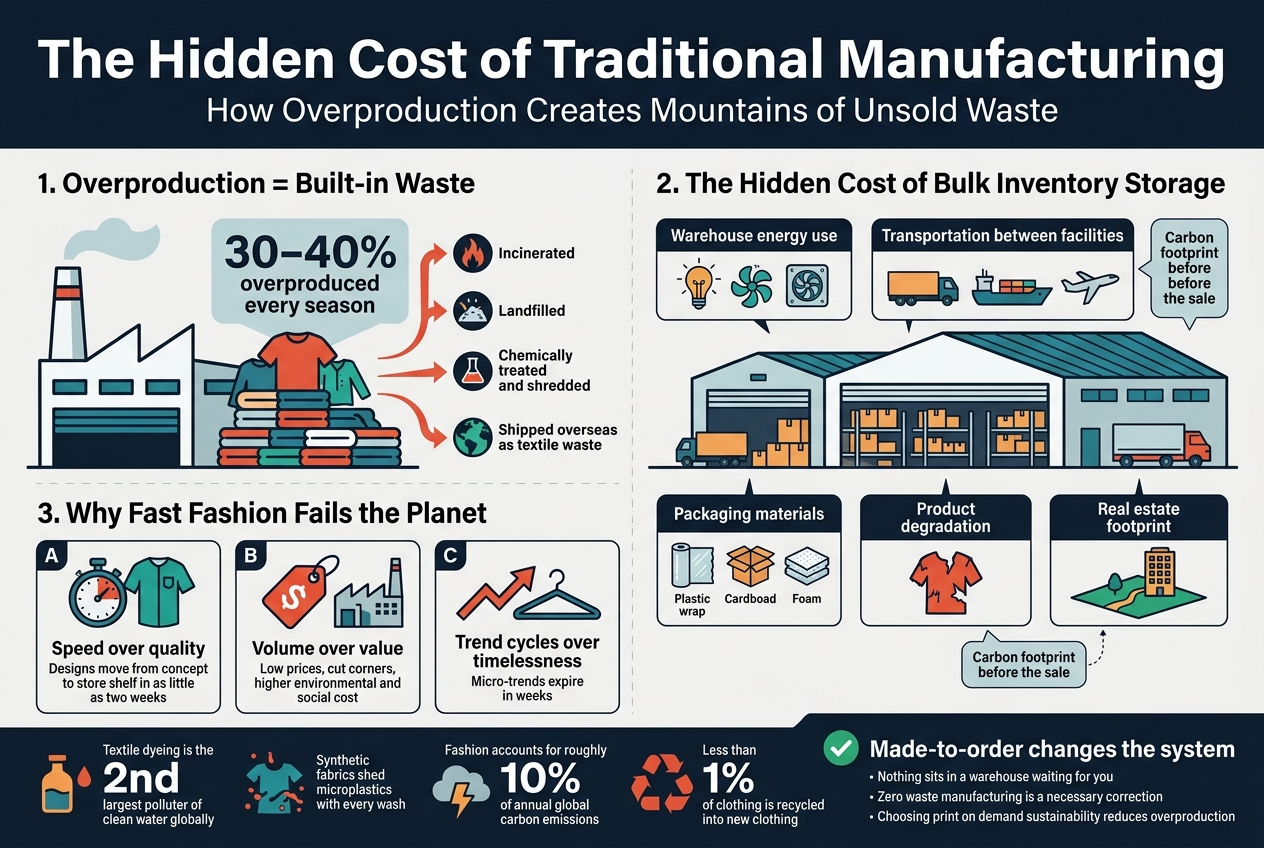
Unsold clothing waste piling up as a result of overproduction in traditional fashion manufacturing.
How Overproduction Creates Mountains of Unsold Waste
Every time a major retailer places a bulk order, they’re essentially gambling. They’re betting that consumers will want this color, this style, this design — in exactly the quantities they’ve ordered. Sometimes they win. Most of the time? They don’t.
The numbers are staggering. The fashion industry alone overproduces by an estimated 30 to 40 percent every single season. That translates to billions of garments that never find a home. Instead, they get:
- Incinerated in industrial furnaces to protect brand value
- Landfilled in massive dumps, often in developing countries
- Chemically treated and shredded to prevent resale
- Shipped overseas as textile waste under the guise of “donations”
When you buy from a traditional retailer, your purchase is one of the lucky ones — the item that actually sold. But behind that one sale, there’s a shadow inventory of overproduced goods that already existed before you ever clicked “add to cart.” The environmental damage from manufacturing those unsold items? It happened whether you bought anything or not.
This is the core problem with mass production: waste is baked into the business model. Companies have to overproduce to avoid stockouts, and stockouts cost money. So they produce more than they’ll ever sell and absorb the loss — or, more accurately, the planet absorbs the loss.
The Environmental Toll of Bulk Inventory Storage
Here’s something most people never think about: even before a product is sold, it has to live somewhere. Warehousing hundreds of thousands of units across climate-controlled distribution centers around the world carries a serious environmental price tag.
Consider what bulk inventory storage actually requires:
| Factor | Environmental Impact |
|---|---|
| Warehouse energy use | Constant lighting, heating, cooling for massive facilities |
| Transportation between facilities | Trucks, ships, and planes moving unsold stock |
| Packaging materials | Plastic wrapping, cardboard, foam used for long-term storage |
| Product degradation | Items that age in storage and eventually get destroyed |
| Real estate footprint | Land cleared and developed for logistics infrastructure |
The carbon footprint of storing goods you might never buy is a hidden cost that never shows up on a price tag. When you shop with a brand that uses made-to-order vs mass production models, you’re stepping outside this system entirely. Nothing sits in a warehouse waiting for you. Your product doesn’t exist until you order it — and that’s a radical shift in how manufacturing actually works.
There’s also the question of what happens when seasonal inventory doesn’t move. Retailers face a brutal choice: discount deeply (which trains consumers to wait for sales and erodes profit margins), donate stock (which often floods secondhand markets and undercuts local economies), or destroy it (which is wasteful but protects brand pricing). None of these options are good. All of them represent the downstream consequences of a system that made too much, too soon.
Why Fast Fashion and Mass Production Are Failing the Planet
You’ve probably heard the term “fast fashion” thrown around. But it’s worth understanding exactly why this model is so damaging — not just emotionally or ethically, but physically and chemically.
Fast fashion and mass production operate on a few key principles that are fundamentally at odds with sustainability:
Speed over quality. Designs move from concept to store shelf in as little as two weeks. There’s no time for thoughtful sourcing, quality testing, or sustainable material choices. You end up with clothes that fall apart quickly, encouraging more purchases, more waste, more production.
Volume over value. The goal is to sell as many units as possible at the lowest possible price. To hit those price points, manufacturers cut corners on wages, materials, and environmental compliance. The people making your clothes and the ecosystems near production facilities pay the price.
Trend cycles over timelessness. By manufacturing around micro-trends that expire in weeks, the industry guarantees that perfectly wearable clothing becomes “unfashionable” before it’s even worn out. This psychological obsolescence is engineered — it keeps you buying more.
The environmental fallout from all of this is hard to overstate:
- Textile dyeing is the second largest polluter of clean water globally
- Synthetic fabrics shed microplastics into waterways with every wash
- The fashion industry accounts for roughly 10% of annual global carbon emissions
- Less than 1% of clothing is recycled into new clothing at end of life
When you look at these numbers, something becomes clear: the problem isn’t just what’s being made. It’s how much is being made, how fast, and with how little accountability for what happens after.
Zero waste manufacturing isn’t just a nice idea — it’s a necessary correction to decades of systemic overproduction. And the shift toward sustainable made-to-order products is one of the most direct ways that shift is actually happening.
Choosing print on demand sustainability isn’t about being perfect or sacrificing convenience for virtue. It’s about understanding a system that was never designed with you — or the planet — in mind, and deciding to opt out of the parts you can. The traditional manufacturing model externalized its true costs onto communities, ecosystems, and future generations. Knowing that changes how you might want to shop.
How Print-on-Demand Works and Why It Changes Everything
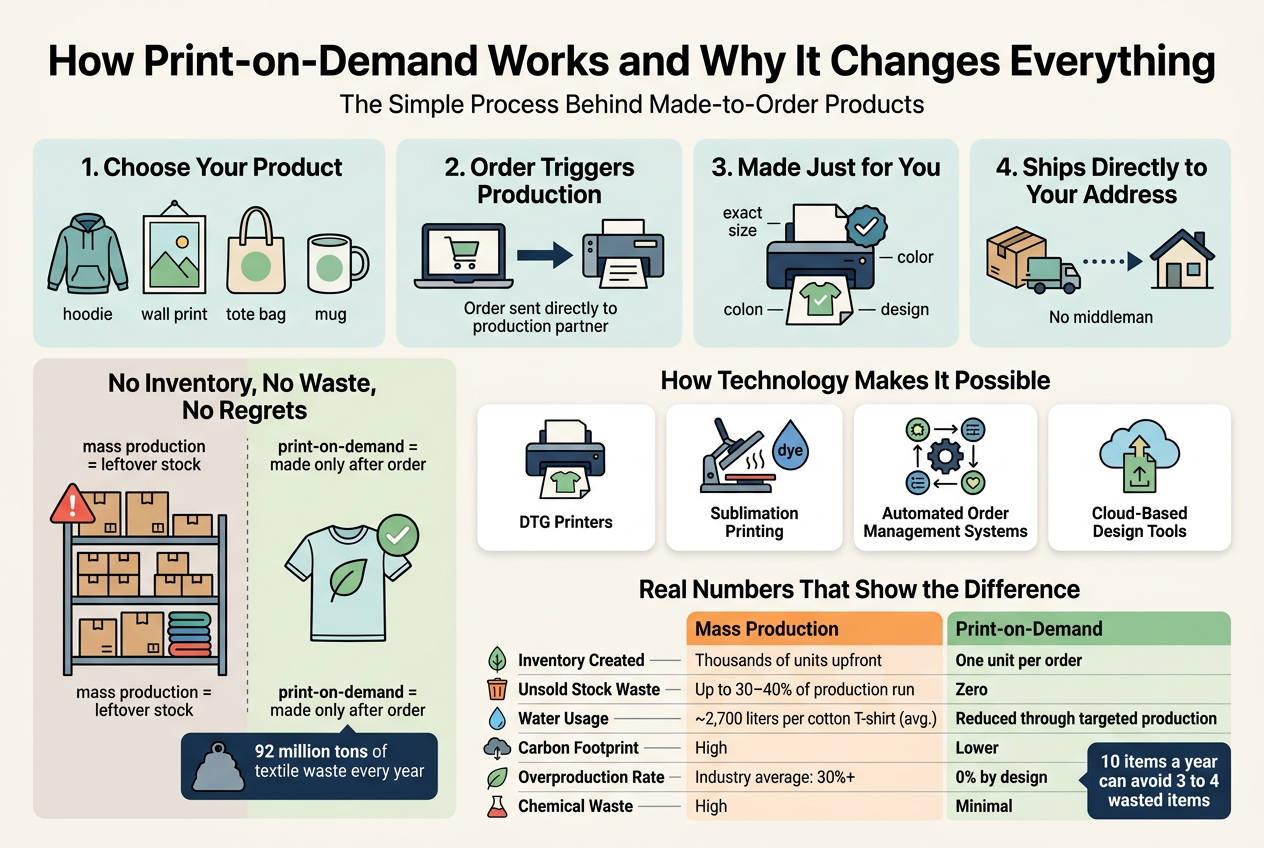
The simple print-on-demand process that makes made-to-order clothing possible.
The Simple Process Behind Made-to-Order Products
When you place an order through a print-on-demand store, something refreshingly straightforward happens. Your order gets sent directly to a production partner, your item gets made — just the one — and it ships to your door. That’s it. No warehouses packed floor-to-ceiling with identical products. No pallets of unsold stock waiting for a buyer who may never show up.
Here’s what a typical made-to-order journey looks like for you:
- You choose your product — a hoodie, a wall print, a tote bag, whatever you’re after.
- Your order triggers production — the file gets sent to a printer or manufacturer.
- Your item is made specifically for you — in the exact size, color, and design you picked.
- It ships directly to your address — skipping the middleman entirely.
That’s the whole chain. What looks like a simple transaction on your end is actually a complete rethink of how products get made and moved through the world.
No Inventory, No Waste, No Regrets
Traditional retail works on prediction. A brand guesses how many units it will sell, orders a massive production run, and hopes for the best. When they guess wrong — which happens constantly — you get one of two outcomes: a sell-out that leaves customers empty-handed, or a mountain of leftover stock that gets discounted, donated, or destroyed.
The fashion industry alone incinerates or landfills an estimated 92 million tons of textile waste every year. A significant chunk of that is unsold inventory — products that were made for a customer who never came.
When you buy from a print-on-demand brand, that scenario doesn’t exist. Because your product wasn’t made until you ordered it, there’s nothing sitting around to go to waste. Every single item produced has a home — yours. That’s the core promise of sustainable made-to-order products, and it holds up completely.
This zero-waste manufacturing approach also protects you from buying something that already had a hidden cost before it even reached your hands.
How Technology Makes On-Demand Production Possible
This model wouldn’t have worked 20 years ago. Producing one item at a time used to be wildly expensive and time-consuming. What changed is the technology.
Direct-to-garment (DTG) printing lets a machine print a design directly onto fabric in minutes, without needing a screen setup or bulk run to make it financially viable. Digital printing for home goods and paper products works the same way — fast, precise, and completely scalable down to a single unit.
A few key technologies driving eco-friendly print-on-demand today:
- DTG Printers — High-resolution fabric printing without excess ink or chemical baths
- Sublimation Printing — Dye bonded directly into the material, reducing waste and water usage
- Automated Order Management Systems — Instantly connect your purchase to a production queue without human delays or batch requirements
- Cloud-Based Design Tools — Let creators upload files that are print-ready without physical samples, cutting pre-production waste entirely
You’re not just buying a product when you shop this way. You’re benefiting from an entire ecosystem of precision tools that make one-at-a-time production just as efficient as a factory run — without the environmental wreckage that usually comes with scale.
Real Numbers That Show the Difference It Makes
It’s one thing to talk about sustainability in broad terms. It’s another to see what the difference actually looks like when you compare made-to-order vs mass production side by side.
| Factor | Mass Production | Print-on-Demand |
|---|---|---|
| Inventory Created | Thousands of units upfront | One unit per order |
| Unsold Stock Waste | Up to 30–40% of production run | Zero |
| Water Usage | ~2,700 liters per cotton T-shirt (avg.) | Reduced through targeted production |
| Carbon Footprint | High — from storage, transport, and disposal | Lower — no warehousing or excess logistics |
| Overproduction Rate | Industry average: 30%+ | 0% by design |
| Chemical Waste | High — bulk dyeing and finishing processes | Minimal with modern DTG/sublimation methods |
When you choose a print-on-demand brand, you’re opting out of that overproduction rate entirely. The 30% of items that would have been wasted in a traditional model simply don’t get made.
That’s not a small thing. If you buy 10 items a year from made-to-order brands instead of fast fashion retailers, you’re statistically avoiding contributing to the production of 3 to 4 items that would have ended up in a landfill anyway. Multiply that across thousands of conscious consumer shopping decisions, and the scale of impact becomes genuinely significant.
The environmental benefits of print-on-demand aren’t theoretical. They’re baked into the structure of how every single transaction works. You don’t have to do anything special to make a difference — choosing this model is the difference.
The Environmental Benefits You Directly Support
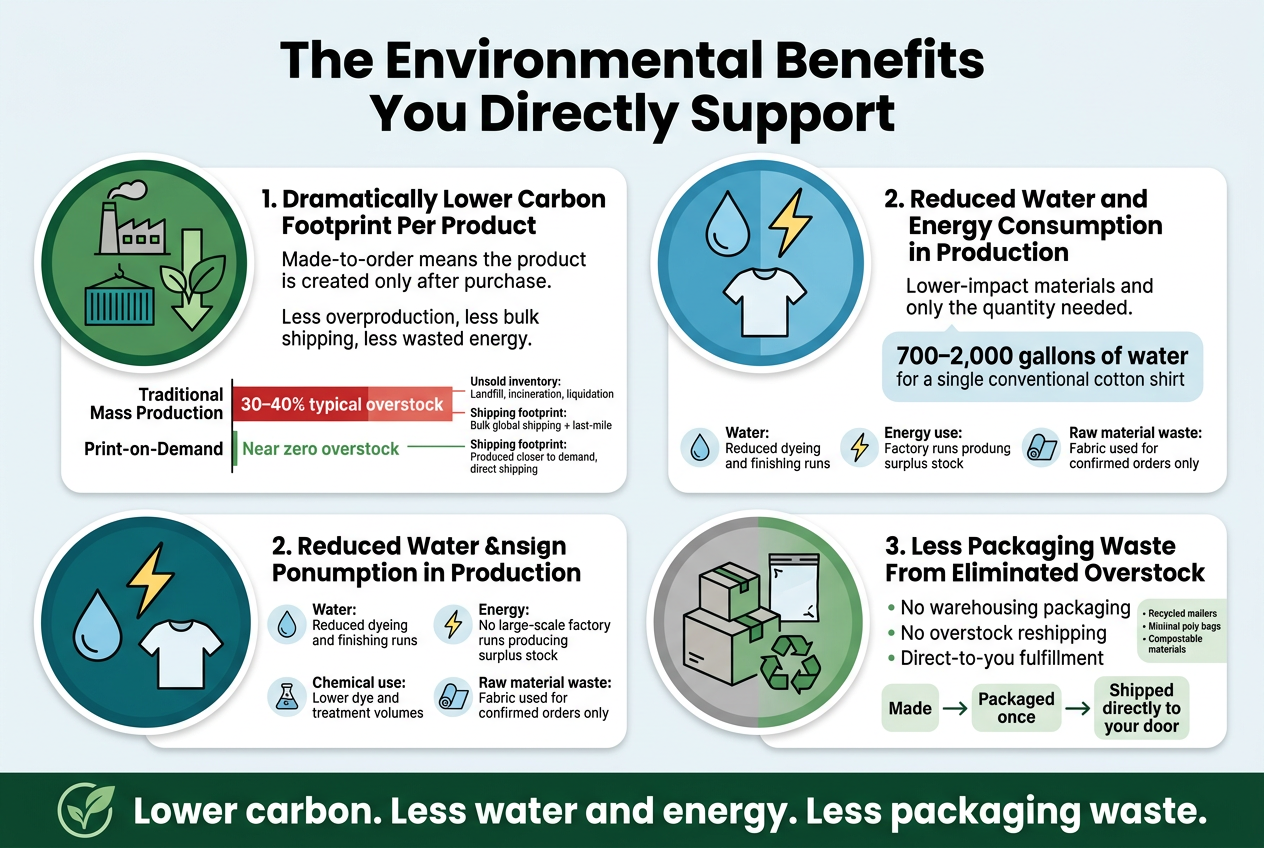
Made-to-order production achieving a dramatically lower carbon footprint per garment.
Dramatically Lower Carbon Footprint Per Product
Every time you choose a made-to-order product over something pulled from a warehouse shelf, you’re directly cutting down on carbon emissions — and the difference is bigger than most people realize.
Traditional manufacturing runs on a simple but wasteful logic: produce as much as possible, sell what you can, and deal with the leftovers later. That “produce first” model means factories are running at full steam regardless of actual demand. Shipping containers full of unsold goods cross oceans. Climate-controlled warehouses run year-round. And when products don’t sell? They get discounted, donated, or destroyed — each of those options carrying its own environmental tab.
Print-on-demand flips that entirely. A product only gets made when you place your order. No factories running at overcapacity. No cross-continental shipping of bulk inventory. The carbon generated in making your item is directly tied to one purpose: getting your specific order to you.
Here’s a rough comparison to put it in perspective:
| Manufacturing Type | Overproduction Rate | Unsold Inventory Fate | Shipping Footprint |
|---|---|---|---|
| Traditional Mass Production | 30–40% typical overstock | Landfill, incineration, liquidation | Bulk global shipping + last-mile |
| Print-on-Demand | Near zero | N/A — only made when ordered | Produced closer to demand, direct shipping |
When you shop with a print-on-demand brand, your carbon footprint per product is dramatically lower — not because of clever marketing language, but because of the basic mechanics of how your order comes to life.
Reduced Water and Energy Consumption in Production
You might not think about water when you’re buying a t-shirt, but conventional garment manufacturing is one of the most water-intensive industries on the planet. Growing conventional cotton for a single shirt can consume anywhere from 700 to 2,000 gallons of water, depending on farming practices and location. Scale that up to mass production runs of thousands of units at a time, and the numbers become staggering.
Eco-friendly print-on-demand brands have responded to this in two meaningful ways:
1. Using sustainable base materials
Many print-on-demand suppliers now work with organic cotton, recycled polyester, or other low-impact materials. Because production is lean and intentional, there’s room to source better — something that’s much harder to do when you’re manufacturing hundreds of thousands of units at the lowest possible cost.
2. Producing only what’s needed
Energy consumption in textile dyeing, finishing, and printing is directly proportional to volume. When you order one hoodie, one print run happens. There’s no energy spent producing 500 units of a colorway that ends up sitting in storage for two years. The energy budget stays lean because the production volume is lean.
This matters to you as a conscious consumer because your purchase decision isn’t just a transaction — it’s a vote for how energy and resources get used in manufacturing. Sustainable made-to-order products give your dollars a cleaner, more efficient supply chain to work through.
Some key resource savings you support when choosing print-on-demand:
- Water: Reduced dyeing and finishing runs tied directly to actual demand
- Energy: No large-scale factory runs producing surplus stock
- Chemical use: Lower dye and treatment volumes per production cycle
- Raw material waste: Fabric is cut and used for confirmed orders, not speculative production
Less Packaging Waste From Eliminated Overstock
Here’s something that rarely gets talked about in sustainability conversations: the packaging waste that comes from overstock isn’t just about the unsold product itself. It’s about every layer of packaging that went into storing, moving, liquidating, or disposing of that product.
Think about what happens to a mass-produced item that doesn’t sell:
- It gets individually wrapped or bagged for warehousing
- It moves through fulfillment centers in additional packaging
- It may get repackaged for discount retail channels
- If it ends up destroyed, it’s often still in its original packaging when it goes
That’s layers of cardboard, plastic poly bags, labels, and foam — multiplied by the millions of unsold items that cycle through traditional retail every single year. The fashion industry alone is estimated to generate enormous volumes of this kind of waste annually, most of it completely invisible to the end consumer.
When you buy from a print-on-demand brand, the packaging story is cleaner from start to finish:
- No warehousing packaging: Your product isn’t pre-packaged and sitting in a bin waiting for a buyer
- No overstock reshipping: There’s nothing to liquidate, so there’s no secondary packaging cycle
- Direct-to-you fulfillment: Your item is made, packaged once, and shipped directly to your door
Many print-on-demand companies are also actively choosing sustainable packaging options — recycled mailers, minimal poly bags, compostable materials — because their smaller, more intentional operation makes it practical to do so. A traditional retailer managing millions of SKUs can’t easily switch packaging formats overnight. A print-on-demand brand fulfilling orders one at a time can.
When you put all three of these together — lower carbon per product, reduced water and energy use, and less packaging waste — you’re looking at a fundamentally different environmental equation than what traditional retail offers. Your choice to wait a few extra days for a made-to-order item isn’t just patience. It’s a concrete, measurable contribution to zero waste manufacturing practices and a supply chain that only does what’s actually necessary.
Honest Answers to the Wait Time Question
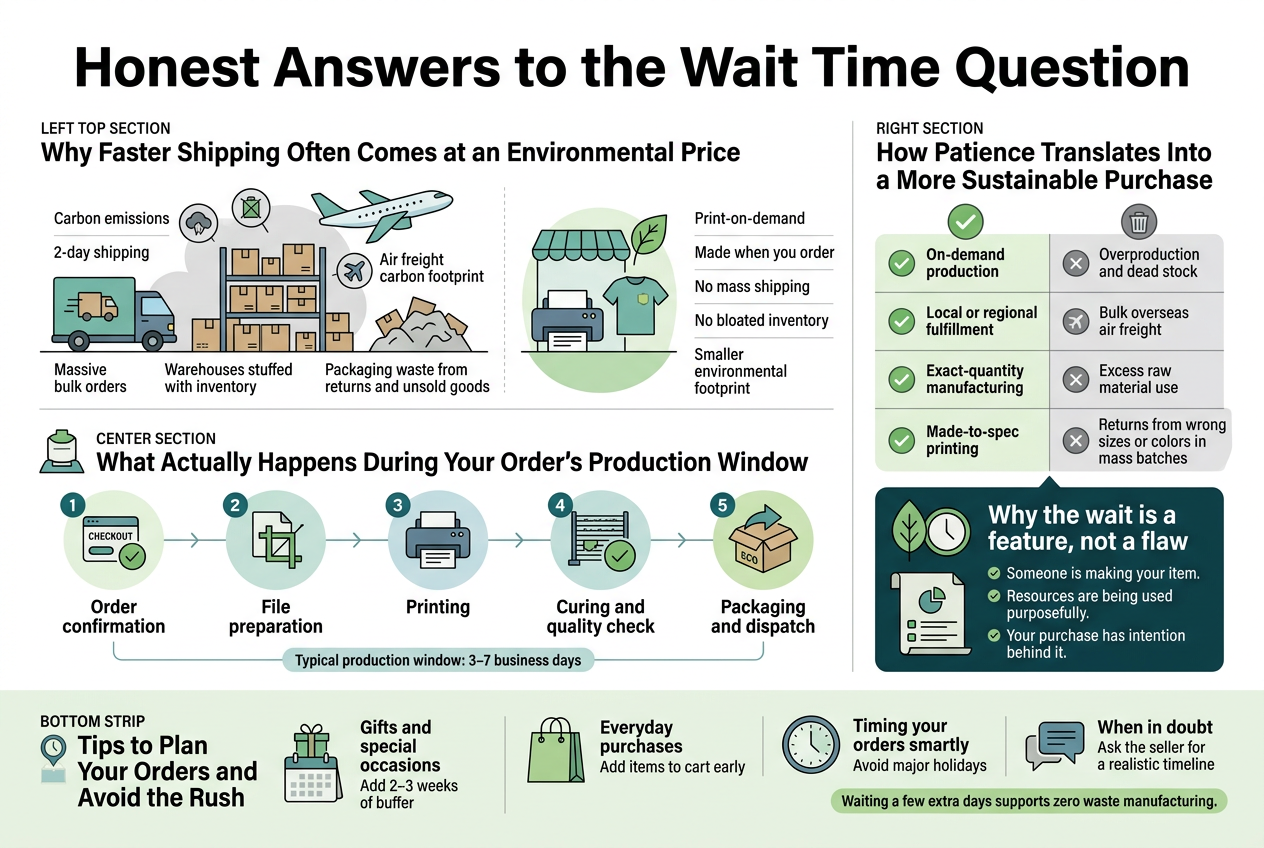
Weighing the environmental price of fast shipping against the benefits of made-to-order clothing.
Why Faster Shipping Often Comes at an Environmental Price
“Designer Tip: A few extra days of waiting is a small price for a piece that was actually made for you, not guessed at by a warehouse six months in advance.” — Elena M.
When you see “2-day shipping” on a product listing, it feels like a win. But that speed has a real cost that rarely shows up on the checkout page.
To make fast delivery possible, retailers have to predict what you want before you want it. That means warehouses stuffed with inventory, products shipped from overseas in massive bulk orders, and a constant cycle of overproduction just to stay ahead of demand. When you factor in the carbon footprint of air freight (used heavily for rush shipments), refrigerated warehouses, and the packaging waste from returned or unsold goods, that “fast” option starts looking a lot less appealing.
Print-on-demand flips this entirely. Your item isn’t sitting in a warehouse. It gets made when you place your order — no mass shipping, no bloated inventory, no guesswork. Yes, that takes a few extra days. But those extra days are doing real environmental work.
What Actually Happens During Your Order’s Production Window
You might wonder what’s going on between the moment you hit “buy” and the moment your package arrives. Here’s a straightforward look at what that production window actually involves:
- Order confirmation — Your purchase triggers production. Nothing is made until this moment.
- File preparation — Your design is prepped and optimized for printing on the specific product you chose.
- Printing — Depending on the item, this could be direct-to-garment printing, sublimation, or another method designed to minimize ink waste.
- Curing and quality check — The product is dried, finished, and inspected before it ever leaves the facility.
- Packaging and dispatch — Your item is packed — often with eco-conscious materials — and handed to the carrier.
That window, typically 3–7 business days for most made-to-order products, isn’t filler time. It’s the actual work of creating something specifically for you. That’s a fundamentally different process than pulling a pre-made item off a shelf, and it’s a big part of why sustainable made-to-order products leave a smaller environmental footprint.
How Patience Translates Into a More Sustainable Purchase
Your willingness to wait isn’t passive. It’s actually one of the most direct actions you can take as a conscious consumer.
Here’s what your patience makes possible:
| What You’re Waiting For | What It Prevents |
|---|---|
| On-demand production | Overproduction and dead stock waste |
| Local or regional fulfillment | Bulk overseas air freight |
| Exact-quantity manufacturing | Excess raw material use |
| Made-to-spec printing | Returns from wrong sizes or colors in mass batches |
Every time you choose a made-to-order product over a mass-produced one and accept the standard production timeline, you’re directly supporting zero waste manufacturing. No extra units get made. No leftover product ends up in a landfill or incinerator. Your order exists because you ordered it — and that’s the whole point.
This is especially true in sustainable fashion on demand, where the textile industry’s waste problem is enormous. An estimated 30% of all clothing produced globally is never sold. When you buy made-to-order, that statistic doesn’t apply to your purchase.
Tips to Plan Your Orders and Avoid the Rush
The easiest way to make peace with production timelines is to plan around them. A little foresight goes a long way.
For gifts and special occasions:
- Add 2–3 weeks of buffer before the date you need the item
- Order gifts for birthdays, holidays, or events as soon as you know the date
- Check the shop’s estimated production + shipping times before purchasing — most list these clearly
For everyday purchases:
- Think of made-to-order items the way you’d think about a custom order at a local artisan shop — worth scheduling for
- If you find yourself browsing a store you love, add items to your cart early rather than waiting until you need them
- Sign up for email lists from your favorite print-on-demand brands — they often give advance notice of busy periods like holidays
Timing your orders smartly:
- Avoid placing orders right before major holidays if you need them by a specific date
- Late October through late November is typically the highest-volume window for most print-on-demand sellers — ordering earlier in the season helps
- When in doubt, reach out to the seller and ask for a realistic timeline. Reputable shops will always tell you the truth.
Why the Wait Is a Feature, Not a Flaw
Here’s a shift in perspective worth making: the production timeline isn’t a limitation of eco-friendly print-on-demand. It’s proof that the model is working the way it should.
Mass production is fast because shortcuts are built into every step — cheap labor, pre-made inventory, synthetic materials that don’t require care, and logistics chains that prioritize speed over impact. When you slow down and choose differently, you’re opting out of all of that.
The wait tells you something real:
- Someone is making your item. It’s not sitting in a bin somewhere.
- Resources are being used purposefully. No fabric is cut until there’s a reason to cut it.
- Your purchase has intention behind it. That matters in a world drowning in disposable goods.
Ethical shopping choices often ask something of you — sometimes it’s paying a little more, sometimes it’s doing a bit of research, and sometimes it’s simply waiting a few extra days. The environmental benefits of print-on-demand are inseparable from that timeline. One exists because of the other.
When you reframe the wait as a built-in signal that your purchase is being handled responsibly, it stops feeling like an inconvenience and starts feeling like exactly what it is: a small act of choosing better.
Making Smarter Choices as a Conscious Consumer
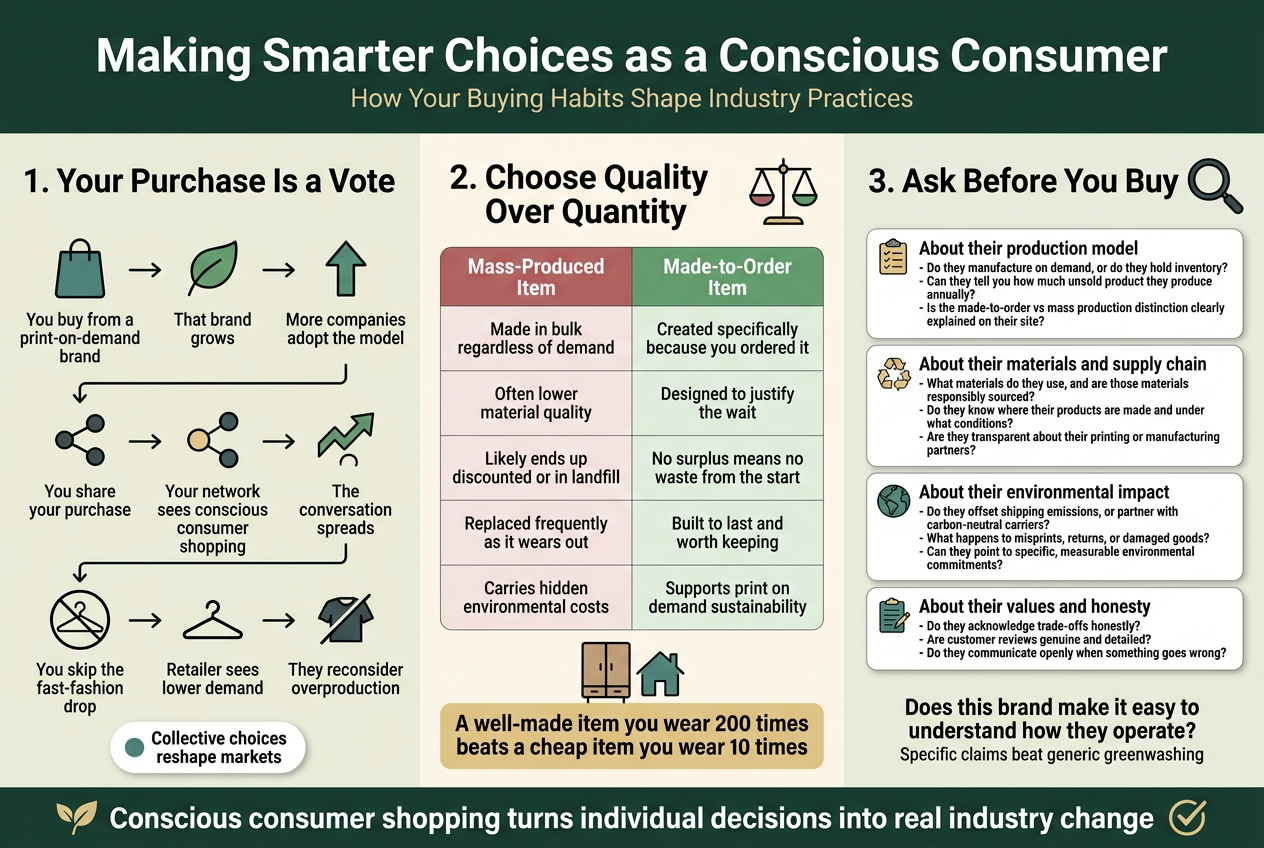
A conscious consumer choosing made-to-order clothing over mass-produced fast fashion.
How Your Buying Habits Shape Industry Practices
Every time you make a purchase, you’re casting a vote for the kind of world you want to live in. That’s not an exaggeration — it’s basic market economics. Brands produce what sells. When you consistently choose sustainable made-to-order products over mass-produced alternatives, you’re sending a direct signal to manufacturers that this model works.
Here’s what that looks like in practice:
- You buy from a print-on-demand brand → that brand grows → investors and competitors notice → more companies adopt the model
- You share your purchase → your network gets exposed to conscious consumer shopping → the conversation spreads
- You skip the fast-fashion drop → that retailer sees lower demand → they reconsider overproduction volumes
This isn’t passive participation. Your wallet is genuinely one of the most powerful tools you have for reshaping how industries operate. The shift toward eco-friendly print on demand and zero waste manufacturing didn’t happen because corporations suddenly grew a conscience — it happened because enough people like you started asking better questions and making different choices.
The collective weight of individual decisions has historically moved entire markets. Organic food went from a fringe category to a grocery store staple because consumers demanded it consistently. The same trajectory is already underway with ethical shopping choices in fashion and merchandise.
Choosing Quality Over Quantity for Long-Term Value
One of the most underrated moves you can make as a conscious consumer is simply buying less, but buying better. The print-on-demand model naturally nudges you in this direction — you’re choosing something specific, something intentional, rather than grabbing whatever’s on clearance.
When you invest in a quality made-to-order product, here’s what you’re actually getting:
| Mass-Produced Item | Made-to-Order Item |
|---|---|
| Made in bulk regardless of demand | Created specifically because you ordered it |
| Often lower material quality to cut costs | Designed to justify the wait — quality matters |
| Likely ends up discounted or in landfill | No surplus means no waste from the start |
| Replaced frequently as it wears out | Built to last and worth keeping |
| Carries hidden environmental costs | Supports print on demand sustainability directly |
Think about your wardrobe or your home for a second. How many items in it do you genuinely love versus how many were impulse buys that felt exciting for about two weeks? The cheap stuff adds up — not just in your space, but in landfills, water systems, and carbon emissions.
Choosing quality over quantity doesn’t mean spending more money overall. It often means spending the same amount, but on fewer things that actually hold their value and hold up over time. A well-made, sustainably produced item you wear 200 times beats a cheap alternative you wear 10 times and toss — financially and environmentally.
Practical ways to shift your mindset toward quality:
- Ask yourself if you’d still want this item in six months before you buy it
- Check the materials — quality fabrics and printing processes last significantly longer
- Factor in cost-per-use rather than sticker price
- Treat your purchases as a small collection of things you love, not a constant rotation of new arrivals
Questions to Ask Before You Buy From Any Brand
Not every brand that uses the word “sustainable” is actually walking the talk. Greenwashing — where companies market themselves as eco-friendly without meaningful practices to back it up — is rampant. You deserve better than vague claims and recycled buzzwords.
Here’s a practical set of questions you can run through before handing over your money to any brand:
About their production model:
- Do they manufacture on demand, or do they hold inventory?
- Can they tell you how much unsold product they produce annually?
- Is the made-to-order vs mass production distinction clearly explained on their site?
About their materials and supply chain:
- What materials do they use, and are those materials responsibly sourced?
- Do they know where their products are made and under what conditions?
- Are they transparent about their printing or manufacturing partners?
About their environmental impact:
- Do they offset shipping emissions, or partner with carbon-neutral carriers?
- What happens to misprints, returns, or damaged goods?
- Can they point to specific, measurable environmental commitments — not just mission statements?
About their values and honesty:
- Do they acknowledge trade-offs honestly (like longer shipping times) instead of pretending there are none?
- Are customer reviews genuine and detailed?
- Do they communicate openly when something goes wrong?
A brand that genuinely embraces print on demand sustainability and ethical shopping choices will have real answers to these questions — not marketing fluff. If a company’s “sustainability page” is three sentences and a stock photo of a forest, that tells you something.
You don’t have to be cynical about every brand you consider. But healthy skepticism, paired with a few targeted questions, can save you from supporting practices that conflict with your values.
A quick gut-check before any purchase:
- Does this brand make it easy to understand how they operate?
- Do their sustainability claims feel specific or generic?
- Would you feel good explaining this purchase to someone whose environmental opinion you respect?
Your ability to ask these questions — and to walk away when the answers aren’t good enough — is exactly what makes conscious consumer shopping a force for real change.
The Future of Sustainable Shopping Is Already Here
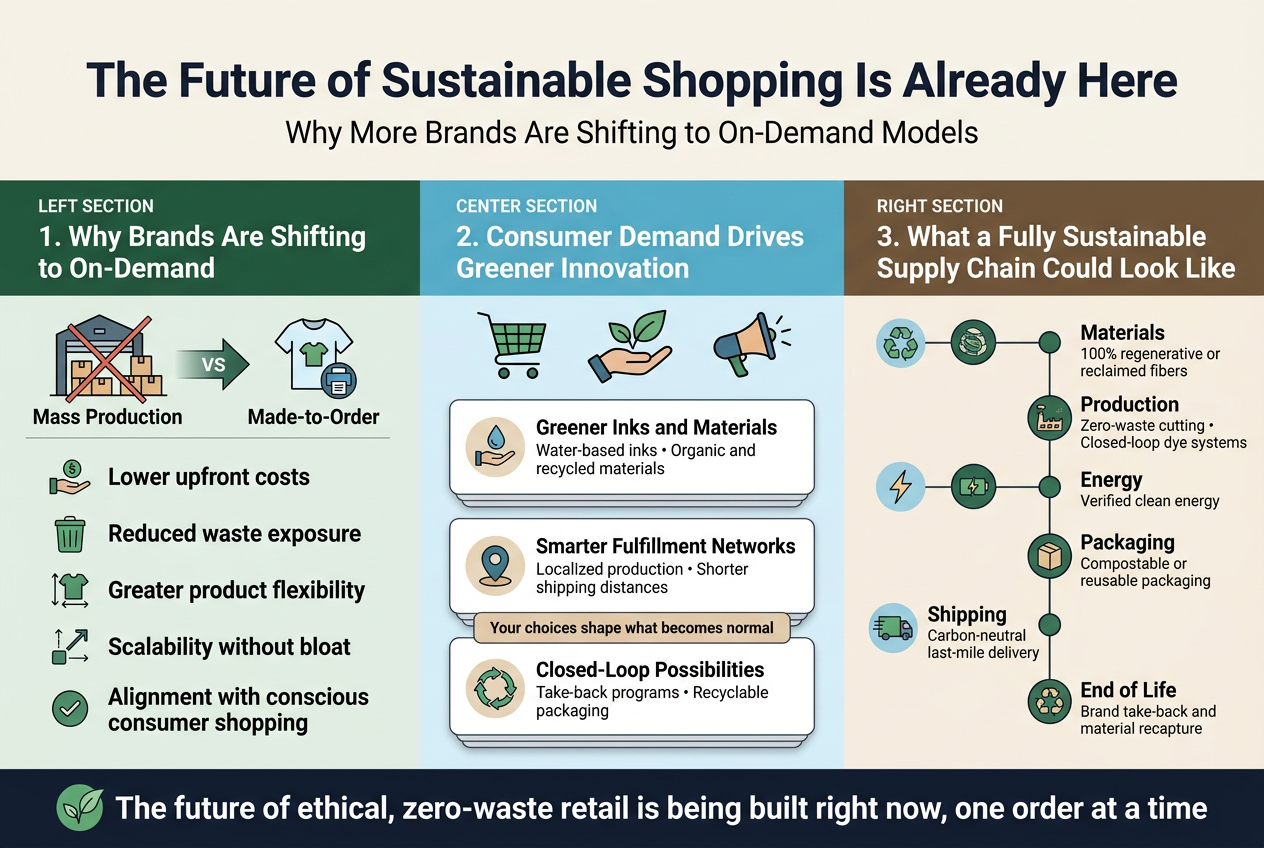
More fashion brands shifting toward on-demand, made-to-order production models.
Why More Brands Are Shifting to On-Demand Models
Something real is happening across the retail landscape, and it goes beyond a passing trend. Brands of every size are quietly walking away from bulk manufacturing and moving toward print-on-demand sustainability models — not just because it looks good in a mission statement, but because the numbers actually make sense. We at Honeh built our entire model around this shift from day one, and it’s why we have no plans to go back to bulk production.
When you run a traditional retail operation, you’re gambling. You’re betting that customers will want what you’ve already made, in the quantities you’ve already committed to. Get it wrong, and you’re sitting on mountains of unsold inventory that either gets discounted into oblivion, burned, or buried in a landfill. That’s not a hypothetical — it’s a documented problem that costs the fashion industry alone billions of dollars every year.
The shift to made-to-order vs mass production changes that equation completely. When a brand only makes what’s been purchased, the financial risk drops dramatically. There’s no overstock to offload, no seasonal clearance desperation, and no warehouse full of products that missed the mark. For smaller independent brands especially, this is a business model that makes survival possible without compromising values.
Here’s what’s driving the shift from a brand perspective:
- Lower upfront costs — no need to manufacture thousands of units before making a single sale
- Reduced waste exposure — zero unsold inventory means zero wasted materials and resources
- Greater product flexibility — new designs can be tested without massive financial commitment
- Scalability without bloat — you can grow without proportionally expanding physical infrastructure
- Alignment with conscious consumer shopping — today’s buyers are paying attention to how things are made
You’re watching an industry restructure itself in real time, and your purchasing choices are part of what’s making it happen.
How Consumer Demand Is Driving Greener Innovation
Here’s something that doesn’t get said enough: brands don’t change on their own. They change because you do.
When you choose eco-friendly print on demand products over fast fashion alternatives, you’re casting a vote with your wallet. Do that enough times — along with millions of other people asking the same questions about where things come from and how they’re made — and the industry has to respond. That’s not idealism. That’s market pressure, and it works.
The wave of sustainable fashion on demand options you see today didn’t appear out of nowhere. It came from consumers like you getting louder about wanting better. Social media made it possible to call out wasteful practices publicly. Review culture made transparency non-negotiable. And a growing awareness of climate reality made “we’ll do better someday” an unacceptable answer.
Because of that pressure, innovation is accelerating in genuinely exciting ways:
Greener Inks and Materials
Water-based, non-toxic inks are replacing petroleum-based alternatives across the print-on-demand industry. Organic and recycled materials are becoming standard offerings rather than premium add-ons. When you choose these options, you’re directly funding the suppliers who prioritize them — which makes those options more viable and more affordable for everyone.
Smarter Fulfillment Networks
The logistics behind ethical shopping choices are getting smarter. Print-on-demand fulfillment is increasingly localized, meaning your order is produced closer to where you actually live. That cuts shipping distances, reduces carbon emissions from transportation, and shortens your wait time. It’s a genuine win across the board.
Closed-Loop Possibilities
Some on-demand producers are beginning to experiment with take-back programs and recyclable packaging — early steps toward genuinely circular manufacturing. You’re not seeing widespread adoption yet, but the direction of travel is clear, and your demand for it accelerates that timeline.
The relationship between what you buy and how the industry evolves is more direct than most people realize. Your choices aren’t just personal — they shape what becomes normal.
What a Fully Sustainable Supply Chain Could Look Like
Right now, even the best print-on-demand operations are works in progress. Zero waste manufacturing as a complete, cradle-to-grave reality is still more vision than fact. But it’s a vision worth understanding, because it helps you recognize how far things have already come — and where the trajectory is headed.
Imagine a supply chain that works like this:
| Stage | What’s Possible Now | What Full Sustainability Looks Like |
|---|---|---|
| Materials | Recycled polyester, organic cotton options | 100% regenerative or reclaimed fibers as standard |
| Production | Made-to-order, no overstock | Zero-waste cutting, closed-loop dye systems |
| Energy | Some facilities using renewable energy | All production powered by verified clean energy |
| Packaging | Recycled and biodegradable mailers | Fully compostable or reusable packaging only |
| Shipping | Local fulfillment reducing distance | Carbon-neutral last-mile delivery as default |
| End of Life | Customer-driven recycling | Brand take-back and material recapture programs |
That full picture isn’t science fiction — every single element already exists somewhere. The challenge is integration, scale, and cost. And the thing that drives all three in the right direction is consistent, informed demand from people like you.
When you ask questions before you buy — What’s this made from? Where is it produced? How is it shipped? — you push brands to have better answers. When you choose the environmental benefits of print on demand over convenience-driven alternatives, you make sustainable infrastructure more economically viable. When you share why you made a conscious consumer shopping choice, you normalize that behavior for everyone in your circle.
The future of ethical, zero-waste retail isn’t waiting for some technological breakthrough or regulatory change. It’s being built right now, one order at a time, by people who decided that how something is made matters just as much as what it is.
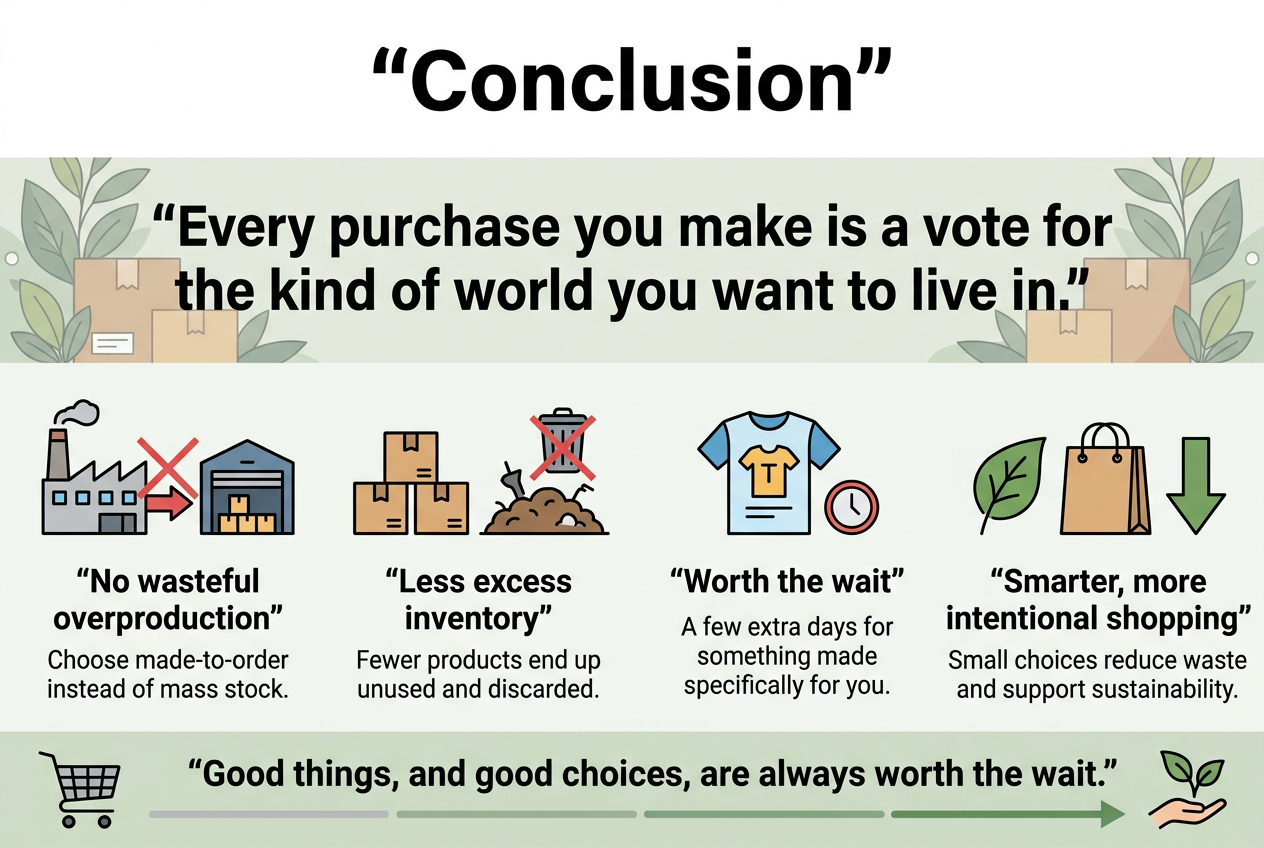
What a fully sustainable, made-to-order clothing supply chain could look like.
Every purchase you make is a vote for the kind of world you want to live in. Choosing print-on-demand means saying no to wasteful overproduction, excess inventory, and products that end up in landfills before they’re ever used. The wait might be a little longer, but what you get in return is something made specifically for you — not pulled from a pile of thousands sitting in a warehouse somewhere.
The shift toward smarter, more intentional shopping doesn’t require a complete lifestyle overhaul. It starts with small decisions, like understanding where your products come from and why some things are worth waiting a few extra days for. When you support a made-to-order model, you’re directly cutting down on waste, reducing overproduction, and backing a future where fashion and sustainability actually go hand in hand. So next time you’re checking your order status, remember — good things, and good choices, are always worth the wait.
Tell Us What You Think
Has waiting for a made-to-order piece ever changed how you think about a purchase? We’d love to hear about it in the comments.

-
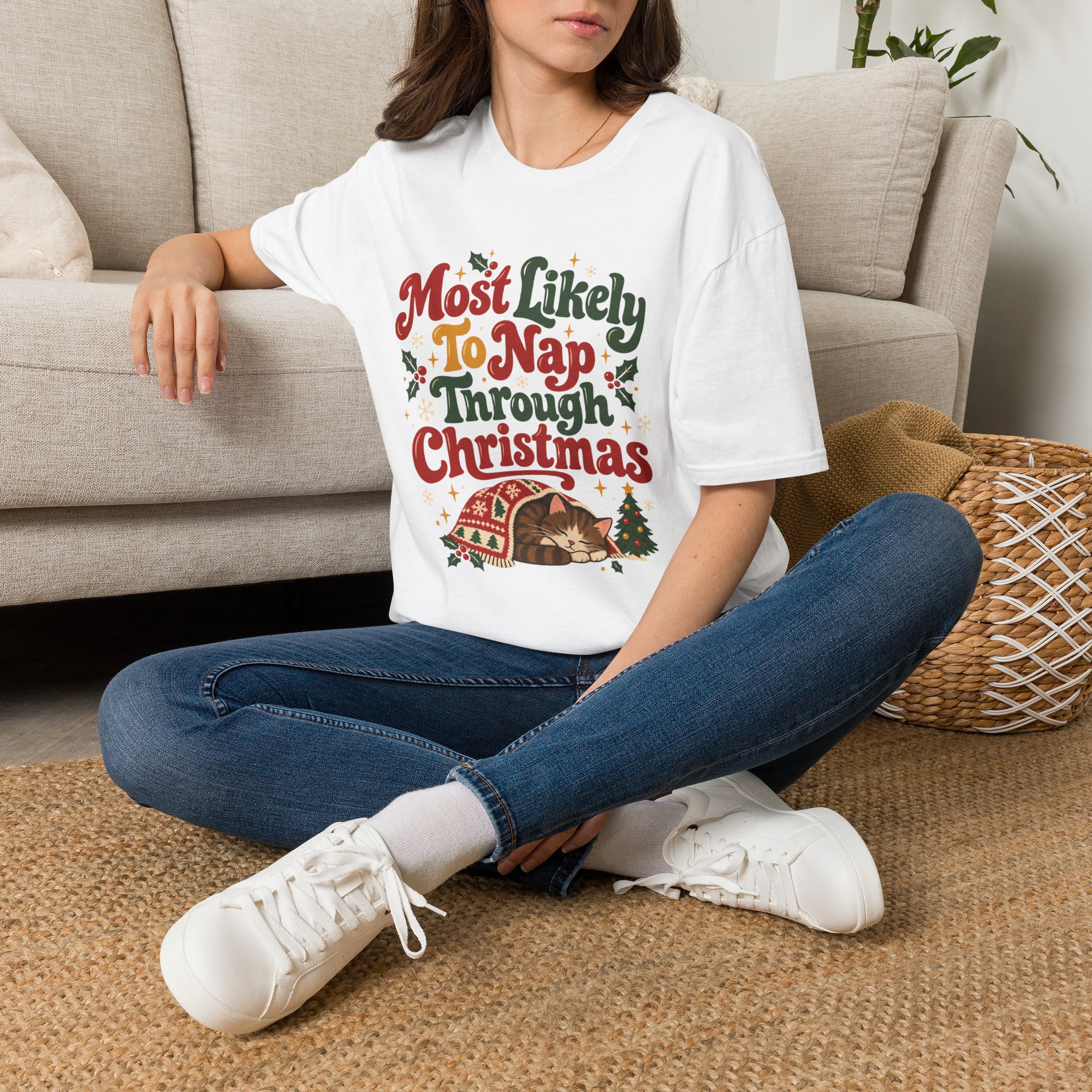 Price range: $22.38 through $29.07
 -
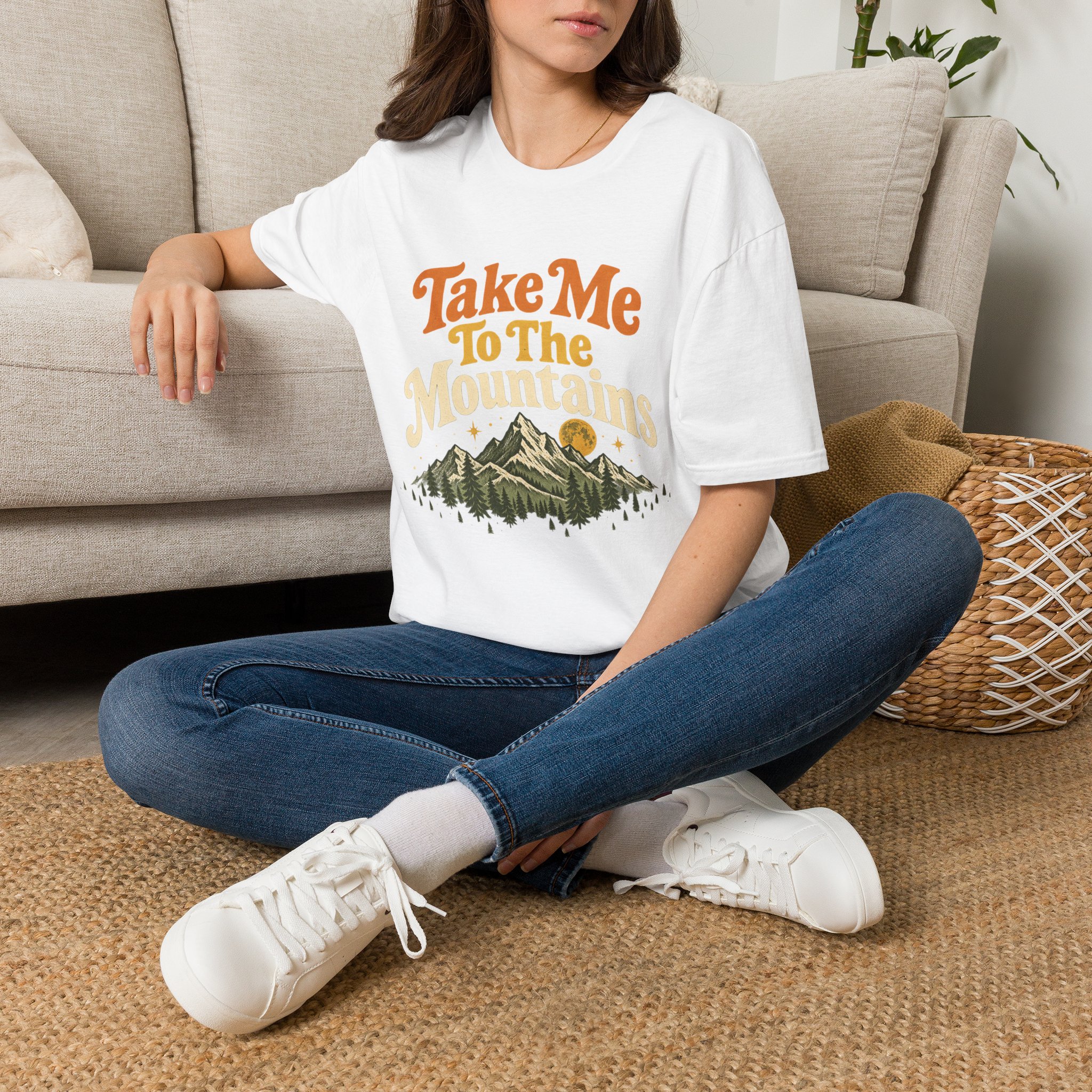 Price range: $22.38 through $29.07
 -
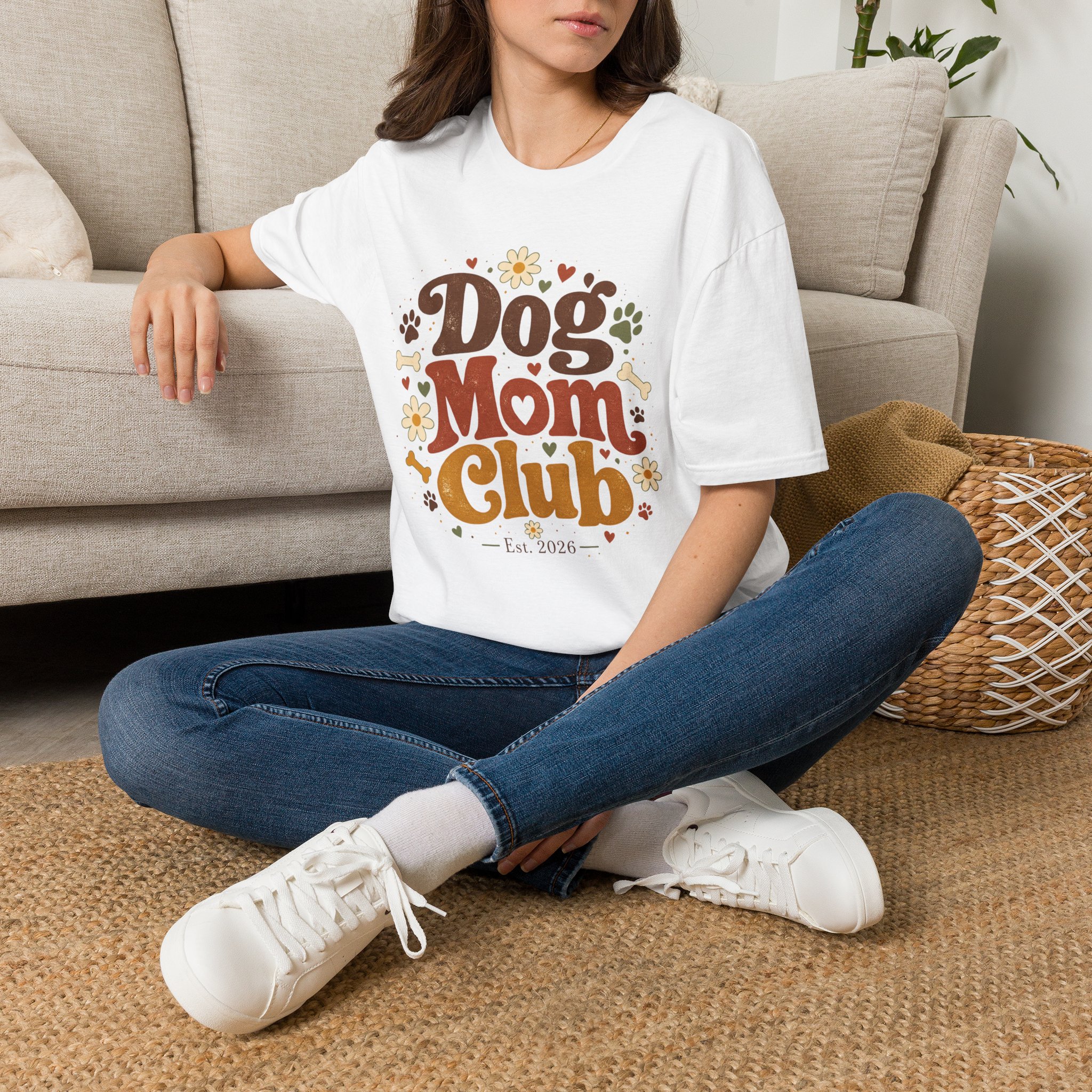 Price range: $22.38 through $29.07
 -
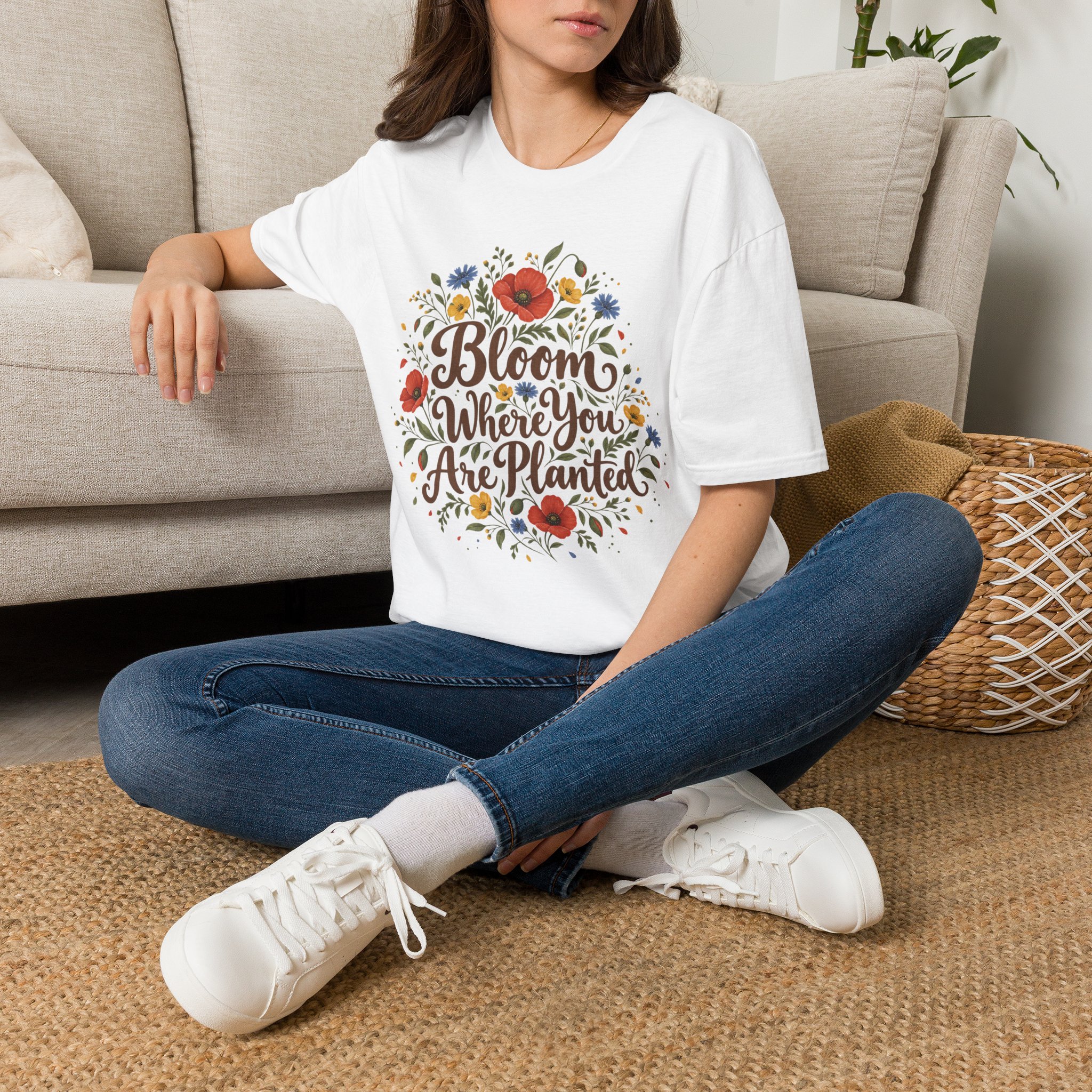 Price range: $21.43 through $28.17
 -
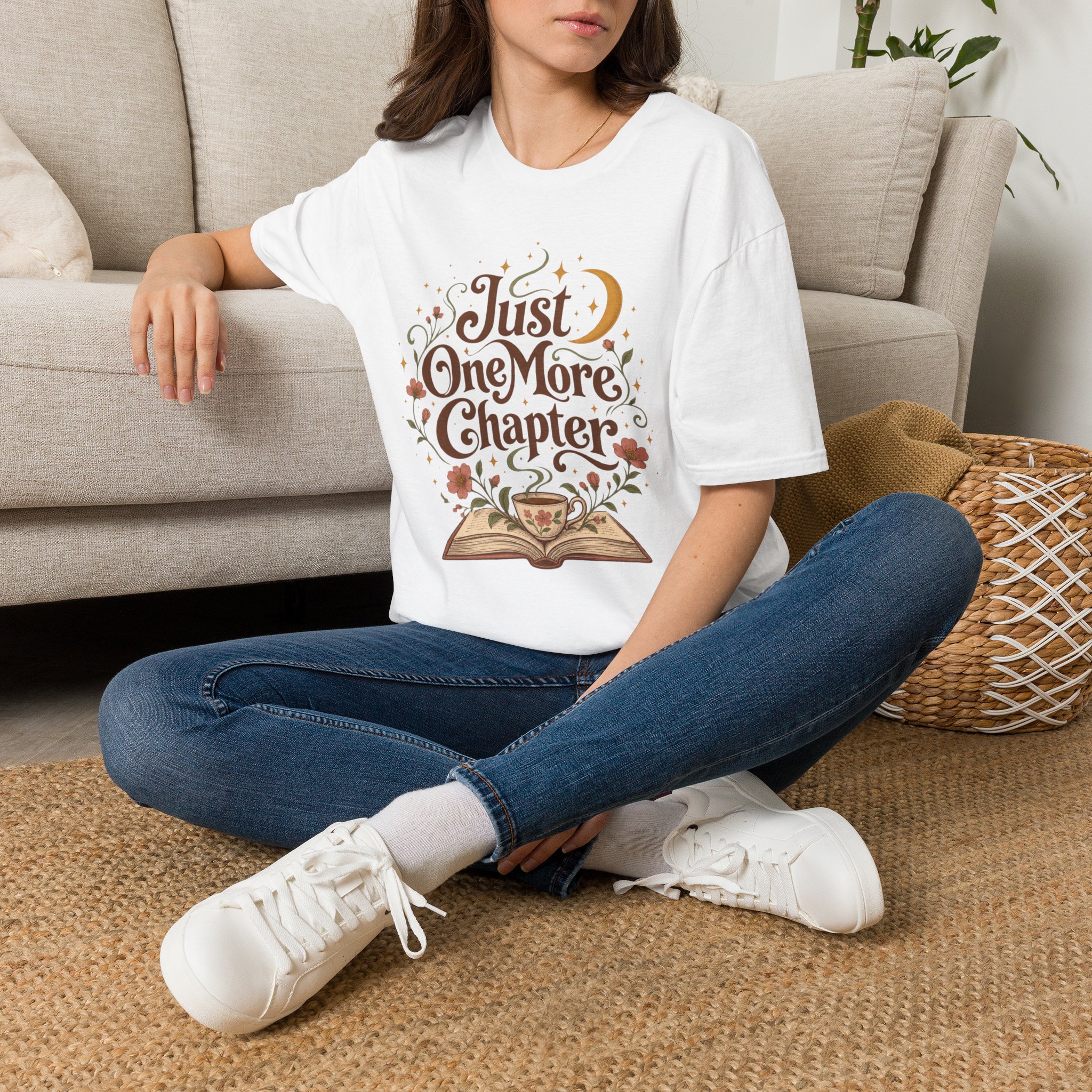 Price range: $22.38 through $29.07
 -
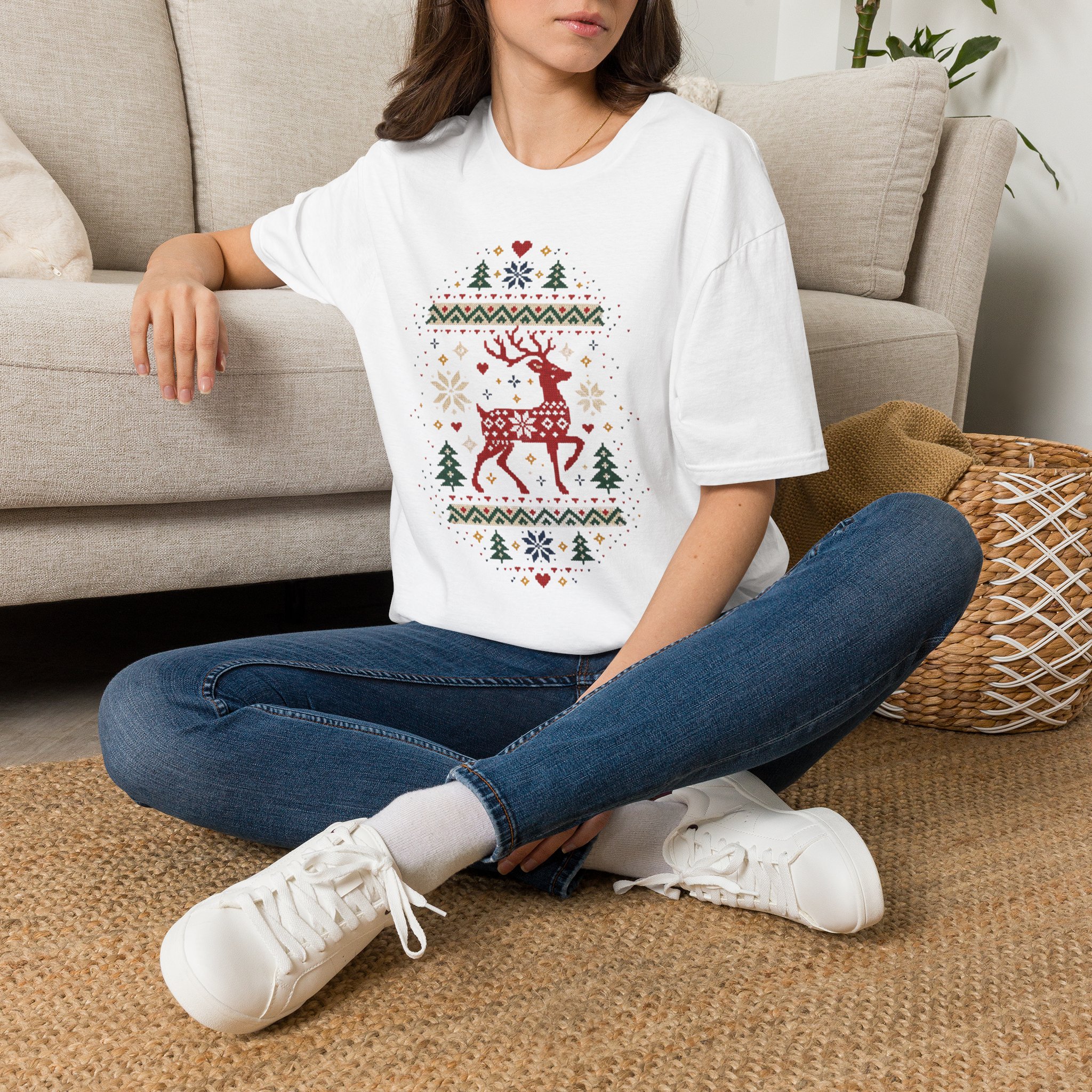 Price range: $22.38 through $29.07
 -
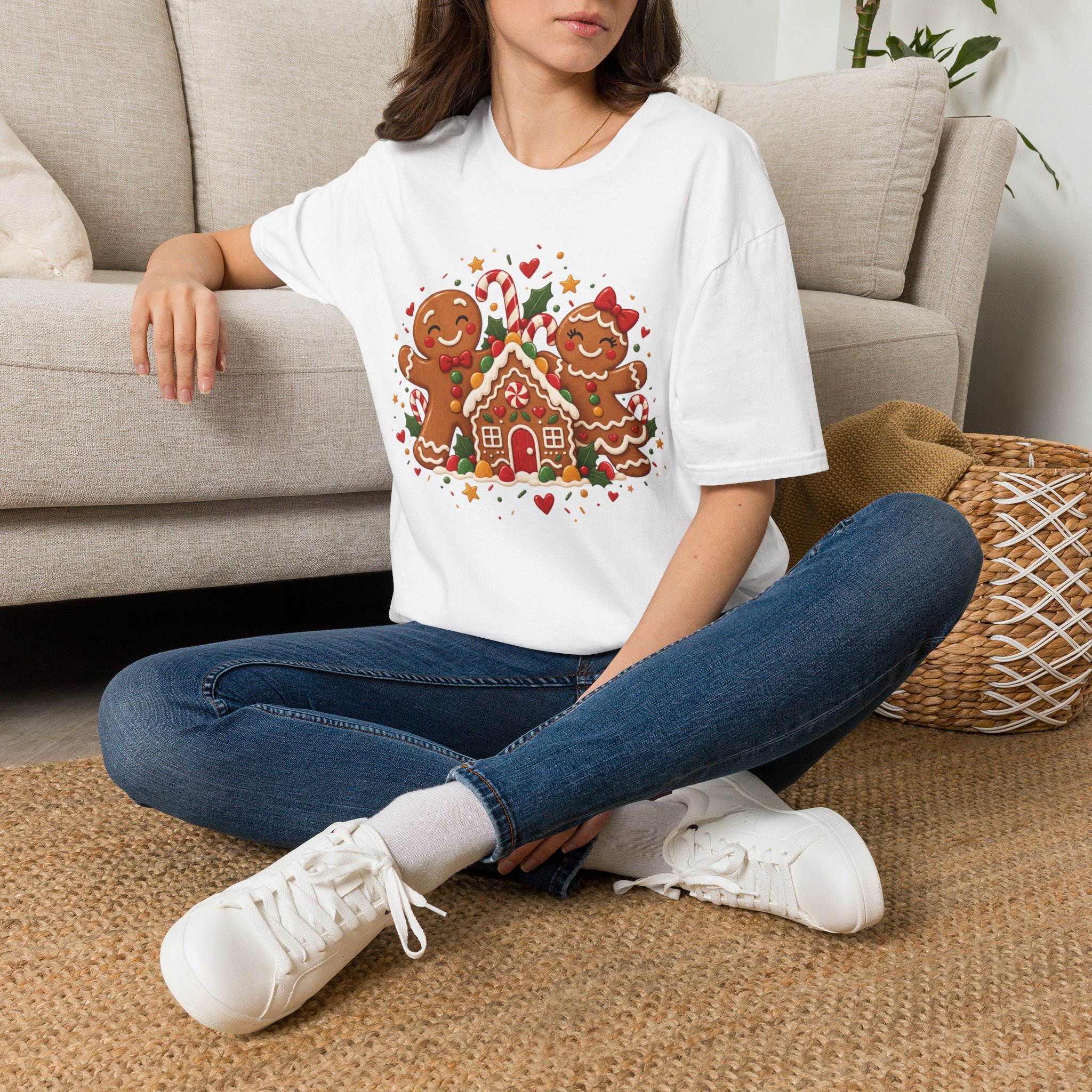 Price range: $22.38 through $29.07

Recent Comments